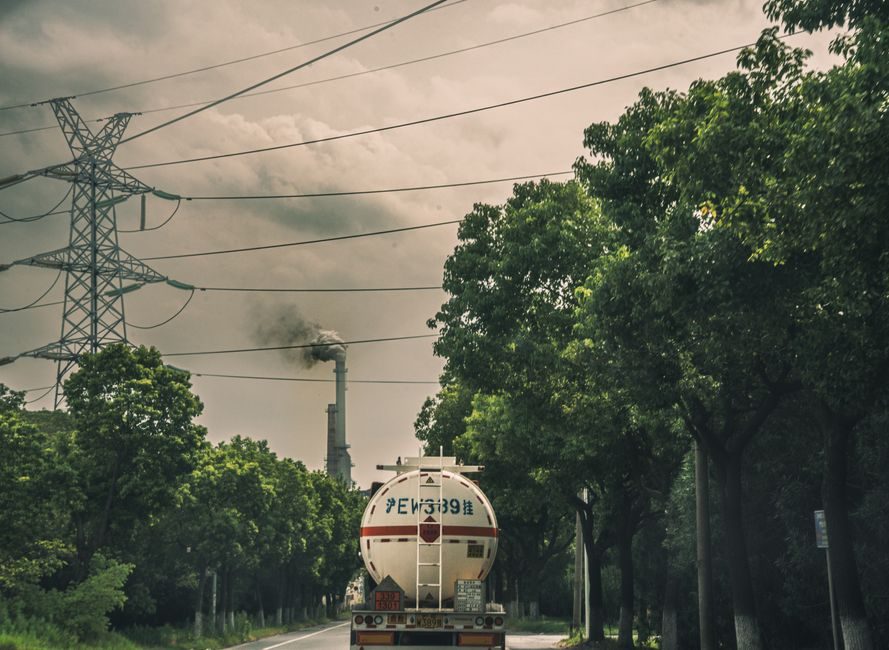
EV supply chain analysis indicates the Inflation Reduction Act has catalyzed investment in the US electric vehicle supply chain, with analysis suggesting a sufficient supply of key minerals to meet IRA requirements for US or free-trade area sources [S5], and the electric vehicle plastics market is projected to grow from USD 3.9 billion in 2025 to USD 45.8 billion by 2035 at a 28.0% CAGR [S4].
Battery raw-material volatility remains the binding constraint, with direct lithium extraction (DLE) via nanochannel membranes now in industrial evaluation [S1], while India-focused work maps raw-material bottlenecks and cell-to-pack localisation pathways [S2]. Regional integration forums — including the ASEAN EV Summit — explicitly cite localised supply chains as a risk-reduction lever for emerging producers [S6].
Mineral and Cathode Inputs: Where Supply Chain Stress Concentrates
Lithium, nickel, cobalt and graphite account for the largest swings in EV bill-of-materials cost, and the IRA has shifted qualifying thresholds toward US or free-trade-area sources to qualify for federal incentives [S5]. Bain's 16-page resilience study warns that, even with adequate aggregate mineral supply, regional and global supply/demand imbalances will still materialise across the value chain [S5].
On the extraction side, nanochannel-membrane direct lithium extraction (DLE) is being benchmarked in peer-reviewed work as a route to lift Li recovery from low-grade brines, reducing the lead-time penalty of evaporative ponds [S1]. For cell makers, this shifts the bottleneck from mine commissioning to membrane-module throughput and reagent regeneration duty — a process-engineering trade-off, not a chemistry breakthrough. For India specifically, raw-material access and refining capacity are flagged as the principal barriers to scaling domestic cell production [S2].
Nickel and cobalt price floors are the second-order risk: cathode active material (CAM) cost curves are dominated by these two metals, so any sustained price rise compresses OEM margin or triggers chemistry substitution toward LFP, which has lower Ni/Co intensity but lower energy density at the pack level.
Li-ion Cell, Pack and BMS Buildout Through 2036
IDTechEx's "Li-ion Batteries and Battery Management Systems for Electric Vehicles 2026-2036" report (June 2026 release window) confirms that Li-ion pack demand for EVs will keep rising across the coming decade as electrification extends into commercial vehicles, two-/three-wheelers, and light trucks [S3]. The same report tracks cell chemistry benchmarking, pack-level architectures, and a competitive map of commercial pack manufacturers [S3].
Chemistry mix is the central design variable. NMC remains the energy-density leader for premium long-range BEVs; LFP is the cost-and-cycle-life winner for entry BEVs, commercial fleets, and energy-storage adjacency. IDTechEx's framing positions BMS as the integration hinge: cell-to-pack and cell-to-body formats reduce module-level hardware but raise BMS channel count, isolation monitoring, and functional-safety overhead (typically referenced against ISO 26262 ASIL levels in supplier documentation, though revision dates vary by integrator) [S3].
Vertical integration is accelerating — Nikola's full acquisition of Romeo Power, consolidating cell-to-pack production in-house for heavy-truck programmes, is the clearest US illustration of OEMs trading supplier dependency for capex exposure [S7]. For a deeper look at the pack-to-vehicle handoff, the EV manufacturing process overview maps the body-paint-battery-final assembly sequence that any supply-chain plan has to feed.
Plastics, Lightweighting and Tier-2 Compound Demand
The EV plastics market is forecast to grow from USD 3.9 billion in 2025 to USD 45.8 billion by 2035 at a 28.0% CAGR, with battery electric vehicles (BEV) holding a 38.2% share of plastics volume and polypropylene (PP) the dominant resin by tonnage [S4]. PP's lead reflects its use in battery housings, interior trim, underbody shields, and HVAC ducts — every kilogram of plastics displacing roughly 4-6 kg of CO2 over a vehicle life cycle when mass reduction is fully realised, though that ratio varies with duty cycle and grid mix.
Material specification is the engineer-level lever: PP-GF (glass-filled) for structural battery tray applications, PA6-GF or PA66-GF for high-temperature under-hood zones, PC/ABS for interior surfaces, and flame-retardant grades (typically UL 94 V-0) for battery-pack enclosures where thermal-runaway containment matters. Tier-2 compounders are responding with halogen-free FR systems and recycled-content grades to meet OEM sustainability scorecards [S4].
Forecast segmentation also tracks plug-in hybrid and fuel-cell variants separately, which matters for plastics spec because PHEV running gear runs hotter in some zones (ICE + battery) while FCEV cooling loops demand different chemical-resistance profiles [S4]. Broader demand-side context — chargers, motors and range-extenders — is covered in the EV market 2026 forecast roundup.
Regional Realignment: ASEAN, India and the IRA Spillover
ASEAN's localisation push targets charging infrastructure, localised cell-to-pack assembly, and risk-mitigation against single-source dependency — themes that the ASEAN EV Summit 2023/2026 cycles have carried into policy planning [S6]. Thailand, Indonesia and Vietnam are anchoring nickel processing, LFP cell capacity, and two-wheeler electrification respectively.
India's supply-chain barriers, per the Discover Sustainability review, fall into three buckets: raw-material access (especially Li and high-purity nickel), refining and precursor capacity, and cell-to-pack gigafactory execution [S2]. The same review identifies localisation incentives, public-sector R&D, and recycling-stream integration as the principal countermeasures [S2].
For US-bound OEMs, IRA-qualifying thresholds favour mineral and component sourcing from US or free-trade-agreement partners, which has redirected investment into North-American cathode plants, precursor facilities, and lithium conversion [S5]. The risk, Bain notes, is the whiplash of regional demand/supply imbalances — over-investment in one segment (e.g. cell capacity) while another (e.g. separator coating or electrolyte salt) tightens [S5].
Comparison of Main EV Supply-Chain Options Across Decision Criteria
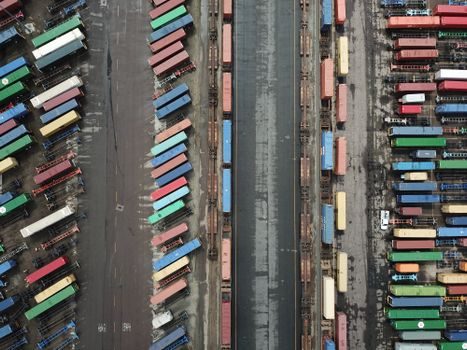
Four sourcing options for a 50 kWh BEV pack line up against four decision criteria — mineral cost exposure, energy density, IRA-qualifying share, and recycling-loop maturity: [S1]
NMC-811 (Ni-rich) cells score high on energy density (~250-280 Wh/kg cell-level, supplier-dependent) but expose the bill-of-materials to nickel and cobalt price swings, with limited closed-loop recycling capacity today. LFP cells win on cost, cycle life, and thermal stability, trade energy density for safety margin, and have the most mature recycling-stream references in 2026. Sodium-ion (Na-ion) cells, still in early industrial deployment, eliminate Li/Co/Ni exposure but trail LFP on energy density and cold-weather performance. Solid-state cells remain pre-commercial in the 2026 sourcing window, with pilot lines rather than gigawatt-scale output [S3].
On IRA-qualifying share, US/FTA-sourced mineral content is a binary gate for federal incentives; LFP and Na-ion chemistries ease the upstream constraint because they sidestep Ni/Co entirely, which is a non-trivial supply-chain simplification for new entrants [S5].
Standards, Compliance and Sourcing Discipline
EV battery supply chains are gated by an overlapping stack: UN 38.3 for transport of lithium cells, IEC 62660 series for cell performance and reliability, ISO 12405 for pack-level testing, ISO 26262 for functional safety at the BMS level, and region-specific end-of-life rules (EU Battery Regulation 2023/1542, US EPR schemes by state). For mineral provenance, IRA Section 30D requirements specify qualifying mineral and battery-component thresholds; for EU OEMs, the Carbon Border Adjustment Mechanism and the Critical Raw Materials Act are the parallel pressure points [S5].
For plastics in pack enclosures and busbars, UL 94 V-0 flame ratings and (where applicable) IEC 62619 industrial-cell safety standards are the typical specification hooks. Engineers evaluating tier-2 compounders should request cell-level abuse-test data, recycled-content declarations, and REACH/RoHS compliance dossiers — the dossier quality is usually a more reliable supplier signal than headline price per kilogram.
Recycling, Second-Life and Closed-Loop Constraints
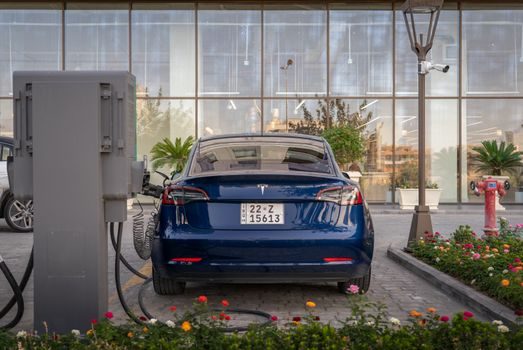
Closed-loop recycling is the single largest hedge against upstream mineral volatility. Hydrometallurgical black-mass recovery now operates at industrial scale for Li, Ni and Co, with pyrometallurgical routes retained for low-grade or mixed feeds. Direct recycling — preserving cathode crystal structure — remains a research-to-pilot frontier, with throughput and electrolyte contamination the engineering bottlenecks rather than chemistry feasibility [S1].
Second-life applications (stationary storage, forklift batteries, chain conveyor buffer units) are commercially active but constrained by state-of-health variance, warranty-transfer mechanics, and pack-format diversity that complicates reuse certification. For manufacturers planning circular-economy claims, third-party verified mass-balance accounting is becoming the de facto evidence standard, ahead of any specific regulatory mandate [S2].
Failure modes to plan for: separator-shutdown degradation in aged cells, BMS firmware fragmentation across multi-vendor packs, and thermal-runaway propagation in densely packed modules — each of which affects reverse-logistics design and recycling yield.
Trackable signals through the rest of 2026: (1) IRA Section 30D qualifying-mineral guidance updates from the US Treasury, (2) IDTechEx's next pack-chemistry and BMS benchmark releases referenced in the EV market 2026 forecast roundup, and (3) announced LFP and sodium-ion gigafactory commissioning dates in ASEAN and India, which will materially shift the regional capacity map referenced in the EV manufacturing process overview.
For component-level specifications, see dc power supply, and switching power supply.