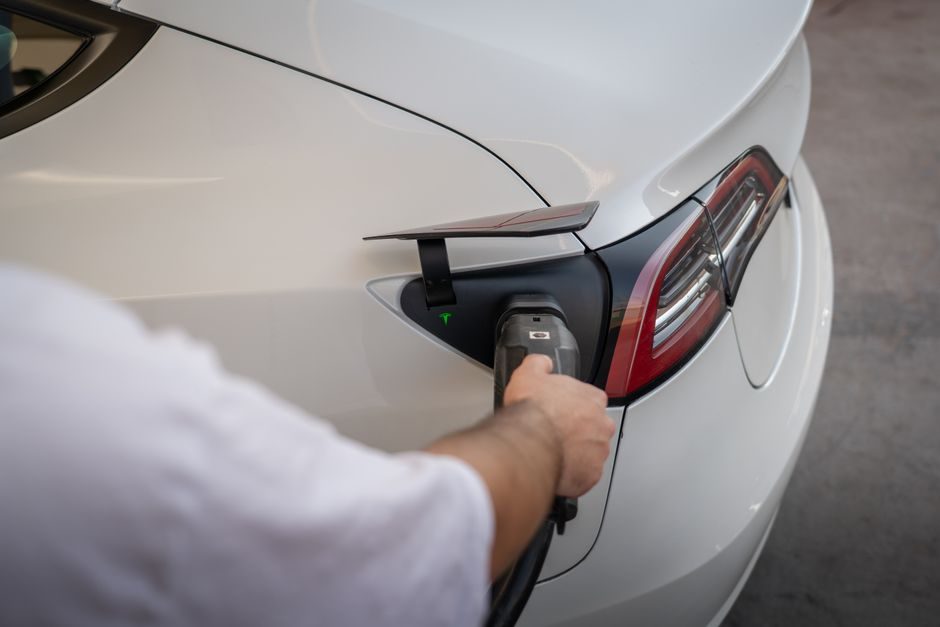
The global electric vehicle charger market is projected to expand from USD 7.2 billion in 2022 to USD 91.2 billion by 2032, growing at a 29.3% CAGR (2023–2032) [S2].
Adjacent segments track in parallel: EV plastics rises from USD 3.9 billion (2025) to USD 45.8 billion by 2035 at 28.0% CAGR, battery-electric vehicles (BEV) holding 38.2% of that plastics demand and polypropylene (PP) leading material share at 25.7% [S6]. The laser-processing backbone behind cell, motor and body fabrication is forecast to climb from USD 30,862.1 million in 2026 to USD 62,075.1 million by 2033 at 10% CAGR.
Charger Hardware: 12x Revenue Multiplier by 2032
The charger market's 12.7x revenue multiplier between 2022 and 2032 is the single largest line item in the EV value chain covered in this briefing [S2]. Driver variables are explicit: stringent pollution-control regulation, rising EV penetration, and the parallel build-out of public DC fast-charging plazas [S2].
For specifiers and procurement teams, this translates into a multi-tier hardware pull: AC Level-2 units for workplace and residential use, CCS/CHAdeMO/GB/T-compliant DC fast chargers (50–350 kW) along highway corridors, and depot-level chargers (typically 22–150 kW) for last-mile fleet operators. Adjacent semiconductor and flow meter demand rises with every kW installed, since liquid-cooled DC dispensers require coolant flow telemetry and chiller integration.
Vehicle Plastics: BEV Dominates the Bill of Materials
Within the EV plastics market, battery-electric vehicles (BEV) are forecast to take 38.2% of demand, with polypropylene (PP) commanding 25.7% of the polymer material segment across the 2025–2035 forecast window [S6]. The 28.0% CAGR is materially steeper than overall automotive plastics growth, reflecting both the higher plastic content per BEV (battery enclosures, underbody shields, cable insulation) and the volume ramp of the global BEV parc.
Material implications for buyers: PP and PP-glass compounds dominate battery-tray undershields and interior trim; polycarbonate (PC) and PC/ABS blends grow in lighting and pillar trim; flame-retardant grades become non-negotiable per IEC 62685 and OEM battery-pack abuse standards. The plastics forecast also signals upstream pressure transmitter demand, since injection-mold hot-runner manifolds, accumulator charging, and clamp tonnage monitoring depend on hydraulic-pressure feedback.
Range Extenders: Steady Double-Digit Growth, APAC Lead
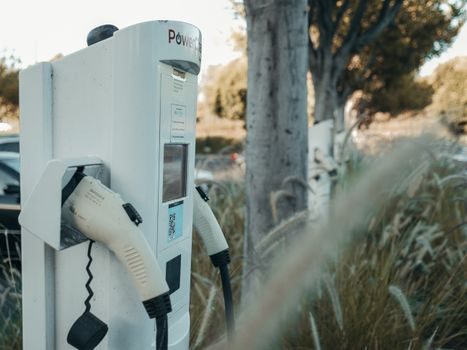
The global electric vehicle range-extender market is projected to grow from USD 839.8 million (2018) to USD 1,679.9 million by 2026 at a 9.0% CAGR [S5]. Asia-Pacific remains the revenue leader, rising from USD 406.6 million (2018) to a projected USD 756.8 million by 2026 at 8.1% CAGR, while North America accelerates faster at 10.6% CAGR to reach USD 342.7 million by 2026 [S5].
Range extenders—small ICE units, fuel-cell APU stacks, or rotary gensets—decouple battery sizing from range anxiety, making them the preferred architecture for light-commercial vehicles, plug-in hybrid SUVs in markets with sparse DC charging, and a residual segment of taxi fleets. The double-digit North American CAGR reflects fleet operators prioritizing total-cost-of-ownership over peak pack capacity, a profile that also overlaps with the NEV taxi market (BEV/PHEV/HEV split across hatchback, sedan, SUV) tracked separately in 2026 commercial-vehicle reports.
Electric Motors and Micro-EV Hardware: Rare-Earth Reduction Is the Engineering Story
EV motor technology in 2026 is defined less by raw volume and more by material strategy: rare-earth reduction, axial-flux topologies, in-wheel architectures, and tighter thermal management are the explicit vectors shaping supplier roadmaps through 2036 [S1]. Cars, micro-EVs, buses, vans, and trucks each carry distinct motor-sizing profiles, which is why granular regional forecasts differentiate unit volumes from kW-rating per vehicle class [S1].
For an industrial B2B reader, the actionable signal is sourcing alignment: rare-earth-light permanent-magnet routes (ferrite-assisted synchronous reluctance, externally-excited synchronous machines) are gaining spec wins, and axial-flux machines are moving from motorsport into premium passenger-EV platforms. Manufacturing flows through EV assembly lines covered in the EV manufacturing process overview, with motor and gearbox sub-assembly integrated near the final marriage station.
Low-Emission Vehicle and E-Bike Adjacencies: Different Curves, Same Tailwind
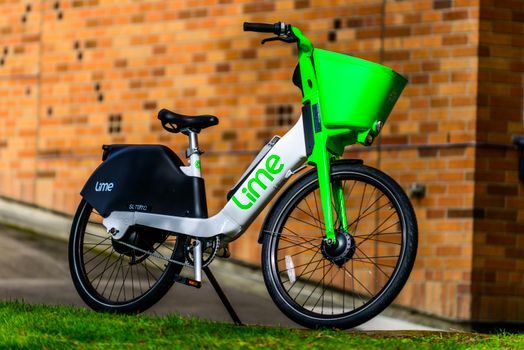
The low-emission vehicle market is segmented by degree of hybridization (mild hybrid, full hybrid, PHEV, BEV, FCEV) and by battery chemistry, with the February 2026 update consolidating competitive and trend analysis [S4]. The electric-bikes market report (January 2026, 150 pages) parses the segment by class (Class-I / II / III pedal-assist cut-offs), motor type (mid-motor vs hub-motor), battery chemistry (Li-ion dominant, with lead-acid and NiMH residual), and application (mountain/trekking, cargo, commuter) [S3].
These adjacent two-wheeler and light-EV markets are the volume floor of the broader electrification wave: a 2026 hub-motor or mid-motor e-bike ships at lower unit price than a 350 kW DC charger stall, but volume multiplies faster. A sourcing engineer should treat them as a single demand signal—Li-ion cell allocation, BLDC motor magnet supply, and BMS industrial valve components all draw from the same upstream pool.
Laser Processing and Manufacturing Capacity: 10% CAGR Through 2033
Laser processing is forecast to grow from USD 30,862.1 million in 2026 to USD 62,075.1 million by 2033, a 10% CAGR, driven by precision manufacturing, cutting and welding in automotive, electronics, aerospace, and medical applications. Within an EV plant, the laser work cells are concentrated at five nodes: battery-tab welding, cell-to-pack laser cleaning, stator hairpin welding, aluminum body-in-white welding, and door/hood hem welding. [S1]
Spec-engineering takeaway: as cell formats migrate from pouch to prismatic to large cylindrical (4680/4695), laser welding parameters must be re-qualified for each new joining geometry, and beam-quality stability (BPP, mode purity) becomes a procurement gate, not a marketing claim. Throughput per laser hour also feeds back into the electric pallet truck flow on the cell-to-pack line, since pallet-move density scales with welding-station cycle time.
Standards, Sourcing, and the Spec Discipline That Actually Matters in 2026
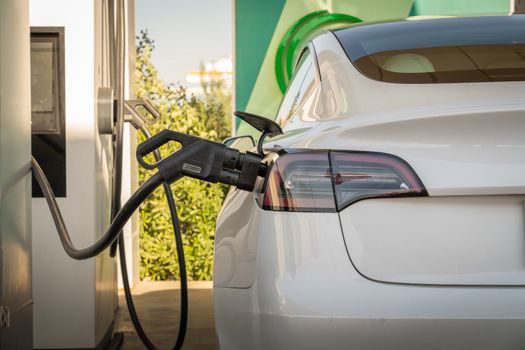
Across the seven sub-markets covered, three procurement disciplines separate 2026 winners from losers: (1) material-grade traceability on EV plastics (resin lot, flame-retardant certificate, recyclate percentage per ISO 14021), (2) hardware certification on chargers (IEC 61851-1 for conductive charging, ISO 15118 for plug-and-charge, IEC 62196 for inlet/outlet), and (3) thermal-management loop integrity on motors and battery packs, where electric actuator and valve pairing determines coolant-flow control resolution. [S2]
Engineers should ignore blended 'EV market' headlines and pull the specific sub-market report that matches the bill of materials: motor forecasts for traction-machine sourcing, plastics forecasts for resin allocation, range-extender forecasts for fleet and light-commercial spec, and charger reports for grid-tie hardware and OCPP backend integration. The converging signal is a double-digit CAGR through the late 2020s across every adjacent layer—chargers (29.3% [S2]), plastics (28.0% [S6]), laser processing (10%), range extenders (9.0% [S5])—with BEV as the volume backbone (38.2% of plastics demand [S6]) and APAC as the revenue anchor.
Next node to track: IDTechEx's 2026-2036 motor forecast refresh, expected to refine axial-flux and rare-earth-light market-share splits across passenger and commercial-EV platforms [S1].