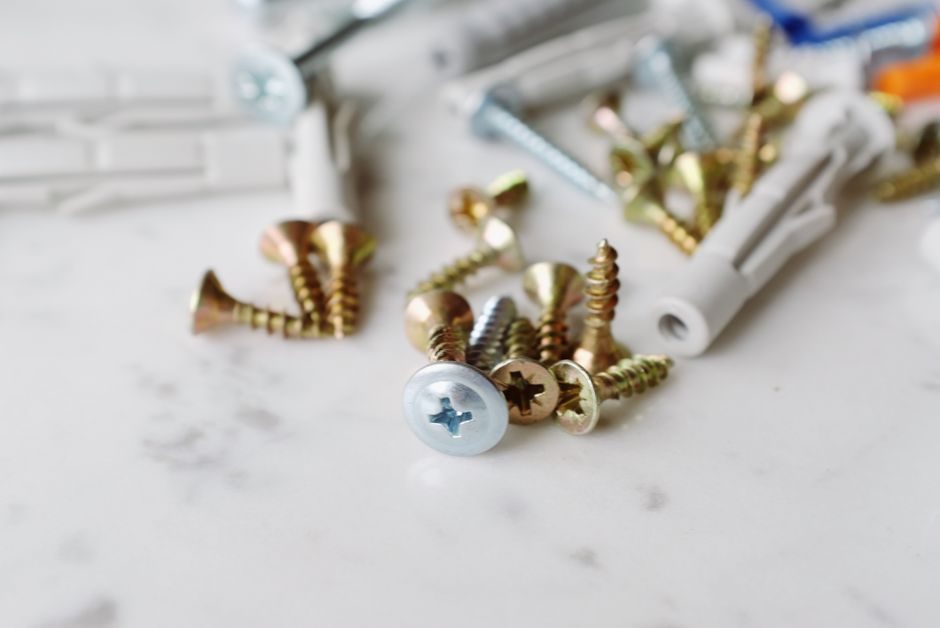
Expansion anchors are post-installed mechanical fasteners that transfer tensile and shear load into concrete or masonry through radial pressure generated when an internal cone, wedge, or expander is driven or torqued against a surrounding sleeve or against the hole wall itself.
Their main advantage is a mature, code-recognised load path at a low unit cost, and their main disadvantage is the dependency on hole diameter, embedment depth, substrate strength, and installation torque.
How Expansion Anchors Generate Load: The Mechanics
When the anchor is set, the cone or wedge is forced outward and locks the sleeve or expansion segment against the hole wall by friction and local bearing. The resulting radial stress at the concrete-hole interface is the direct load-transfer path, which is why expansion anchors are categorised in ICC-ES AC193 and ACI 318 Chapter 17 as "cracked-concrete" or "uncracked-concrete" rated products.
Three mechanics separate the three main families. Wedge anchors (one-piece stud with clip and cone) develop the highest frictional grip and are the most sensitive to concrete cracking. Sleeve anchors (bolt through an expanded sleeve) tolerate softer base materials and hollow masonry, but have lower published shear values. Drop-in anchors (female sleeve set with a setting tool, then threaded) are used where the bolt must be flush or removable, and depend on a clean setting tool stroke to fully expand.
Material and Finish Selection: Zinc, HDG, Stainless, and the Corrosion Trade
Carbon-steel expansion anchors are routinely supplied in zinc plating (≈5-7 µm) for dry interior service, hot-dip galvanised (≈50-85 µm) per ASTM A153 for outdoor or mildly corrosive atmospheres, and 304 or 316 stainless steel for chemical, marine, and wastewater exposure.
Stainless wedge anchors in 316/316L typically carry a 1.5x-2.5x cost premium over zinc-plated equivalents of the same diameter and embedment, with the gap widening for non-standard lengths. For comparison, a 1/2" x 3-3/4" zinc wedge anchor lists around $1-2 per piece in 2025 distribution channels, while the same anchor in 316 stainless lists $4-7 per piece, which materially shifts the TCO calculus on jobs above 500 anchors.
Substrate Map: Where Expansion Anchors Win, Where They Fail
Expansion anchors reach their published capacity in normal-weight concrete ≥ 2,500 psi (≈17.2 MPa), which is why most load tables are anchored to 3,000 psi (≈20.7 MPa) and 4,000 psi (≈27.6 MPa) reference concrete. Below 2,000 psi (≈13.8 MPa), the concrete crushes locally before the anchor reaches design load, and pull-out capacity falls off sharply. [S2]
They are a poor fit for hollow concrete block, soft brick, and aerated autoclaved concrete (AAC), where undercut or chemical anchors usually outperform them. They are also a poor fit for sustained vibratory service, because the radial-pressure mechanism can fret the surrounding concrete over time and walk the anchor loose; in vibrating equipment bases, a different anchor family is normally specified.
Comparison: Wedge vs Sleeve vs Drop-In vs Chemical (Resin)
On four spec criteria, the four common post-installed anchor families rank as follows. Cost per anchor: wedge < sleeve < drop-in < chemical. Cracked-concrete suitability: wedge ≈ chemical > drop-in > sleeve. Edge-distance tolerance: chemical > drop-in > wedge > sleeve. Vibration tolerance: chemical > sleeve ≈ wedge > drop-in. The ranking is a working guide, not a substitute for the project-specific ICC-ES ESR or ETA report.
A 5/8" wedge anchor in 3,000 psi concrete commonly holds 7,000-10,000 lbf (≈31-44 kN) tension, while a 5/8" chemical anchor in the same hole and substrate can reach 12,000-18,000 lbf (≈53-80 kN) where edge distance and embedment are not limiting. That 1.5x-2x capacity gap is the main reason resin anchors have displaced expansion types on bridge and heavy-facade jobs, even though the resin cartridge itself costs $3-8 per hole.
Installation Pitfalls: Hole Diameter, Depth, Torque, and Cleanliness
Most field failures on expansion anchors are not material failures, they are installation failures.
Torque control is the second most common failure path. Wedge and sleeve anchors must be tightened to the manufacturer's listed torque, typically 30-150 ft-lb for 1/2"-3/4" diameters, to fully seat the expansion mechanism. Under-torqued anchors slip; over-torqued anchors in low-strength concrete can crush the base material. Drill bit diameter must match the anchor diameter to within roughly 1/32" (≈0.8 mm) for proper expansion, and a 1/2" anchor installed in a 9/16" hole is the most common single root cause of site pull-out failures logged on industrial work.
Standards, Listings, and What Spec-Writers Should Pin in the Notes Column
For North American structural jobs, expansion anchors are specified against ICC-ES AC193 (mechanical anchors in concrete) and qualified by an ICC-ES ESR report, with design per ACI 318-19 Chapter 17. For European projects, ETA approval per EAD 330232 (mechanical fasteners in concrete) and design per EN 1992-4 (Eurocode 2 Part 4) is the equivalent path, and seismic categories C1 and C2 are explicitly addressed there.
For process-plant and offshore work, NACE MR0175 / ISO 15156 restricts the materials that can sit in H₂S service, which usually forces 316/316L stainless or higher alloys for the anchor body. For detailed substrate selection and drill-size mapping across concrete, brick, and block, the linked drill-size selection guide is the natural follow-up reading; the broader linear guide pros and cons map and the storage cage decision map apply the same spec-first logic to adjacent fastening and material-handling decisions.
Track these signals when qualifying an expansion-anchor product: the published ICC-ES ESR or ETA report must cover the diameter and embedment being specified, the listed torque value must match the field torque wrench, and the substrate compressive strength on the project must be at least 2,500 psi (≈17.2 MPa) for the published capacity tables to be valid.
Spec-level background on the components involved: expansion anchor, chemical anchor, and expansion joint.