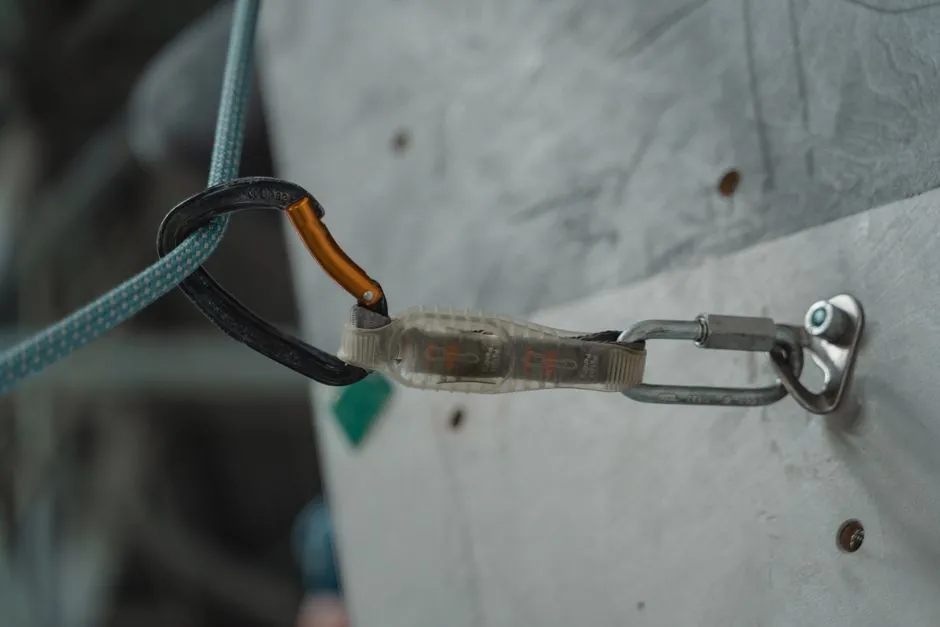
A 1/2 inch wedge anchor set at 65 mm embedment in 25 MPa uncracked concrete holds roughly 8-12 kN tension, and that single number is the starting point for sizing expansion-anchor hold-downs on steel machine base plates [S3]. The same source flags a 0.5 mm drilled-hole oversize as capable of cutting pull-out capacity by 30-40%, which is why base-plate spec sheets almost always call out hole diameter and cleaning procedure as hard requirements, not preferences [S3].
Mechanical expansion anchors are post-installed fasteners that expand or deform inside a pre-drilled hole to grip cured concrete, brick, or block, and that definition covers the wedge, sleeve, and drop-in families used under machinery [S1]. Wedge anchors in particular are categorized by Simpson Strong-Tie field engineers as torque-controlled expansion anchors, and they are listed for column/post baseplates, MEP bracing, and fire-protection pipe supports that see vibration [S2].
How a Wedge Anchor Carries Base-Plate Load
The fastener is a steel stud with a nut and washer on the top end and a formed tapered mandrel on the bottom end, with an expansion clip riding around that taper [S2]. Torquing the nut pulls the stud upward while the clip stays put against the bore wall, and the taper drives the clip outward, converting the applied tension into a friction-locked clamp load between clip and concrete [S3]. Holding strength is friction, not thread-cutting and not adhesive bond, which is why hole diameter, hole cleanliness, and torque value are the three variables that decide whether a base plate actually stays put.
Trubolt wedge anchors from ITW Redhead pair a stainless steel expansion clip with a plated carbon steel or hot-dipped galvanized threaded stud body, a configuration that is the industry default for indoor equipment pads where corrosion is moderate [S4]. The same product line is supplied with the matched nut and washer so the installer does not mix components and undercut the rated clamp load.
Capacity Math: Diameter, Embedment, Concrete Strength
The Firgelli calculator scales the baseline 1/2 inch / 65 mm / 25 MPa case linearly: nominal tension scales with anchor diameter d, embedment h_ef, and the square root of concrete compressive strength f_c, with a derating factor D applied when the drilled hole is oversize [S3]. A clean, on-size hole keeps D at 1.0, while an oversize hole forces D down toward 0.2 as the gap grows, because the expansion clip cannot fully preload the bore wall [S3]. For the expansion anchor specifier, that means the same anchor can lose a third of its working load if the drill walks even half a millimetre over the bit rating.
ITW Redhead's wedge-anchor selection guide uses a plated carbon-steel body with a stainless expansion clip as the default material combination, and lists hot-dipped galvanized as the upgrade for harsher environments [S4]. The guide frames the wedge anchor as the high-capacity end of the mechanical-expansion family, sitting above sleeve anchors for general construction and well above light-duty single-expansion shields used in soft masonry [S6].
Base-Plate Geometry: Edge Distance, Spacing, and Hole Prep

Because the wedge clip exerts an outward radial force into the concrete, expansion anchors require a larger minimum edge distance and spacing than screw anchors of the same diameter [S2]. Simpson Strong-Tie's comparison puts the Strong-Bolt 2 wedge anchor at the conservative end of that requirement, while the Titen HD screw anchor can be placed closer to a free edge thanks to its thread-interlock mechanism [S2]. For machine base plates, that usually means the anchor layout cannot be a simple copy of an interior slab detail, and the equipment drawing should call out the wedge anchor's edge distance explicitly.
Hole preparation is non-negotiable: a hammer drill with a carbide-tipped bit matched to the anchor diameter is required for cured concrete, and the hole must be cleaned with a wire brush plus compressed air or vacuum before the anchor drops in [S1]. Confast's single-expansion anchor installation guide notes the same cleaning sequence and extends the substrate list to brick, block, and soft masonry, which is relevant for older plant floors where the equipment pad was poured against a CMU wall [S6].
Wedge vs. Sleeve vs. Drop-In vs. Screw: When to Pick Each
Wedge anchors are the high-strength, vibration-rated choice for column/post baseplates and MEP bracing, sleeve anchors cover general construction and electrical/plumbing fixtures where shear capacity matters more than tension, and drop-in anchors are the internal-thread option for overhead equipment hung from ceilings [S1][S2]. Screw anchors, by contrast, derive holding strength from thread interlock with the concrete, are tested to ACI 355.2 and ICC-ES AC193 for cracked and uncracked concrete, and can be removed, which wedge anchors cannot [S2].
For a heavy machine base plate that is grouted and sees continuous vibration, the wedge anchor is the right call because it is listed for vibration service and carries the highest tension per diameter [S2]. For a base plate that may need to be relocated during a layout change, a screw anchor saves the slab from spalling during removal, at the cost of a smaller minimum edge distance and a different load-transfer mechanism [S2]. The Huyett quick-reference table captures the same split from a distributor's view, listing wedge anchors for construction, seismic, and wind, sleeve anchors for construction/electrical/plumbing, and drop-ins for overhead systems [S1].
Material and Coatings for Plant Environments
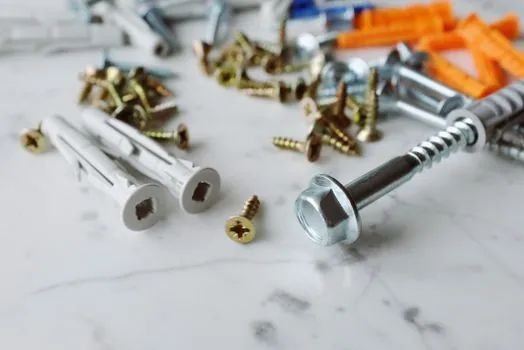
Carbon steel with zinc plating is the budget default, hot-dipped galvanizing adds a thicker sacrificial layer for outdoor or washdown areas, and stainless steel bodies with stainless expansion clips are specified for corrosive or food-grade plants [S1][S4]. The Trubolt Wedge datasheet confirms the clip is stainless even on the plated carbon-steel body, which protects the moving interface that actually generates the friction lock [S4]. Mixing a zinc-plated body with a stainless nut, or a galvanized body with a zinc-plated nut, is a common field shortcut that voids the coating system and should be written into the base-plate installation drawing as a single BOM line.
Failure Modes and Field Inspection Cues
The most common field failure is concrete breakout at the edge, driven by an edge distance that was sized for a screw anchor and then quietly switched to a wedge anchor [S2]. The second is pull-out from an oversized or uncleaned hole, which the calculator captures with its 0.2-1.0 derating factor D and the 30-40% pull-out penalty at 0.5 mm oversize [S3]. The third is loss of torque preload from a clip that was damaged during installation, which is why the wedge anchor is set once to the specified torque and never re-torqued after the equipment has been running. Anchor behavior on heavy equipment mounts, including 2 inch size selection and vibration loading, is covered separately in a related note on 2 inch expansion anchor use frequency in heavy equipment mounts.
Specifying an expansion anchor under a machine base plate is therefore a four-input decision: anchor diameter, embedment depth, edge distance, and hole tolerance, with concrete strength f_c and base-plate stiffness as the secondary inputs. A 1/2 inch wedge at 65 mm in 25 MPa concrete gives the 8-12 kN working tension baseline [S3], the wedge family's torque-controlled expansion mechanism is what carries vibration and cyclic shear [S2], and the hole-diameter and edge-distance rules from the same comparison are what keep that capacity from collapsing in service.
Component reference pages worth checking: mold base, and chemical anchor.