
An equal-leg angle has two legs of identical length meeting at 90°, so its section properties are symmetric about the geometric centroid; an unequal-leg angle has one longer leg, shifting the centroid toward that leg and concentrating capacity along one principal axis [S5]. The standard designation reflects this directly: a 2½×2×¼ unequal angle is 2½ in deep, 2 in wide, ¼ in thick, while an equal L4×4×⅜ is 4 in on both legs at ⅜ in thick [S3][S9]. This is the entire engineering decision in one line: do you need balanced biaxial stiffness, or do you want to spend steel only where the load actually lives?
Commercial sizes in ASTM A36 span roughly 1×0.625×0.125 in at 0.641 lb/ft on the small end, up to 8×6×1.000 in at 44.219 lb/ft on the heavy end, with intermediate unequal combinations such as 5×3.5×0.750 (19.778 lb/ft) and 6×4×0.500 (16.142 lb/ft) covering the bulk of structural-bracket and framing demand [S2]. Stainless variants 304/304L and 316/316L track the same geometry in inch-series sizes from 2×1×¼ (2.40 lb/ft) through 9×4×½ (21.41 lb/ft), and duplex 2205/lean duplex 2201 are produced by laser fusion when the size exceeds standard mill stock [S4].
Geometry, Designation, and What the Section Properties Actually Do
An unequal angle is designated with the longer leg first, then the shorter leg, then thickness; a 6×4×½ is 6 in on the long leg, 4 in on the short leg, ½ in thick [S3]. This convention is the rule across AISC, A36 structural-steel catalogs, and the British BS 5950 unequal-leg tables, and it is the first place procurement errors creep in when the callout is reversed [S2][S8]. For unequal angles of 6 lb/ft or less, the long leg controls the length tolerance of each leg per Penn Stainless, which is the same logic that drives the AISC unequal-leg table organizing dimensions by the long-leg nominal size [S4].
The asymmetry produces two distinct radii of gyration, rx and ry, with the larger value along the leg that runs farther from the centroid; this is precisely why unequal angles show up on the strong axis of a welded connection where the load path is one-directional, and why equal angles are picked when the connection sees reversing or biaxial load [S5][S6]. On a standard A36 4×3.5×½ unequal angle at 11.871 lb/ft, the area is 3.488 in² and the section properties table separates Ix, Iy, Sx, Sy, and rx, ry to reflect that asymmetric behavior; the AISC unequal-leg table from 1.000×0.625×0.125 (0.188 in²) up to 8×6×1.000 (12.993 in²) is the canonical reference for design [S2][S9].
When to Use Equal vs Unequal: A 4-Criterion Decision Matrix
Selection reduces to four engineering criteria: load symmetry, connection geometry, material availability, and weight budget. On load symmetry, equal angles win whenever the connection sees comparable demand on both principal axes; roof trusses, symmetrical bracing in towers, and frames where the gusset is centered on the centroid all favor equal legs, with typical designations such as 50×50×5 mm mild steel [S5]. On connection geometry, unequal angles are the right answer when the gusset or attached plate has a fixed offset and the longer leg has to span that offset while the shorter leg lands on the supporting member; a 100×75×8 mm unequal is the textbook example for edge reinforcement of beams and column-face connections [S5].
On material availability, equal angles are stocked deeper across mild, galvanized, and stainless, while unequal angles outside the common 6×4, 5×3, and 4×3 families frequently move to made-to-order with longer lead times, especially in duplex 2205 where laser fusion is the only route for non-standard sizes [S4]. On weight budget, for the same mass per foot a 6×4×0.500 unequal (16.142 lb/ft, 4.743 in²) puts more area on the long-leg axis than an L6×6×0.375 equal at similar weight, which is exactly the trade structural engineers exploit when one direction is the design driver [S2][S9]. The decision in one sentence: if the load is bidirectional or unknown in ratio, specify equal; if the load is reliably unidirectional or the connection geometry is offset, specify unequal.
Size, Weight, and Material Reference Data

The AISC unequal-leg table covers thicknesses from 0.125 in up to 1.000 in and long-leg sizes from 1.000 in to 9.000 in, with weights ranging 0.641 lb/ft to 44.219 lb/ft and cross-sectional areas 0.188 in² to 12.993 in² [S2]. Common mid-range workhorses include 3×2×0.250 at 4.061 lb/ft (1.193 in²), 4×3×0.250 at 5.754 lb/ft (1.691 in²), 5×3.5×0.375 at 10.366 lb/ft (3.046 in²), and 6×4×0.500 at 16.142 lb/ft (4.743 in²); these same sizes are mirrored in the Chatham Steel A36 structural-angle table used in U.S. fabrication shops [S2][S9].
For stainless 304/304L and 316/316L unequal angles, the available inch-series sizes run 2×1×¼ (2.40 lb/ft) through 9×4×½ (21.41 lb/ft), with thicknesses of 3/16, ¼, 3/8, and ½ in depending on leg size, and duplex 2205 follows the same dimension set when laser-fused [S4]. A36 hot-rolled unequal angles carry the characteristic blue-grey mill scale and are sold for structural support, trailer fabrication, bracing, and brackets, while equal angles in the same grade cover the same use cases plus aesthetic applications where uniform appearance is required [S1][S5]. The British BS 5950 unequal-leg table (L section) cross-references to the back-to-back equal and back-to-back unequal compound sections for built-up members, which is the route designers take when a single unequal angle cannot supply the required section modulus [S8].
Applications, Failure Modes, and Sourcing Constraints
Equal angles are specified for roof trusses, symmetrical bracing, frames, racks, shelving, bridges, towers, and concrete-frame reinforcement because their matched legs carry identical moments about both centroidal axes; they are also used in decorative steelwork where the visual symmetry matters [S5]. Unequal angles are specified for shipbuilding, heavy-engineering projects, edge reinforcement of beams and columns, platforms, walkways, plant structures, and any machinery base where one leg bolts to a thicker support and the other leg carries a directional load [S5][S6]. Coremark's hot-rolled unequal inventory is positioned for trailer cross-members, bracing, and bracketry, which is consistent with the 3×2, 4×3, and 5×3 families that dominate North American light-fabrication catalogs [S1].
Failure modes to watch: unequal angles buckle about the weak principal axis first, so an unbraced long-leg compression member without intermediate lateral support will fail well below the published Ix value; specifying an unequal angle for a column where the designer assumed equal-axis behavior is the most common procurement-driven redesign. Sourcing constraints: standard equal angles ship from mill stock in the full thickness range, while unequal angles outside the canonical 6×4, 5×3, 4×3, and 8×4 families typically require a mill run with a 4-8 week lead time, and stainless or duplex unequal angles over 6 in long-leg often need laser fusion rather than hot rolling [S4][S7]. Engineers specifying unequal stainless in duplex 2205 should confirm laser-fused manufacture explicitly, since hot-rolled duplex unequal stock is not a standard catalog item.
Standards, Design Codes, and Cross-Reference Notes
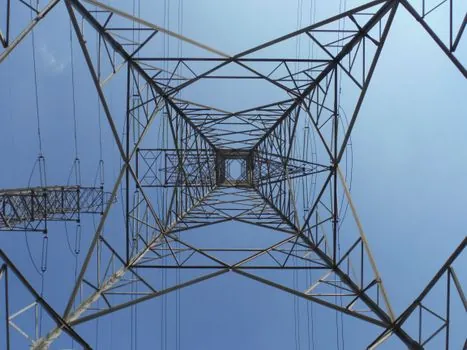
ASTM A36 is the dominant mild-steel grade for both equal and unequal hot-rolled angles in U.S. practice, with the AISC steel-construction manual providing the canonical unequal-leg dimension and weight table from 1.000×0.625×0.125 through 8×6×1.000 in [S2][S9]. For U.K. and Commonwealth projects, BS 5950 governs the unequal-leg (L) section properties published in the Steel-for-Life Blue Book, with parallel tables for equal legs and back-to-back compound sections used when a single angle is inadequate [S8]. Stainless unequal angles in 304/304L, 316/316L, and duplex 2205 are produced to ASTM A276/A479 chemistry with dimensional tolerances per ASTM A484, and Penn Stainless publishes both the inch-series table and the laser-fusion capability for sizes outside standard mill ranges [S4].
For a deeper dive into how a similar geometric-versus-functional trade plays out in a different product family, see this comparison of EN 1906 grade 3 and grade 4 lever handles, which uses the same criterion-based selection logic for door hardware that this article applies to structural angles. Procurement teams pairing unequal angles with gusset-plate connections will also find the full-face vs ring gasket spec map useful as a parallel example of choosing between symmetric and asymmetric sealing geometries under bolt preload. Engineers who need background on the base material itself can review the steel section properties reference and the carbon steel grade overview to anchor material-property assumptions before running an A36 unequal-angle check.
Trackable next signals for spec updates: AISC manual revisions that add new unequal-leg sizes above 9×4 in duplex or stainless grades; expansion of laser-fusion stock programs at major stainless service centers to cover 8×6 and 9×4 as catalog rather than made-to-order items; any BS 5950/EN 10056-2 update that reclassifies leg-length tolerances for unequal angles under 6 lb/ft, since the 6 lb/ft threshold currently driving tolerance treatment in stainless catalogs is a vendor-published rule, not a harmonized code value [S4][S8].
The underlying component specifications are covered under angle grinder.