
Stainless corrugated metal expansion joints in 304/321/316L grades cluster at a US$5-20 per piece FOB export price band on Made-in-China.com, while EPDM/rubber roofing expansion joints price at US$20-80 per meter for civil construction [S1][S6]. Across the 2026 catalog the dominant constructions are wire-braided metallic bellows for high-pressure process piping, universal metal compensators for external-pressure service, and rubber or PTFE-lined joints for building and chemical ducts [S1][S2][S5].
An expansion joint — sometimes called 伸缩接头, 补偿节 or expansion bellows in bilingual spec sheets — is an assembly designed to safely absorb heat-induced expansion and contraction of pipe, duct or vessel runs while containing the internal pressure [S4]. Procurement-grade decisions are governed by EJMA methodology for movement calculation, ASME B31.3 for process piping and ASME B31.1 for power piping, with material conformance to ASTM A240 (304/316L plate) and ASTM A312 (316L pipe) the most common cert trail. See the expansion joint selection criteria reference for the full movement/material band.
Movement Capacity: The EJMA Triad of Axial, Lateral and Angular
EJMA's 10th Edition methodology decomposes bellows movement into three independent vectors: axial compression/extension, lateral (parallel) offset, and angular rotation in degrees, and the published allowable for any one vector is reduced when two or three act simultaneously [S3]. US Bellows, an EJMA Standards Subscriber, publishes per-design tables mapping cycle life (typically 1000 to 10000 full cycles) against combined movement ratios, which is the figure a buyer should demand on every data sheet [S3].
A practical rule: a single-ply 304 bellows rated for ±25 mm axial movement typically derates to roughly ±12-15 mm when 50 mm of lateral offset is imposed at the same time. A two-ply or heavier wall 316L bellows of the same nominal diameter moves the trade the other way — more cycles at the same amplitude, or higher pressure class for the same cycle count. For unanchored runs the linear guide article explains why single-anchor points mis-locate lateral growth and overstress the nearest joint.
Material Selection: 304, 321, 316L and the Process Fluid Map
304 stainless is the baseline for clean water, air and low-chloride service; 321 (stabilised with titanium) is the upgrade for sustained service between 400-600 °C where 304 suffers sensitisation and intergranular corrosion; 316L (low-carbon, molybdenum-bearing) is the default for chloride-bearing, acidic or marine fluids, and is the only one of the three that should be quoted for seawater, demin water with residual chloramines, or pharmaceutical CIP loops [S1][S2].
Material density, weight and price diverge sharply. A 316L corrugated bellows in DN100 nominal bore typically carries a 15-25% premium over an equivalent 304 unit at the same pressure class, and 321 sits between them. For plant-side context on cost curves and lead time, the plastic pipe vs stainless steel pipe spec map lays out the same trade-off at the line-pipe level. Buyers in chemical, offshore or pharmaceutical service should require EN 10204 3.1 mill cert and a ferrite content report for 316L welds; 304 orders below DN50 rarely justify 3.2 third-party witnessing.
Pressure Class, Braid and End-Fit Geometry

Standard catalogue pressure classes on the Made-in-China export band are PN16 (1.6 MPa) for unbrazed single-bellows, PN25 (2.5 MPa) for single-braid 304, PN40 (4.0 MPa) for double-braid 316L, and PN64+ for multi-ply 321 designs [S1]. Each pressure step adds a stainless braid layer, increases the mean diameter and roughly doubles the unit mass on the same nominal size.
End connections are flanged (ANSI B16.5 Class 150/300, DIN PN16/PN25), welded-butt (Sch 40/Sch 80 ends to match ASME B36.10), threaded NPT for sizes up to DN50, and hydraulic bulkhead thread for hydraulic-pack applications. The Made-in-China "Metric External Thread Through-Plate" listing at M14×1.5 and M18×1.5 at US$0.50/piece is the low-pressure end of this geometry range, and confirms that hydraulic-pack expansion joints occupy a separate, lower-cost sub-segment from process-piping units [S5]. Flanged-to-weld adapters — sometimes called expansion anchors in bid documents — are sold separately and must be ordered to the same pressure class as the joint itself, not to the line pipe class.
Application Segment Pricing: Process, Hydraulic and Roofing Bands
Process-piping stainless corrugated joints: US$5-20 per piece for DN25-DN100 single- or double-braid 304/321/316L [S1]. Universal metal compensators and external-pressure bellows for HVAC and low-pressure steam: roughly US$1.50-2.00 per piece at 10-piece MOQ, with thread or flange ends [S5]. Rubber/EPDM roofing expansion joints for plaza and car-park waterproofing: US$20-80 per meter, black/grey colour, 60 Shore A hardness, CE/ISO certified, pallet-packed in PE film [S6].
Hydraulic-pack threaded joints in the M14-M18 size sit below US$1 per piece and are not interchangeable with the process segment because their pressure rating is below 1.0 MPa and their elastomer seal is not specified for thermal cycling. For cross-segment sourcing context the seamless steel pipe selection guide is the upstream line-pipe reference that determines what bore, schedule and end-prep the joint must match.
Options Comparison: Bellows, Slip, Bellows-Rubber and Universal
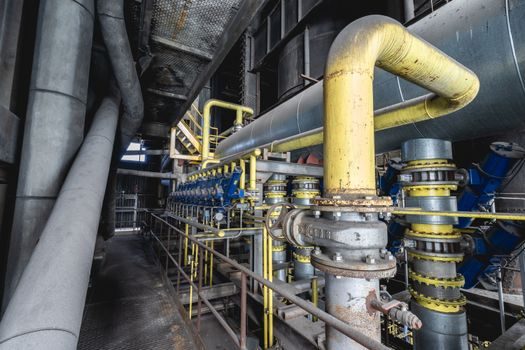
Four architectures cover ~95% of industrial and civil expansion-joint orders in 2026. (1) Metallic corrugated bellows: highest temperature (up to 600 °C on 321), highest pressure (PN64+), longest cycle life when designed to EJMA. (2) Slip-type packed joints: cheap, high axial travel, but require routine repacking and are banned on flammable or toxic services per most operator HSE standards. (3) Rubber/EPDM with fabric reinforcement: best chemical resistance for acidic condensate, max ~120 °C, low cost per meter. (4) Universal metal compensators: combine bellows and tie-rod hardware to absorb large lateral movement in two or three planes, used on district heating and large-diameter exhaust ducts [S2][S3][S5][S6].
Decision matrix: high temperature + high pressure + clean fluid → metallic bellows; long axial run + clean fluid + cost-sensitive → slip joint (where allowed); acid/chloride + low pressure + low temperature → rubber/EPDM; large lateral movement at moderate pressure → universal compensator. The crossed-roller guide article covers the kinematics behind multi-plane movement calculation when the spec requires simultaneous X, Y and theta absorption.
Standards, Documentation and Common Failure Modes
Every process-piping data sheet should carry the EJMA calculation sheet, ASME B31.3 or B31.1 design code reference, material certs to EN 10204 3.1, hydrostatic test pressure (typically 1.5× design), and the bellows cycle-life figure. The 10-year operating-cost penalty for skipping the EJMA sheet usually shows up as bellows fatigue cracking within 18-36 months on hot, high-cycle service. [S1]
The three most common field failures are: (a) anchor failure — the pipe guide is missing, so the joint is asked to absorb movement it was not designed for; (b) cycle-life miscalculation — the design assumed 1000 cycles but the service delivers 10000; (c) wrong material — 304 in chloride service pitted through within 12 months. Each of these is detectable at the bid stage by demanding the EJMA sheet, the expansion joint cycle rating, and a material cert aligned to the actual process fluid, not to a generic "stainless" call-out. The universal joint reference is the closest encyclopedia neighbour for designers cross-checking angular movement on shaft-driven equipment interfaces.
Trackable 2026 signals for buyers: the EJMA Standards Subscriber roster — US Bellows' membership runs through 31 December 2026 — is the cleanest public indicator of which manufacturers are still publishing EJMA-conformant data sheets [S3].