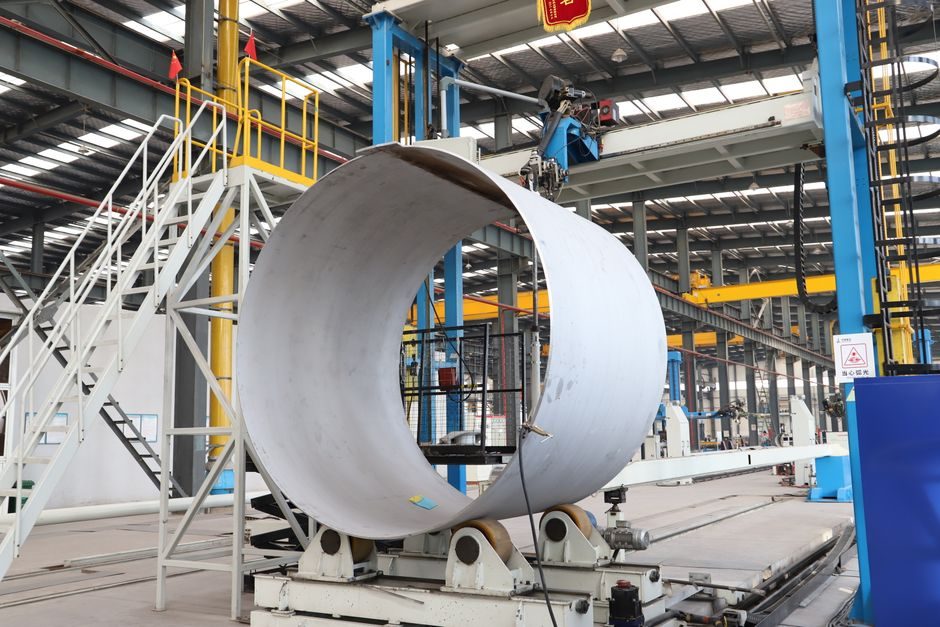
Specifying seamless steel pipe starts with the service envelope, not the price sheet: an SMLS pipe that is fit-for-purpose for a 480 °C boiler feedline is almost always wrong for a sour-service linepipe, because the metallurgical recipe, NDT regime and dimensional tolerance bands differ. Procurement engineers who lock the standard first (API 5L PSL2 vs ASTM A106 Gr.B vs DIN 2391-1 St 35) typically cut 6-8 weeks off the RFQ cycle versus those who negotiate on nominal diameter and wall alone [S1][S2][S4].
Across 2026 supply chains, mills in China, India and Eastern Europe are the dominant stockists; one Hunan-based manufacturer lists OCTG, tubing, casing, drill pipe, ERW, LSAW and SSAW alongside its SMLS range to a global buyer base [S6], while an Indian stockist carries approximately 500 t of stainless SMLS in size range 1/2″ NB to 12″ NB [S8]. That sourcing concentration is why raw-material, MTC-traceability and pre-shipment NDT clauses now drive selection as much as the basic OD × wall.
Selection Criteria 1 — Material Grade and Mechanical Floor
Carbon-steel grades Q195, Q235, S235JRH, S275JOH, S275J2H, S355JRH, S355J0H and S355K2H are the workhorses for general structural and low-pressure fluid service in 1/2″-24″ SMLS sizes, with both seamless and welded lines typically offered from the same EN 10025 family [S5]. For higher temperature or pressure ratings, ASTM A106 Gr.B/C and ASTM A213/A519 (the latter also covers mechanical tubing) are the cross-reference points most Chinese mills quote on a single MTC, with the pipe formed by drawing a solid billet over a piercing rod rather than welding [S4].
Stainless SMLS — SS 304, SS 321, SS 310S and SS 316 — sits in a separate pricing tier; Indian ex-works for SS 304 has been quoted at roughly INR 190/kg in mid-2026 listings, with one stockist claiming a 4 % or better price advantage versus comparable domestic and import offers [S8]. Procurement should treat any quote with a delta greater than 8-10 % below the mill list as a flag for grade-mix or NDT shortcut, not a genuine discount. Austenitic 304/316 is selected for corrosion duty, not for pressure rating alone.
Selection Criteria 2 — Governing Standard and Test Regime
Four standards cover the majority of 2026 SMLS procurement: API 5L for linepipe (PSL1 or PSL2 with mandatory CEq limits and pipe number traceability), ASTM A106/A53 for high-temperature and general service, ASTM A213/A519 for boiler and mechanical tubing, and DIN 2391-1 for precision seamless tubes used in hydraulic, pneumatic and automotive applications [S2][S4]. Each of these ties back to a different hydrostatic-test pressure formula and a different NDT default (typically ultrasonic + eddy-current on SMLS versus radiographic on some welded equivalents).
Standards stack rather than overlap in a well-written spec: a sour-service linepipe will commonly invoke API 5L PSL2 plus Annex H or Annex K (depending on revision), NACE MR0175 for SSC/HIC resistance, and ISO 15156 for material selection in H₂S-containing environments; a precision hydraulic tube cites DIN 2391-1 for dimensions plus DIN 2391-2 for the delivery technical condition, and may add ISO 4394 for fitting compatibility [S2]. Specifying one standard and one test method, then leaving the rest to the mill, is the single most common cause of re-inspection costs on SMLS RFQs.
Selection Criteria 3 — Size, Tolerance and Dimensional Band
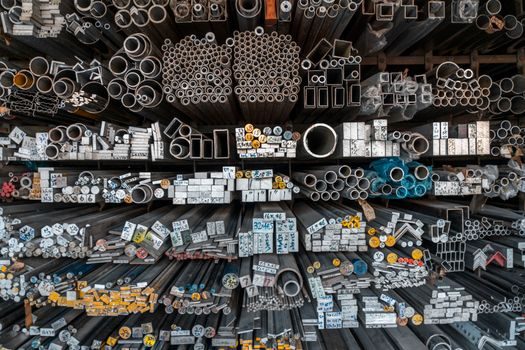
For precision seamless tubes to DIN 2391, OD tolerance bands are typically tighter than ±1 % of nominal, with wall tolerance held to ±10 % or better depending on the steel grade and delivery condition (cold-drawn versus normalized) [S2]. Boiler tubes to ASTM A213 sit in a similar but not identical band; linepipe to API 5L allows a wider OD tolerance on the body but a strict ovality limit at the pipe ends to keep the bevelling within the field-weld prep envelope. A steel pipe RFQ that names only a nominal DN and a schedule (e.g. Sch 40, Sch 80, XXS) without naming the standard is, in practice, requesting whichever tolerance the cheapest mill happens to hold.
Procurement should lock three numbers, not one: OD tolerance, wall tolerance, and minimum length per piece (random 4-7 m, double-random 7-13 m, or cut-to-length). For 1/2″ NB to 12″ NB stainless SMLS stocked by Indian suppliers, single-random lengths of 6 m are the most common ex-stock offering, and any length tolerance looser than ±25 mm usually means the mill is also loose on straightness [S8].
Selection Criteria 4 — Service Fluid, Temperature and Corrosion Envelope
Seamless pipe is the default for oil, gas, water and low-pressure liquid delivery; DIN 2391 precision tubes are typically the second call-out inside machinery-manufacturing hydraulic circuits [S2]. For OCTG, casing, tubing and drill-pipe duties the seamless route is essentially mandatory because of the internal pressure plus external collapse plus axial tensile load combination, and dedicated OCTG manufacturers in Hunan and Hebei offer the full API 5CT grade range (J55, K55, N80, L80, P110) alongside their linepipe inventory [S6][S7].
For chemical, refinery and offshore service, material selection moves up the corrosion ladder: carbon steel A106 Gr.B for general hydrocarbon, A333 Gr.6 for low-temperature, A335 P11/P22/P91 for elevated-temperature creep service, and stainless 304L/316L/321/310S for acidic or chloride-bearing media. Selection should be driven by the most aggressive expected condition during the design life (start-up upset, depressurisation, hydrotest fluid hold), not by the normal-operating steady state. A pipe fitting bolted onto the wrong parent pipe is the most expensive way to learn this lesson.
Selection Criteria 5 — End-Use Sector and Application Match
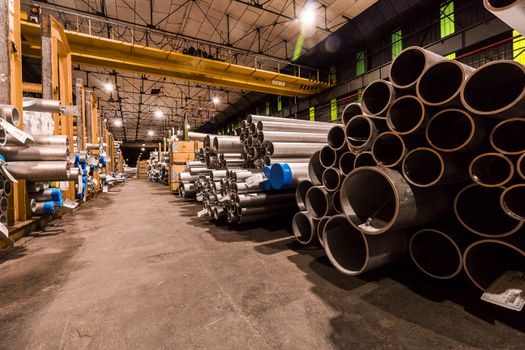
SMLS pipe breaks into six application buckets in 2026: (1) linepipe for oil and gas transmission (API 5L); (2) process pipe for refineries and petrochemical plants (ASTM A106, A335); (3) boiler and superheater tubes (ASTM A192, A213); (4) mechanical and structural tubing (ASTM A519, EN 10297); (5) precision hydraulic and pneumatic tubes (DIN 2391, EN 10305); (6) OCTG tubing, casing and drill pipe (API 5CT) [S2][S4][S6]. Each bucket has its own dominant standard, its own NDT default and its own third-party-inspection scope; cross-applying a linepipe MTC to a boiler-tube purchase is one of the more common RFQ errors.
Manufacturer specialisation matters: a mill running 30 years on SMLS plus pipe fittings and exporting to 100+ countries will typically hold more API 5L/5CT monogrammed product than a general stockist, while a precision-tube mill running DIN 2391 cold-drawing lines will be the cheaper source for sub-100 mm OD hydraulic tubes [S7]. The trade-off is usually MOQ and lead-time, not piece price. A steel-plastic composite pipe alternative should be considered for buried water lines where internal corrosion is the dominant failure mode and the operating temperature is below 60 °C.
Selection Criteria 6 — Sourcing, MOQ, MTC and Lead-Time
Stockists carrying 500 t of stainless SMLS across 1/2″-12″ NB can ship 1-3 container loads in 2-4 weeks versus 8-12 weeks for an indented mill order [S8]. ISO 9001:2008 / ISO 9001:2015 certification at the mill is a baseline, not a differentiator — virtually every exporter in the 2026 SMLS catalogue holds one [S3][S6].
Trackable signals to monitor over the next 90 days: API 5L PSL2 Annex H/K revision cycles (sour-service linepipe), ISO 15156 part-restatement cadence, and mill list-price moves on SS 304/316 in INR and CNY. A practical reading of current data is that a buyer who locks grade, standard, tolerance, test regime and inspection scope on the RFQ, then negotiates price last, will land 6-10 % under the price achieved by buyers who lead with diameter and wall — the same pneumatic tubing logic applies: spec first, supplier second. For buyers who also need load-handling spec discipline, the gantry crane selection map follows the same six-criteria pattern.