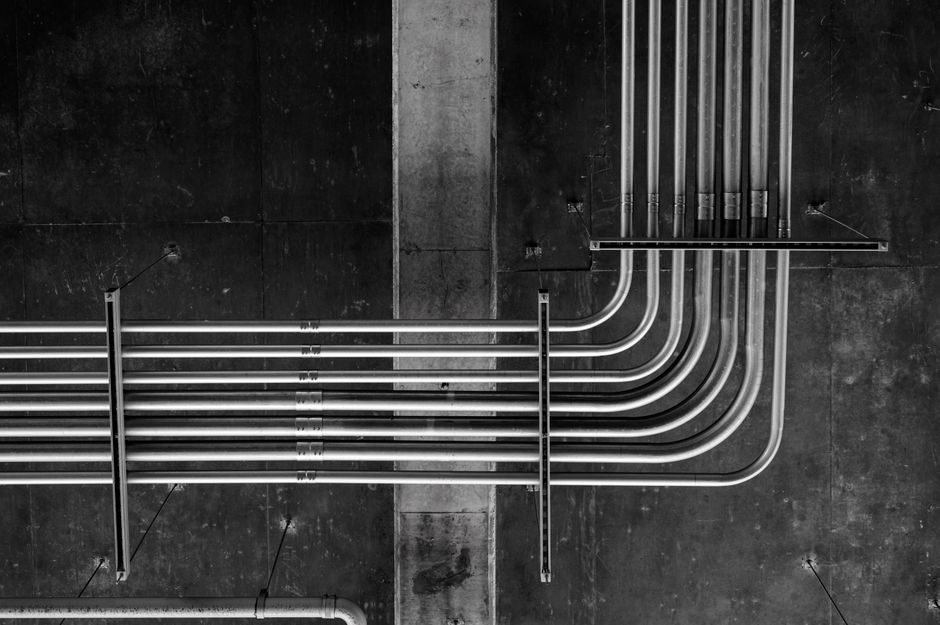
Specifying pipe in 2026 comes down to four numbers — operating temperature, internal pressure, fluid chemistry, and jointing method — and stainless steel pipe (ASTM A312/A213, OD 3-2500 mm, WT 1.0-150 mm, lengths 5.8-12 m) is the default above ~95 °C and in chloride or chemical service, while plastic pipe (PE, PPR, PVC, PEX, PB) is the default for cold potable, drainage and buried utility runs below 60 °C [S6].
This map covers the two material families in parallel — common standards, pressure-temperature ratings, joining methods, and a 2026 sourcing reality where seamless stainless runs roughly US$520-900/ton FOB China (Inconel 617 SS square pipe US$800-900/ton) and stainless moulds for plastic-pipe extrusion tooling sit in a US$500-50,000/set band [S4]. Engineering selection, not unit price, drives the right pick.
Material Definition and Governing Standards
Stainless steel pipe in process and building service is governed by ASTM A312 (seamless and welded austenitic), ASTM A213 (seamless ferritic/austenitic boiler/heat-exchanger), ASTM A269 (seamless and welded austenitic for general low/high temp service), ASTM A778 (welded, unannealed) and ASTM A789 (duplex), with DIN 17456/17457 and EN 10216 as the European equivalents; austenitic 304/316 and duplex 2205 cover roughly 90% of installed tonnage in chemical, food and marine service [S6].
Plastic pipe systems are split by resin: PE80/PE100 (ISO 4427 water, ISO 4437 gas), PPR (ISO 15874 hot/cold, DIN 8077/8078), PVC-U (ISO 1452 pressure, EN 1329 soil), CPVC (ASTM F441 hot water), PEX (ISO 15875), and PB (ISO 15876). Stainless screwed fittings to ASTM A351 CF8/CF8M are specified in 1/8" to 4" sizes against ANSI, DIN, BS threads, and are the common transition between stainless pipe runs and plastic systems where a metal termination is needed [S2].
Pressure-Temperature Operating Envelope
The hard dividing line is the plastic ceiling: PPR is rated to ~95 °C continuous at 1.0 MPa, CPVC to ~93 °C at 0.7 MPa, PE100 water to 60 °C at 1.6 MPa SDR 11, and PVC-U pressure pipe tops out near 60 °C. Stainless 304/316 seamless to ASTM A312 retains full pressure rating from cryogenic (-196 °C LNG) through 400 °C, and 321/347H stabilised grades reach 800 °C in fired-heater and superheater service — an envelope no thermoplastic approaches [S6].
The same divide shows in pressure: PN20 PPR (20 bar at 20 °C) derates to PN8 at 70 °C; PE100 SDR 11 holds 16 bar at 20 °C but drops below 6 bar at 60 °C. Austenitic stainless A312 SMLS Schedule 40S 2" carries roughly 150 psi at 200 °C with a 1.6 mm wall — a level plastic pipe cannot reach at any temperature without transitioning to steel-reinforced thermoplastics. For any line that sees steam, boiler make-up, glycol loops, or hot-oil circuits above 80 °C, stainless or carbon steel is the only compliant option; the relevant reference case on plastic-side hot/cold design is the Plastic Pipe Selection Criteria: Five Gates, Four Resin Bands, One Sourcing Map guide.
Corrosion, Chemistry and Hygiene Behaviour
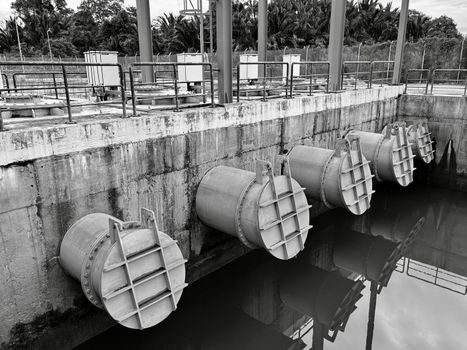
316L stainless with 2-3% Mo handles chloride service to roughly 200-1000 ppm Cl⁻ at ambient temperature depending on pH and residual free chlorine; above the pitting/crevice threshold the duplex 2205 (3% Mo, PREN ≈ 35) or super-austenitic 254 SMO (6% Mo, PREN ≈ 43) is specified. Five-star-hotel potable design has shifted from copper to stainless in chloride-affected regions precisely because 304/316 does not leach copper or lead at the rates seen in Cu-DHP systems — a comparison that has been documented in the copper-vs-stainless literature since the late 2000s [S5].
Plastic pipe is chemically inert to most mineral acids, alkalis and salts within its temperature window, which is why PE100 dominates buried water, sewer force mains and methane digester lines, and PPR/Fusiolen PP-R is the default hot/cold riser in residential and hotel plumbing. The limitation is permeation and disinfection by-products: PE and PEX transmit hydrocarbons and chlorinated solvents by molecular diffusion, and PVC-U is attacked by aromatic solvents and strong oxidisers. Where the line carries anything above trace hydrocarbons, or where the spec demands zero permeation, stainless is the safer call; a parallel pressure-temperature-corrosion matrix for steel-side procurement sits in the Seamless Steel Pipe Selection: Six-Criteria Spec Map for 2026 Procurement article.
Joining, Installation and Field Fabrication
Stainless pipe is joined by orbital TIG autogenous welding (most common in 1/2" to 24" sanitary), threaded NPT/BSP screwed fittings in 1/8" to 4" (ASTM A351 CF8/CF8M), socket-weld and butt-weld flanges, plus grooved couplings for fire-service mains. Plastic pipe is heat-fused: butt-fusion for PE80/PE100 (ISO 21307), socket-fusion for PPR (DIN 16962), electrofusion couplings with embedded heating coils (PE100 gas 0.4-0.6 MPa), and solvent-cement (PVC-U). The Chinese source for stainless screwed fittings lists size range 1/8" to 4" in CF8/CF8M against ANSI/DIN/BS threads, and Indian stockists carry ferrule fittings, dairy bends and hex nipples in 304/316 to the same dimensional envelope [S2][S3].
Installation speed is where plastic pulls ahead: a 110 mm PE100 butt-fusion run lays 200-300 m/day with two operators and no hot work permit, while a welded 6" 316L stainless Schedule 10S chemical line runs 30-50 m/day including weld purging, radiographic NDT where specified, and post-weld passivation. Trade-off: stainless gives a leak-tight, fully traceable, NDE-testable joint; PE/PPR gives a homogeneous, corrosion-free joint with no X-ray required but no easy way to inspect in service. For chemical-plant stainless instrumentation, hygienic and pharmaceutical service, electro-polished orbital welds remain the only path; for water, gas and drainage, fusion is faster and cheaper.
2026 Cost and Sourcing Reality
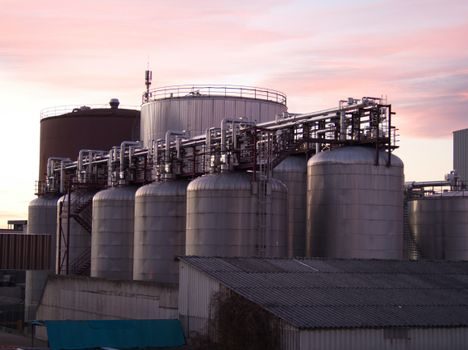
Stainless FOB-China price bands in mid-2026 sit around US$520/ton for competitive seamless pipe, US$800-900/ton for Inconel 617 stainless square pipe, with MOQs of 1-5 tons per [S4]. Stainless screwed fittings run US$0.76-0.80 per piece at 3,000-piece MOQ for brass/SS plumbing fittings, and SS pipe moulds for plastic extrusion tooling sit at US$500-50,000/set MOQ 1 set [S4][S2]. The Indian supply side (Saras Enterprises) holds 30-plus years of stockholding in 304/316 sheet, plate, coil, tube, pipe, rod, wire and fittings, giving buyers a Mumbai-based alternative to Chinese mills [S3].
Plastic pipe pricing is resin-volatile: PE100 granules track Brent/naphtha, and 2026 PE100 PN16 SDR 11 water pipe lands at roughly US$1.5-3.0/m delivered Europe; PPR PN20 hot/cold at US$2-5/m; PVC-U at US$1-2/m. Total installed cost narrows the gap: stainless welded labour at 8-15 welder-hours per DN100 metre versus PE100 butt-fusion at 0.5-1.0 hour per metre, so a stainless DN100 process line can run 3-5× the plastic installed cost on labour alone. The procurement playbook is therefore to right-size the material to the duty and not the unit price, then check the supplier band on plastic pipe and stainless pipe catalogues before RFQ.
Decision Matrix: Stainless vs Plastic in 2026
Across the four decision criteria (temperature, pressure, chemistry, jointing) stainless pipe wins in 3 of 4 quadrants whenever temperature is above 80 °C, pressure above 16 bar, or fluid contains chlorides above 200 ppm, hydrocarbons, or pharmaceutical-grade purity. Plastic pipe wins in 4 of 4 quadrants for cold potable, irrigation, drainage, sewer force mains, low-pressure gas, and any buried utility under 60 °C where corrosion and installation speed dominate. A line that has to handle both — e.g. a hot-water recirculation loop in a hotel — can be split: stainless risers and headers at the plant room, PPR/PEX branches in the risers, with a dielectric union or stainless transition fitting at the interface. [S1]
Concretely, a procurement officer should ask: (1) What is the design temperature peak? >80 °C rules out PE/PPR/CPVC and forces stainless or carbon steel. (2) What is the operating pressure at that temperature? >10 bar at 60 °C starts favouring seamless steel pipe or stainless. (3) What is the fluid — water, glycol, acid, hydrocarbon, pharma WFI? WFI and clean-in-place loops specify 316L with Ra ≤ 0.8 µm orbital welds. (4) What is the jointing crew capability and hot-work permit regime? If no welding on site, plastic fusion is faster. The four-question gate is more reliable than chasing the lowest per-metre price.
Limitations, Failure Modes and Field Lessons
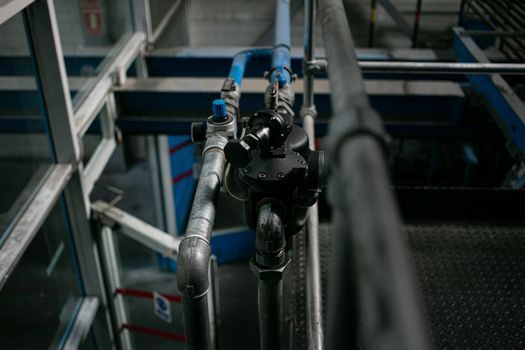
Stainless pipe failure modes: chloride pitting and stress-corrosion cracking (SCC) above 60 °C in 304 (use 316L or 2205), crevice attack at flange gaskets and threaded joints (use spiral-wound gaskets, avoid gasket rubber containing halides), and under-deposit corrosion in stagnant service. Plastic failure modes: UV degradation of unprotected PE/PPR (carbon-black PE100 or UV-stabilised PPR jacket required for outdoor runs), creep rupture at sustained high temperature, permeation of hydrocarbons through PE in soil-contaminated sites, and brittle fracture of PVC-U at sub-zero impact loads. Both families share one operator error: mixing dielectric-dissimilar metals (stainless to galvanised steel) without isolation fittings causes galvanic attack on the carbon-steel side; using brass fittings on stainless for hot recirculation pulls zinc out of the brass and drops dezincification products into the water. [S2]
The lower-risk spec for a 2026 build is: stainless 316L Schedule 10S for hot risers, process chemical lines, clean utility, and any line above 80 °C; PE100 SDR 11 PN16 for buried cold water, fire-service mains where local code allows, and sewer force mains; PPR PN20 for hot/cold risers in residential and hotel plumbing; CPVC ASTM F441 for hot-water risers in mid-rise where the budget cannot carry 316L.