
Gravity die casting dies require a refractory coating that can extend tooling life while preserving cavity filling and part release.
The coating must provide thermal insulation, resist molten-metal erosion and tolerate repeated heating cycles without losing its bond to the steel die.
What Die Coating Controls in Gravity Casting
A gravity die coating is a ceramic-based layer applied to cavity surfaces after the die has been heated. Its primary function is to delay premature solidification so the cavity can fill before freezing begins, while also protecting steel from molten-metal erosion and corrosion [S3][S4].
The coating also affects release, soldering and the repeatability of casting dimensions. An unsuitable layer can crack, erode or adhere to the casting, forcing repeated touch-ups and shortening the interval between die reconditioning [S1][S4].
Compare Coating Routes by Performance and Application
Traditional spray coatings, thermally sprayed ceramic layers and PVD tool-surface treatments solve different parts of the tool-life problem. They should not be treated as interchangeable. [S2]
The distinction matters because a low-friction PVD layer cannot replace the thermal insulation required to fill a gravity cavity.
Build a Coating Specification Around Failure Evidence
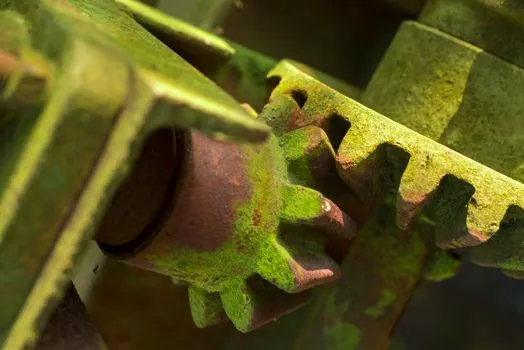
Specify a gravity die coating from observed failure modes rather than from a generic life claim. The process must control cavity coverage, coating thickness, porosity, surface roughness, bond strength and curing or drying conditions before production tooling is released [S4].
For thermal-shock damage, inspect the steel substrate and coating interface for thermal-fatigue cracking. For soldering or sticking, examine gate areas, core pins and ejection surfaces. For erosion, check the pour hole, runner entry, cavity corners and regions exposed to impinging metal. IBC Coatings identifies thermal shock, soldering, release problems and wear as the principal threats to die-casting tooling [S1].
For high-temperature die sections, coating performance and substrate temperature must be assessed together. IBC Coatings offers Ceratough® coatings that are applied using a physical vapor deposition (PVD) process and protect die cast tooling, including core pins, aluminum die casting molds and die inserts.
Do not accept a generic “long-life” claim without defining the test condition. A useful trial record should state the alloy, die material, coating thickness, cycle count, pouring temperature, die temperature, repair frequency and the condition that ended the trial.
Thermal Spray Coatings Can Reduce Repeated Touch-Ups
CSIRO's CASTcoat development demonstrated why coating adhesion determines service life. CASTcoat technology overcomes problems associated with conventional die coats through its use of thermal spray technology.
The long-life insulating coat known as CASTcoat was developed by CSIRO scientists Mahnaz Jahedi and Stefan Gulizia and could deliver die-coat life up to 14 times longer than existing products. These figures describe the cited development and trial, not a guaranteed multiplier for every die, alloy, coating thickness or production duty.
Conventional coatings struggle to adhere to the die for more than a few shots, so damaged areas must be repaired or touched up before the conventional coating is stripped and reapplied. Longer intervals between repairs reduce labour, die downtime and the risk of disturbing an otherwise sound coating layer.
Use Surface Treatments Where Wear Controls Tool Life
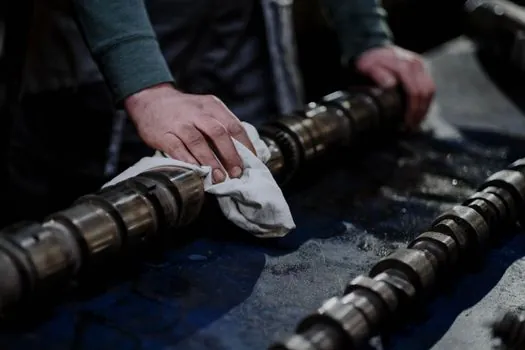
PVD and nitriding treatments address a different failure set from gravity cavity coats. IBC Coatings uses ion plasma nitriding as the first surface-hardening step for die sections, inserts, core pins, shot blocks and distributors, while its PVD coating family adds low-friction, high-hardness and corrosion-resistant properties [S1].
Thermal shock, soldering, release problems and wear can work against die casters' goal of producing quality finished, uniform castings throughout many production runs.
Black nitride treatment is another surface-hardening route. A published case describes proprietary black nitride as increasing the strength, hardness, wear resistance and soldering resistance of steel die-cast die and mould components [S6]. It belongs in the die-material and component specification, not in a specification written only for the sprayed cavity coating.
Know When Gravity Casting Is the Wrong Process
Gravity die casting is suitable when the part requires thick sections, pressure tightness, heat treatment or a slower fill than high-pressure die casting can provide. It is less suitable for thin walls, intricate geometry or planned production volumes in the hundreds of thousands, where redesign or a pressure process may be more appropriate [S5].
The process itself fills a reusable cast-iron or hot-work tool-steel die under gravity, rather than injecting metal at high speed. Permanent dies can be used many thousands of times, but that claim depends on die design, thermal control, venting, cores, coating maintenance and the casting duty [S3][S5].
For an engineer comparing process options, A356 gravity die cast versus sand cast tensile properties provides a separate property comparison, while this coating decision must remain linked to fill, solidification and tooling performance [S5].
Qualify Coatings Before Production Release
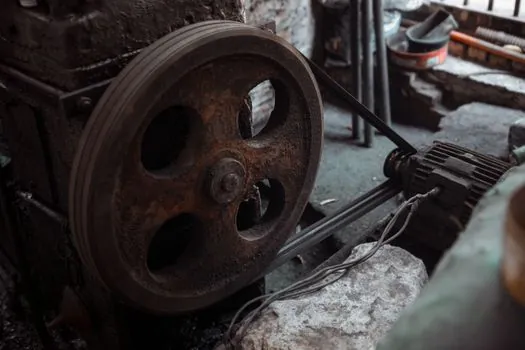
The most defensible coating decision combines a failure audit, a controlled trial and defined acceptance criteria. Confirm cavity fill, casting soundness, release behaviour, surface quality, thermal-fatigue cracking and the repair interval over a representative operating schedule. [S1]
Track four signals in production: coating loss at gates and pour holes, increased touch-up frequency, rising soldering or release defects, and changes in solidification or dimensional repeatability. A die coating that survives the laboratory coupon but erodes at the gate has not solved the production problem.
For procurement and maintenance records, state whether the item is a sprayed refractory die coat, a thermally sprayed ceramic layer, a PVD coating or a nitriding treatment. Each belongs in the gravity die casting machine maintenance plan, but only the ceramic cavity coatings directly provide the insulation described in gravity and low-pressure die casting [S3][S4].