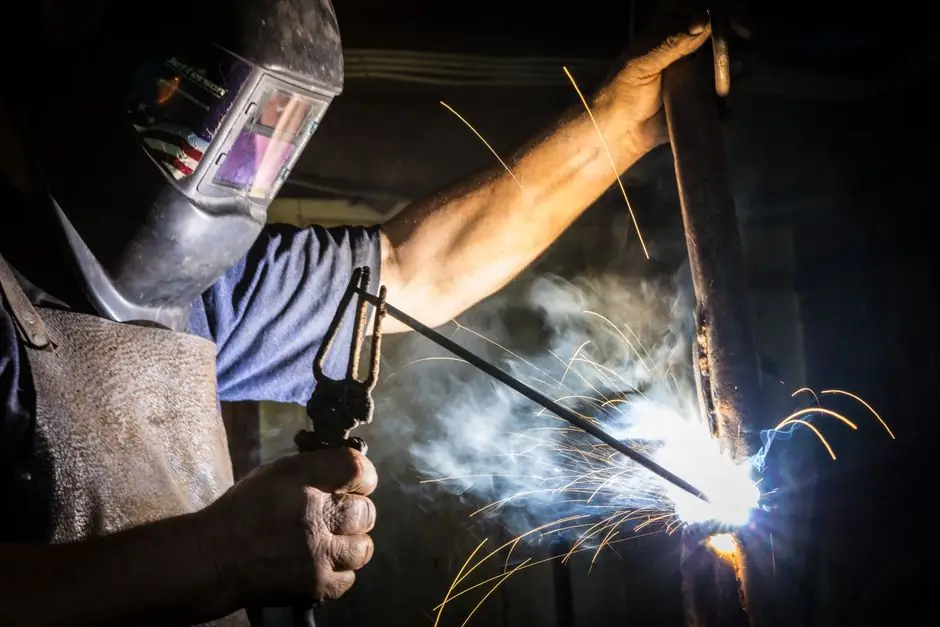
Welding shields differ fundamentally from grinding or splash shields: the lens must auto-darken within 0.1-0.3 ms and block IR/UV across shade 9 (TIG low-amp) to shade 13 (stick/flux-core, 200-350 A), per the shade-selection guidance cited in current OEM datasheets [S1].
Process engineers specifying welder PPE should treat the shield as a system: helmet shell, ADF cartridge, polycarbonate visor (front cover lens), and respiratory interface, each carrying its own standard mark. Centurion's Classic face shield, for example, ships as an 8.27" (210 mm) polycarbonate visor weighing 3.67 oz (104 g), tested to ANSI Z87.1, and integrates with the maker's hard-hat accessory slots for simultaneous ear-defender use [S1].
Welding process vs. shade number: where the spec starts
Shade selection is driven by arc current and process, not by personal preference. Below 50 A TIG work, shade 9-10 is the typical minimum; 50-150 A MIG or stick climbs to shade 11; 150-350 A stick or flux-cored demands shade 12-13; and plasma cutting above 50 A steps to shade 8-11 because the duty cycle and luminance differ from true arc welding. The ADF cartridge must also carry a permanent marking for the optical class (EN 379 1/1/1/1 is the best tier), switching speed (typically 0.1-0.3 ms at room temperature), and UV/IR blocking independent of the dark state.
For fixed-shop weld cells where an ADF is overkill, a fixed-shade polycarbonate face shield (e.g. green IR shade 5.0 molded into the visor) at lower cost is acceptable for oxy-fuel and light gas welding, but it must never be used for arc welding above 30 A. Reference face shield materials lists the polycarbonate-vs-propionate trade-off that drives this decision.
Shield types lined up against four decision criteria
A spec-driven comparison helps a buyer stop treating all "welding helmets" as one product. The four gates below map the common configurations an industrial buyer encounters:
1. Passive fixed-shade polycarbonate visor (e.g. Centurion Classic, 8.27" polycarbonate, 3.67 oz). Criteria: low cost, ANSI Z87.1 impact mark, no auto-darkening. Use for grinding, oxy-fuel, and chemical/metal splash; not rated for open arc above 30 A [S1].
2. Passive welding helmet with fixed IR shade glass (typical shade 10-12). Criteria: low to mid cost, EN 175 / ANSI Z87.1 welding mark, "flip-up" lens carrier, neck-fatigue risk on long runs. Use for stick and MIG at fixed amperage; not for variable-amp TIG.
3. Auto-darkening helmet (ADF) with external grind mode. Criteria: shade range 9-13, switching time 0.1-0.3 ms, EN 379 optical class, 1/1/1/1 preferred, solar+battery dual power, true-color LCD option. Use for production welding where the operator moves between processes.
4. Powered-air purifying respirator (PAPR) welding helmet combo. Criteria: TH3 (EN 12941) or APF 25-1000 assigned protection factor, ADF shade 9-13, lift-front flip cartridge, lithium battery 8-12 h runtime. Use for stainless welding where hex-Cr fume is a concern; not cost-effective for occasional tack work.
For comparison context across non-welding but related PPE, see Face Shield Selection for Mining Operations: 2026 Hazard-Class Map, which treats impact and IR criteria independently of arc-radiation criteria.
Standards and markings: what must be on the shield
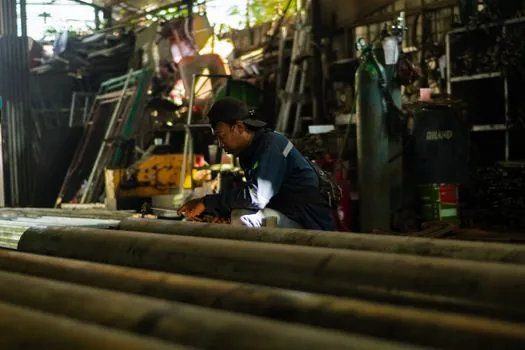
Every welding shield sold into a regulated shop carries a permanent mark. ANSI/ISEA Z87.1-2020 (US) classifies eye-and-face protection by impact ("Z87+" for high impact) and by whether the product is a welding filter ("W" plus shade number, e.g. "W12"). EN 166 (EU) marks mechanical strength (letter S, F, B, A) and EN 169 carries the welding-shade number (1.2 to 16). EN 379 governs auto-darkening cartridges specifically and publishes the four-number optical-class code (e.g. 1/1/1/1). A welder's ADF that does not have these marks on the cartridge itself is a red flag regardless of marketing claims. [S1]
For respiratory integration, the relevant CE marks are EN 12941 (powered hood/helmet) or EN 149 (replaceable filtering facepiece), and in North America NIOSH 42 CFR 84 with the appropriate filter series (N, R, P). The shield and respirator must be co-certified as a system, not field-assembled, if the manufacturer is to carry the liability.
Lens and shell materials: polycarbonate, propionate, and fiberglass
Welding helmet shells are almost always glass-filled nylon or polycarbonate for impact resistance and heat stability around 150-180 deg C continuous; the inner cover lens is usually clear CR-39 or polycarbonate at 0.5-1.0 mm thickness, and is treated as a consumable because spatter pits it within a shift. The auto-darkening LCD sits behind a polarized filter stack and a UV/IR blocker that remains active even in the clear state; this is the property that makes ADFs safe to leave down between strikes. [S1]
For chemical-plant environments where a face shield is the primary PPE and welding is occasional, the selection logic shifts toward chemical-resistant materials; see Face shield selection for chemical plants: visor, marking, and fit map for the chemical-resistance side of the same spec tree.
What it is FOR vs. who should not buy a welding shield
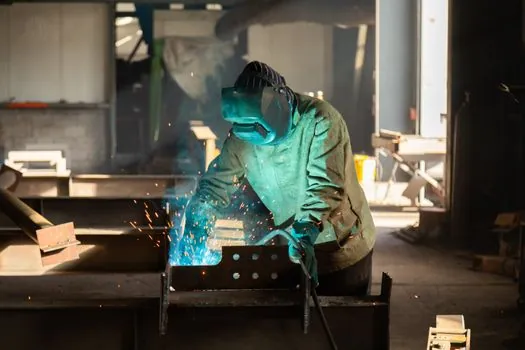
Welding helmets with auto-darkening filters are built for operators running arc processes (SMAW, GMAW, GTAW, FCAW, plasma) at 30-500 A for more than 30 minutes per shift, who need hands-free darkening and neck support. They are also justified for occasional users who will not tolerate the neck strain of repeatedly nodding a fixed-shade hood. [S2]
They are NOT the right pick for: pure grinding (a flip-up grinding shield on a hard hat is cheaper and faster to swap), oxy-fuel cutting without arc (fixed IR shade 5 is enough), dental/medical splash where the requirement is fluid barrier (Plasdent-style disposable 13" x 7.5" foam-band shields at 24-pack pricing are the correct product, not a welding helmet) [S3], or confined-space work where a supplied-air respirator is mandated and any non-integrated welding shield will be flagged on the JSA.
Common failure modes and maintenance traps
Three failure modes dominate shop-floor feedback. First, cover-lens neglect: a single spatter hit on the inner polycarbonate lens can scatter light enough to cause "arc eye" (photokeratitis) within hours, so the consumable cover lens is a low-cost item that should be stocked by the dozen. Second, battery failure on solar-only ADFs in low-light stick welding on dirty rod, where the cells never get enough bias to charge; specify solar-plus-replaceable-battery (CR2450 or AA) for any shop running rod at high duty cycle. Third, helmet fit variance: head sizes range 52-65 cm and many "one size" shells fit only 55-60 cm, so a half-head mismatch causes the ADF to sit off-axis and the welder to compensate with a tilted neck, the root cause of many cervical-injury claims. [S1]
Procurement checklist for a 2026 spec release
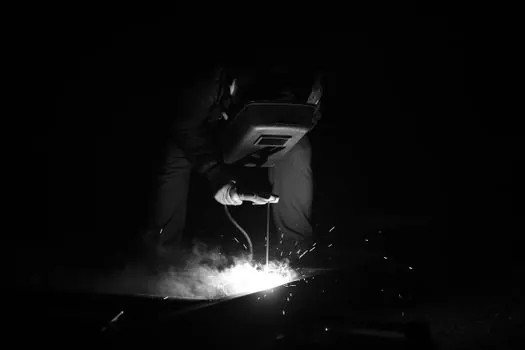
Buyers writing a 2026 spec should anchor it on these pass/fail lines: (1) Shell: ANSI Z87.1-2020 impact mark "Z87+" plus EN 166 mechanical strength, fiberglass or glass-filled nylon, head-size range stated in cm not "one size". (2) ADF cartridge: EN 379 optical class 1/1/1/1, switching time at 23 deg C and at 55 deg C (the hot-bench number is the one welders actually feel), shade range 9-13 external, true-color LCD option, dual power (solar + replaceable cell). (3) Respiratory integration: EN 12941 TH3 with assigned protection factor 25-1000 if PAPR is specified; otherwise a co-certified half-mask interface. (4) Spares: inner cover lens, outer polycarbonate visor, sweatband, headgear adjustment knob, all listed as orderable parts with the helmet, not as aftermarket accessories. [S1]
Price band for a stand-alone ADF welding helmet sits roughly 60-180 USD in the 2025-2026 catalog market, with PAPR-integrated units running 500-1500 USD depending on filter cartridge and battery capacity. None of the materials published in the past six months show a structural break in that band, only a drift downward on the entry-level ADFs as Chinese ODMs continue to push 1/1/1/1 optical class into the sub-80 USD tier. Trackable signals for the next cycle: any EN 379 revision that tightens the high-temperature switching time test (currently 0.1-0.3 ms is widely published, but the precise test method is set by the standard), and any move by the major auto-darkening LCD suppliers to standardize the optical-class four-number code on retail packaging rather than only on the cartridge label.
The underlying component specifications are covered under welding cutting tool, and shield machine.