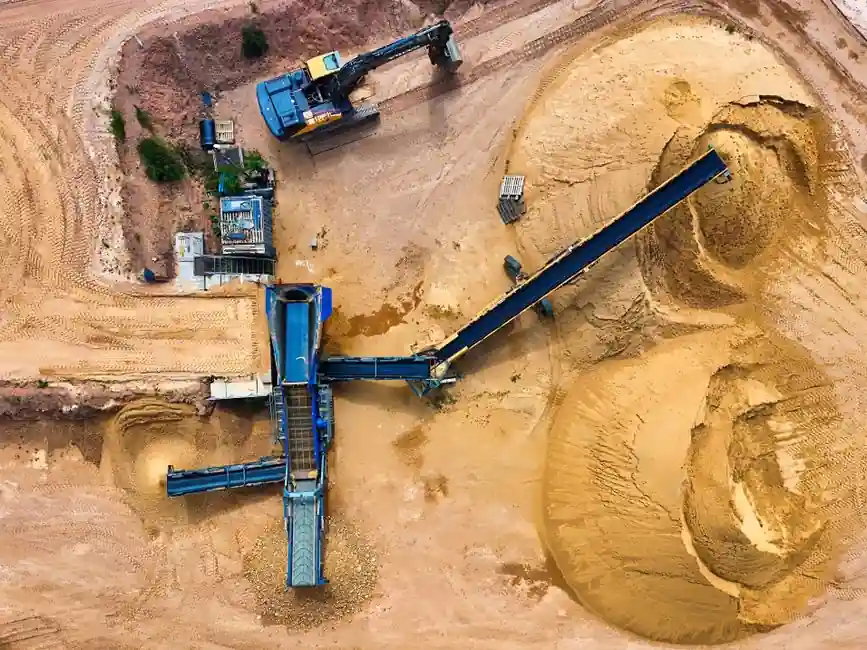
Mining face shields in 2026 are specified as part of an integrated head-and-face system, not a standalone visor: the hard hat (ANSI Z89.1 / CSA Z94.1 Type I or II, Class E or G) carries the face shield via a slotted or universal adapter, and the face shield itself must be rated to ANSI Z87.1-2020 for impact, optical clarity, and (where splash is present) the Z87+ droplet-and-splash mark [S2].
For hard-rock and coal operations, the practical decision tree is driven by four hazard inputs: flying debris velocity, dust load, chemical or water exposure, and whether the worker also wears a respirator, hood, or welding filter. Each input rules in or out a specific visor material, window height, and chin-cup geometry.
Hazard Class to Visor Material Mapping
Three visor constructions dominate mine procurement, and the specifier must lock the material to the highest credible particle energy on the work order, not the average. Polycarbonate (PC) at 1.0–1.5 mm thickness is the default for drilling, scaling, and crusher-cleanout tasks where ANSI Z87.1+ high-mass (500 g dropped from 127 cm) and high-velocity (a 6.35 mm steel ball at 91.4 m/s) impacts are the gating test [S2].
Where the worker is also exposed to liquid splash (slurry, hydraulic oil, reagent mist), specify a Z87+ marked shield with a formed chin-cup and a minimum 200 mm vertical window; the listing must explicitly carry the "+" splash designation, not just Z87.1 base impact. Mesh visors (powder-coated steel or aluminum) are specified for brush-cutting and vegetation clearing around pit walls and access roads, not for drilling, because mesh does not arrest fine slurry or weld spatter. For underground coal and high-dust environments, anti-fog coated PC at 1.0 mm minimum is the practical default; uncoated PC fogs within minutes in a humid heading and is one of the most common field complaints [S2].
Standards and Markings Required on the 2026 Mine Sticker
A face shield that reaches a miner in 2026 should carry at minimum: ANSI/ISEA Z87.1-2020 with the "+" splash mark if liquids are present, the manufacturer's date code, the visor thickness in mm, and either Z87.1 "D3" splash, "D4" dust, or "D5" fine-dust markings where relevant [S2]. Head-protection pairing must be Z89.1 Class E (electrical, 20 kV) for any work near overhead lines or trolley haulage, and Class G (2.2 kV) for general pit service.
Procurement teams should reject any shield listed only to "Z87" or to a pre-2020 Z87.1 revision without confirming the drop-ball velocity rating, since the 2020 revision tightened penetration and optical performance criteria. Where respirators are issued (half-mask N95, full-face elastomeric, or PAPR), the shield crown depth must be at least 90 mm to clear the cartridge or hood seal, otherwise the visor contacts the respirator and the worker flips it up, defeating both the face and respiratory protection. This is a routine finding in MSHA-style field audits and is the single highest-fitment failure on a face shield spec sheet.
Selection Criteria for Open-Pit vs Underground
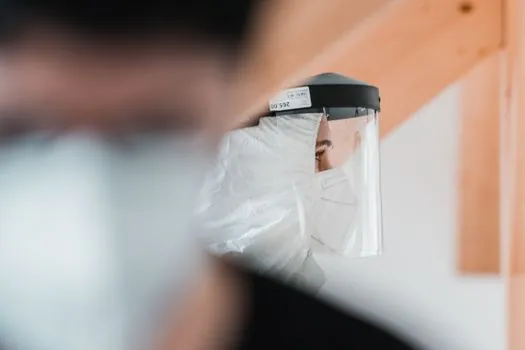
Open-pit haul-truck, loader, and drill crews face a different set of trade-offs than underground development miners, and the spec sheet should be split accordingly. The table below lines the main 2026 options against four decision criteria: impact rating, splash/dust seal, respirator clearance, and typical unit cost in USD (FOB Asia reference, MOQ 1 box per [S2] listing at $3.59 per shield).
Polycarbonate Z87+ (1.0–1.5 mm): impact rating high, splash seal medium (formed chin-cup required), respirator clearance good at 90 mm crown, cost $3–15 per shield. Acetate Z87+ (1.0 mm): impact rating medium, splash seal medium, respirator clearance good, chemical resistance superior to PC for solvent and reagent exposure, cost $4–12. Mesh (steel/Al, powder-coated): impact rating medium (excludes fine particle), splash seal none, respirator clearance good, cost $5–20. For underground headings with continuous water spray and shotcrete mist, a formed acetate window is often the more durable pick than PC despite the lower impact margin, because PC hazes and crazes under alkaline shotcrete exposure.
Integration with Adjacent PPE and Mobile Equipment
A face shield never lives alone on a miner: it interfaces with hard hat suspension, hearing protection (earmuffs or plugs), cap-lamp bracket, communications headset, and either a respirator or welding filter. The 2026 spec must lock the bracket pattern (most North American mines use the universal 30 mm slot, but some European sites still specify the older EN 397 slot pattern) before any face shield SKU is released for trial, otherwise the visor will not click into the cap. [S2]
For haul-truck and loader operators, where the cab is filtered and climate-controlled, the in-cab face shield is typically a lighter Z87 base-impact PC unit without a chin-cup, since full sealed PPE is unnecessary. For the same operator doing a remote shovel walk-around or tire check, the spec reverts to the open-pit field shield above. In the underground ramp, the mining dump truck operator typically pairs a Z87+ shield with a low-profile half-mask because the cab filtration alone does not cover a brake-check or a re-fuel stop. For mechanics servicing shield machine cutters in TBM and roadheader operations, the shield must also accommodate a welding filter flip-up (auto-darkening shade 9–13) without breaking the Z87+ seal when the filter is stowed.
Common Spec Failures and 2026 Audit Findings
The most common 2026 audit findings on mine face-shield specs fall into five categories, each traceable to a procurement or trial-discipline gap: shields specified to Z87 base only on jobs that require Z87+; mesh visors issued for drilling or scaling; no chin-cup on a splash-risk task; crown depth below 90 mm forcing respirator contact; and shields more than 24 months old in service where polycarbonate has yellowed below the 70% transmittance limit set by EN 166. [S2]
A second recurring failure is using a generic "industrial" face shield (such as the protective face shield listed at $3.59 per unit, MOQ 1 box on go4worldbusiness [S2]) without confirming Z87+ or Z89.1 pairing for the specific mining task. Low-cost shields are fit for visitor tours, training simulators, and light grinding, but a hard-rock or coal application should demand the test certificate and date code, not only the marketing listing. The mine procurement standard should be: no certificate, no purchase, regardless of price.
Trackable 2026 Signals to Watch
Procurement engineers should also track whether the OEM (such as the American Screening Corp SKU cited above at $3.59 per shield, MOQ 1 box [S2]) begins publishing Z87+ lot-traceable data sheets, since the absence of that document is still the cheapest signal that a shield belongs in visitor PPE, not in a production heading. Pairing this with a documented hard-hat bracket trial on the pressure transmitter and flow meter maintenance crews is a useful proxy for general PPE-program maturity, and mirrors the spec discipline expected on a industrial valve dossier. For related equipment selection logic in adjacent mine operations, see the Face Shield Selection for Construction Sites: 2026 Spec and Fitment Map and the Truck Crane Selection for Quarrying: 2026 Capacity, Reach, and Chassis Map articles for the spec-by-hazard pattern that 2026 mine PPE now follows.