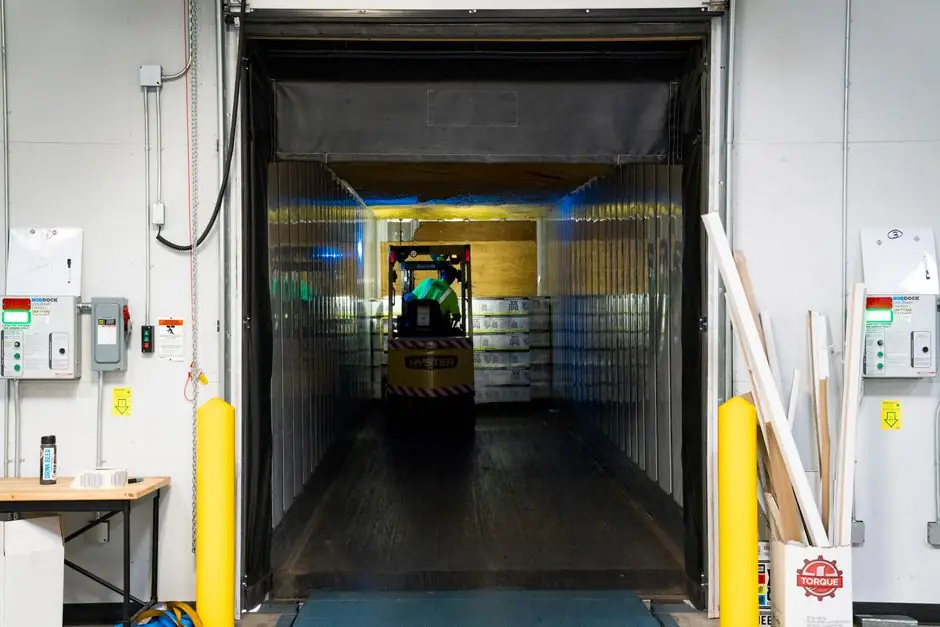
Filling scales in cold chain lines must be specified for enclosure ingress, condensation control, and weighing resolution that survives the actual product temperature window, not the lab rating on the data sheet [S1][S3].
The cold chain drug market was valued at USD 6.4 billion in 2024 and is projected to reach USD 9.6 billion by 2035, a 3.8% CAGR [S4], while U.S. food retailers discard 16 billion pounds of product yearly, with temperature mismanagement a key driver [S5]. That product flow is exactly where a filling-weighing scale sits: at the dispense step before the pack goes into the reefer.
What a cold chain filling scale has to do, and the tiers it serves
Filling scales dose or checkweigh product inside temperature windows that span controlled room temperature (20 to 25 degrees Celsius), chilled (2 to 8 degrees Celsius), frozen (minus 18 to minus 30 degrees Celsius), deep frozen (minus 60 degrees Celsius or below), and cryogenic (minus 150 degrees Celsius or below), as defined for pharmaceutical cold chain practice [S3][S4]. A scale specified only for an ambient factory will drift, fog, or fail if dropped into a 2 to 8 degree Celsius fill room without a sealed load cell and a desiccant-loaded enclosure.
Cold storage electricity alone accounts for 18% of facility operating cost, and the U.S. cold chain industry spends over USD 30 billion a year on energy, so pack lines inside the same facility are rarely warmed for the convenience of the weigher [S2]. The scale has to live where the product lives, and that is the design constraint most procurement documents miss.
Selection criteria that actually filter vendors
Four gates separate a cold chain qualified filling scale from a general-purpose one: enclosure material and seal, load cell temperature class, resolution against product weight, and throughput in units per minute under the actual line layout. Stainless 304 covers most washdown food lines; stainless 316 is the safer call when chloride cleaning agents or salty seafood are present, and is standard for pharma suites where GMP and GDP cleaning regimes apply [S3][S4].
Ingress protection should be specified at IP65 as a floor for any wet or condensating zone, IP66 where high-pressure washdown is scheduled, and IP67 or IP68 if the scale sits in a drip zone under a filler or a thaw drip pan [S3]. Resolution is the second gate: 0.1 to 1 g is the working band for vaccine vials, insulin pens, and biologic containers; 5 to 50 g is the practical range for frozen food packs, ready-meal trays, and seafood portions [S4].
Throughput is the third gate, and it is where a filling machine integration matters more than the scale datasheet alone: a multihead weigher upstream will dictate a different dosing cycle than a single-head linear scale, and the line builder has to match them. The fourth gate, often skipped, is data output: at minimum an RS-232 or RS-485 stream, with Ethernet/IP, PROFINET, or IO-Link when the line runs under a MES, so each fill is logged against the batch and the reefer ID for traceability under FDA, EMA, and WHO GDP expectations [S4].
Comparison of the main filling scale types for cold chain
Three formats dominate cold chain pack lines, and they line up against the four gates as follows. A multihead weigher handles 60 to 120 weighings per minute, fits IP65 to IP66 stainless enclosures, and resolves to about 0.5 to 2 g, which suits frozen food, IQF vegetables, and snack packs but is over-spec for vial filling. A linear combination scale drops to 20 to 40 weighings per minute with similar IP and resolution, and is the right call for fragile or sticky product like frozen berries or seafood that cannot survive the radial dispersion of a multihead [S4].
A single-head checkweigher at the line exit runs 100 to 600 pieces per minute depending on pack weight, with 0.1 to 5 g resolution and the same stainless IP65 to IP66 envelope, and it is the legal-for-trade guard at the end of a pharma or ready-meal line [S4]. For a deeper line design view, see checkweigher throughput gates in electronics handling, where the resolution and reject logic translate almost one-to-one. None of the three will hold accuracy inside a cryogenic or minus 80 degrees Celsius zone without a remote load cell head and a heated, sealed electronics cabinet, and that limitation should be written into the URS before vendor selection [S3][S4].
Who this is for, and who should not buy
A purpose-built cold chain filling scale pays back for any line that fills product already at 2 to 8 degrees Celsius, product that is filled warm and immediately moved into a blast or spiral freezer, and product that lives in minus 18 to minus 30 degrees Celsius storage between fill and dispatch [S3][S4]. The vaccine and biologic segment alone justifies the spec premium, because the industry loses roughly USD 35 billion a year to cold chain failures, and the dose is the audit point regulators look at first [S5].
It is the wrong tool for ambient dry-goods lines, for bulk grain or sugar dosing where a belt scale or loss-in-weight feeder is the correct technology, and for any sub-zero application where the load cell cannot be kept in a heated, sealed housing. For shipping and final-mile stages, the logistics packaging spec, not the filling scale, is the controlling document, and procurement should not push the scale into a role it cannot serve.
Failure modes and constraints seen in the field
Condensation inside the load cell housing is the single most common cold chain filling scale failure, followed by cable jacket embrittlement at sub-zero docks and drift after repeated door openings on a 2 to 8 degree Celsius fill room [S3][S4]. Drift is the more dangerous one because it is silent: a scale that reads 0.2 g heavy on every vial will pass quality control if the checkweigher is set to the same drift, and the dose error only shows up in the assay or the patient complaint months later.
Mitigation is mechanical before it is electronic: slope the enclosure to drain condensate, specify a Gore vent or equivalent breathable membrane, and route load cell cables through sealed IP68 glands rather than standard PG entries [S4]. The Kigali Amendment to the Montreal Protocol pushes the industry off HFC refrigerants by 2036, so any refrigerant-cooled scale enclosure or in-line chill station has to be specified for lower-GWP refrigerants from day one, not retrofitted later [S2].
Standards and sourcing the spec
Pharma cold chain filling operations are governed by Good Manufacturing Practice and Good Distribution Practice expectations from the FDA, EMA, and WHO, with temperature ranges defined for controlled room temperature (20 to 25 degrees Celsius), refrigerated (2 to 8 degrees Celsius), frozen (minus 18 to minus 30 degrees Celsius), and cryogenic (minus 150 degrees Celsius or below) storage, as documented in CDMO technical literature [S4]. For food, HACCP and the reefer temperature tiers described in the Worldwide Express shipping guide are the working references, with strawberries spoiling above 45 degrees Fahrenheit and dairy curdling outside 36 to 46 degrees Fahrenheit as the practical band [S5].
On the sourcing side, the U.S. alone runs roughly USD 228 billion a year in cold chain-dependent imports and USD 111 billion in exports, which means the supplier base for IP65 to IP67 stainless checkweighers and multihead combiners is deep and competitive, and short lead times are realistic for standard resolutions [S2]. For buyers in mainland China, the cold chain system is being built out for an agricultural flow of roughly 400 million tons a year, and that scale of investment is pulling more domestic filling scale vendors into GMP-compliant stainless builds than was the case five years ago [S1].
Track next: vendor data sheets that publish drift behaviour at 2 to 8 degrees Celsius and at minus 20 degrees Celsius with the humidity value stated, and EN 60529 or IEC 60529 ingress certificates issued by the OEM rather than a distributor, are the two artefacts that separate a cold chain qualified filling scale from a marketing-grade datasheet. Until those land, keep the scale in the warm zone of the line, or budget for a remote load cell head from the first RFQ.