
A filling scale is any weighing-instrument sub-assembly that meters a product into a container by mass, and on the engineering floor these machines are sorted into five functional classes — manual, semi-automatic, fully automatic, multi-head combination, and inline checkweigher-integrated — selected primarily on throughput (containers/min), net-fill tolerance, and the applicable OIML R61 or OIML R76 accuracy class [filling-weighing-scale](internal reference).
This map covers the operating envelope, the dominant weighing technologies (load cell vs. weigh hopper vs. volumetric+gravimetric hybrid), the container formats each class serves (bottles, cans, pouches, drums, IBCs), and the failure modes that show up in commissioning — feed-back lag, dust ingress into the load cell, and tare drift on viscous products. The spec boundaries below come from OIML R76 (non-automatic weighing instruments) and R61 (automatic gravimetric filling machines) framework, the two documents that govern 90% of regulated filling lines.
Five Operating Classes: Throughput, Container, Accuracy
Manual filling scales — benchtop units with a 0.1–50 kg range and a platform typically 200–400 mm wide — are specified for short-run, low-throughput packaging of powders, screws, or small-parts kits; throughput sits at 2–6 fills/min per operator and OIML R76 accuracy class III (verification scale interval e ≥ 2 g at 10 kg) is the common baseline [bench-scale](internal reference).
Semi-automatic filling scales add a foot-switch or hand-triggered cut-off and a pneumatically actuated nozzle; net weights of 1–25 kg in open-mouth bags or rigid containers are typical, throughput climbs to 4–10 cycles/min, and the load cell is usually a single-point 100–500 kg cell with IP65/IP67 protection against the dust and washdown environments of food and chemical lines.
Fully automatic filling scales — the dominant class on new FMCG and chemical packaging lines — run 20–120 containers/min, integrate conveyors, cap-tightening, and label stations, and require a net-weight accuracy of ±0.1% to ±0.5% depending on the legal-for-trade application; OIML R61 applies when fills are sold by weight [filling-machine](internal reference).
Multi-head combination filling scales use 10–14 weighing heads, each with its own load cell, that dump the closest combination to a target weight — this is the canonical solution for snack foods, frozen vegetables, and hardware at 60–120 weighings/min with typical accuracies of ±0.1–0.3 g per dose on a 50–500 g target.
Inline checkweigher-integrated filling lines treat the checkweigher as the final authority and feed the result back to the filler via a 4–20 mA or PROFINET link, pushing legal-for-trade accuracy toward ±0.05% at production speeds of 100–400 packages/min and matching what truck scale legal-for-trade work requires at the heavier end of the same load-cell family.
Weighing Technology Inside the Class: Load Cell, Hopper, Hybrid
Single-point aluminium-alloy load cells (50–1000 kg nominal capacity, C3 or C6 accuracy class per OIML R60) dominate the manual and semi-auto classes; their off-centre loading tolerance and IP67 sealing are what makes the platform tolerate a misplaced 25 kg sack without re-calibration [electronic-scale](internal reference).
Hopper scales — a vessel mounted on 3 or 4 shear-beam or compression load cells, total capacity typically 30 kg to 2 t — are the structure inside every fully automatic net-weigher and every batching [hopper-scale](internal reference); vessel geometry (cone angle ≥ 60° for free-flowing granules, steeper with vibratory discharge for cohesive powders) sets the discharge time and therefore the shortest achievable cycle.
Gravimetric + volumetric hybrids (screw feeder + catch weigh bucket) handle non-free-flowing powders at 5–30 kg fills where a pure gravimetric cut-off would overshoot due to in-flight product; the screw runs to a pre-target, the bucket then tops off to the gravimetric setpoint, and total fill accuracy lands at ±0.2–0.5% on flour, talc, and ground-spice duty.
For large bulk containers — 200 L drums, 1000 L IBCs — drum fillers and IBC fillers are a sixth, less-cited class running 1–4 fills/min at 100–1200 kg, with the load-cell array mounted in the platform (not the vessel) to keep the live part of the machine free of contamination; legal-for-trade accuracy per OIML R76 class III applies for trade and shipping.
Selection Criteria: Throughput, Accuracy, Container, Product
First decision node: containers per minute. Below 6/min, manual is the rational answer and any move to automation adds floor space, compressed air, and validation cost that the throughput cannot amortise; between 6 and 30/min, semi-automatic or single-head automatic are the candidates, and above 30/min the multi-head combination or inline checkweigher-integrated class is forced by economics.
Second decision node: legal-for-trade scope. If the filled product is sold by weight (rice, sugar, 25 kg chemical bags, refrigerant cylinders) OIML R61 governs and the filler must pass type-approval as a complete machine, not just the load cell; if the product is sold by count (screws, capsules) and the weight is internal QA only, R76 governs the load-cell subsystem and the line is simpler to validate.
Third decision node: product behaviour. Free-flowing granules and liquids suit pure gravimetric; cohesive powders, pastes, and sticky products suit the gravimetric + volumetric hybrid because in-flight mass variability dominates the error budget on a pure cut-off; abrasive mineral or metal-fill products (sand, metal powder) demand compression load cells with stainless steel bodies rather than aluminium-alloy shear beams.
Fourth decision node: environment.
Comparison Across the Five Classes
The five classes line up against four decision criteria: throughput, typical accuracy, container mass range, and capital cost band. Manual sits at 2–6 fills/min, ±0.5–1% accuracy, 0.1–50 kg, low capital cost; semi-automatic at 4–10 fills/min, ±0.3–0.5%, 1–25 kg, low-to-mid capital; fully automatic at 20–120 fills/min, ±0.1–0.5%, 0.1–50 kg, mid-to-high capital; multi-head combination at 60–120 fills/min, ±0.05–0.3%, 0.01–5 kg, high capital; checkweigher-integrated at 100–400 fills/min, ±0.05–0.2%, 0.01–5 kg, highest capital.
For a snack-food or frozen-vegetable line at 80 packages/min, the multi-head combination class is the only option that hits throughput and accuracy at the same time, and any move "down" to a single-head automatic costs about 60% of the capital but cannot reach 80 packages/min on a 100 g dose with acceptable give-away. For a chemical 25 kg bag line at 8 bags/min, semi-automatic is rational and moving to fully automatic only pays back if the line runs more than one shift [checkweigher selection](related spec-engineer write-up).
Who a Filling Scale Is For — and Who It Is Not
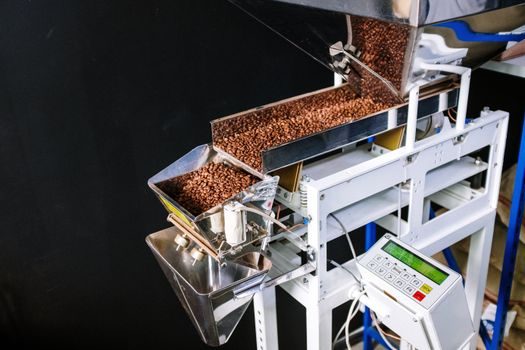
Filling scales are the right answer for products that are sold, dosed, or invoiced by mass — powders, granules, liquids in rigid containers, piece goods sold by weight, and bulk chemicals — and where the production volume justifies repeat-fill accuracy rather than one-off hand-weighing. They are the wrong answer for piece-count products (small screws, capsules) sold by count, where a counting scale or vision-based counter is both cheaper and more accurate; for ultra-low-throughput hand-craft packaging (artisan coffee, single-batch spices) where operator skill is part of the value proposition and automation strips it; and for hazardous-area duty where the certification cost of a fully automatic ATEX-class machine is uneconomic on low-volume SKUs. [S1]
The legal-for-trade boundary is also a hard filter: a filling scale that fills product sold by mass to a retail consumer must be OIML R61 type-approved, and a non-type-approved machine in that role is an enforcement risk that no spec engineer should accept regardless of price [truck-scale TCO framing](related lifecycle-cost write-up).
Failure Modes and Engineering Limits
Feed-back lag is the single most common accuracy problem on fully automatic net-weigh fillers; the cut-off signal is sent to the discharge valve, but the product already in-flight keeps landing in the container, so the cut-off is set "early" by an empirically determined in-flight mass that drifts with product moisture, particle size, and hopper level. Operators who do not re-tune this value after a product change routinely see fill-weight standard deviation double.
Dust ingress into the load cell is the second most common failure mode on powder lines; even an IP67 cell fails when the bellows is damaged during vessel cleaning, and the symptom is a slow zero drift and a Class III → Class IIII accuracy regression that fails the next verification. The engineering control is the bellows inspection at every CIP cycle and a quarterly recalibration against a Class F1 reference mass set.
Tare drift on viscous products (sauces, pastes, syrups above ~5000 cP) shows up as a systematic overshoot; the product clings to the nozzle and drips into the next container, and the standard remedy is a drip-tray catch-and-recycle plus a nozzle-wipe station, not a software fix. Filling scale specifications that quote a single accuracy figure without naming the product and viscosity are unreliable for purchasing comparison.
Sourcing, Standards, and Trackable Signals
Two standards cover virtually every legal-for-trade filling line: OIML R76 for the load-cell subsystem (accuracy class III or IIII in most food/chemical applications) and OIML R61 for the complete automatic gravimetric filling machine. ATEX 2014/34/EU and the IEC 60079 series govern hazardous-area installations, and 3-A sanitary / EHEDG cleaning requirements govern food and dairy. For verification of in-service accuracy, OIML R111 applies to the reference masses used in calibration.
Trackable signals to watch: the next OIML R61 revision cycle, which has been under review for tighter accuracy class definitions on small (≤10 g) fills; the continued migration from analogue 4–20 mA to PROFINET/EtherNet-IP feedback between filler and checkweigher; and the steady uptake of hygienic stainless-steel hermetically-sealed load cells in mid-tier food lines as the price gap with aluminium-alloy cells has closed to under 20% on multi-unit orders.
Component reference pages worth checking: filling weighing scale, filling machine, and bench scale.
Related analysis: Proximity Probe Price 2026: Cost Drivers, Tier Comparison, and Sourcing Map.