
Filter elements are the replaceable media-loaded components fitted inside a filter housing, and they divide cleanly into two structural classes: surface filters, which stop particles on a uniform pore face, and depth filters, which retain contaminants throughout a tortuous fiber matrix [S4].
Within those two classes, the practical taxonomy runs by media (cellulose, glass, wire mesh, coalesce, resin, activated carbon, sintered metal, magnetic), by micron rating (paper elements at 5, 10, 25, and 40 microns; mesh elements at 40, 80, 120, and 160 microns), and by whether the element is cleanable or disposable [S2][S3]. This reference lines up the main options against the four decision criteria engineers actually use on the floor: fluid, temperature, beta efficiency, and reusability.
Surface vs depth: the structural split that drives everything else
Surface elements are made of closely woven fabric or treated paper with controlled pore size, so fluid passes through the pore and contaminants are stopped on the face; depth elements are layered fabric or fiber matrices with passages larger than the rated size, so particles are held inside the media body [S4]. The practical consequence is that a depth element has far higher dirt-holding capacity at the same micron rating, while a surface element has a sharper, more predictable cutoff that maps directly onto an absolute rating.
Glass media outperforms cellulose on this point, capturing and containing over 49% more particles than cellulose in matched testing, and it is also immune to particle shedding under rising fluid temperature [S2]. Cellulose remains the cheapest option but is rated nominally, sheds captured dirt back into the system when loaded, and softens or migrates as temperature climbs [S2]. For a related walkthrough of how these structural choices feed into full vessel sizing, see the filter element reference page.
Five working media families and where each one wins
Cellulose (paper) is the workhorse for low-cost, low-temperature oil and fuel duty at nominal ratings, typically offered at 5, 10, 25, and 40 microns [S3]. Micro-glass media is the upgrade path, with uniform pore structure, an absolute rating, and no shedding, so it is the default for hydraulic and lube systems where cleanliness targets are tight [S2][S3].
Wire mesh is rated nominally but reusable, durable against aggressive fluids such as phosphate ester, Skydrol, deionized water, and high-temperature service, which makes it the standard for power-generation and fire-resistant fluid circuits [S1][S2]. Coalescing media is built from a pleated synthetic configuration that separates free and emulsified water from a gas or fuel stream and drops it out by gravity [S2]. Resin media operates at the molecular level, removing polar oxides, acids, and free radicals that form varnish, while leaving additive packages intact [S2]. Bag filter housings running these media, see bag filter, remain a common vessel format for lower-pressure liquid service.
Cleanable vs disposable: 5-micron, micronic, porous metal, and magnetic
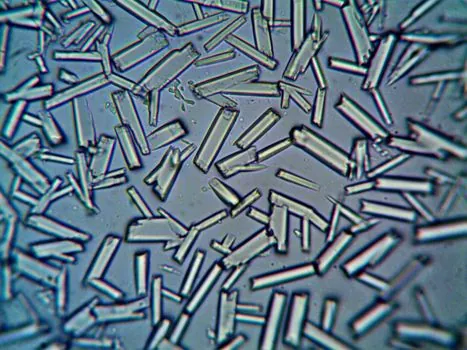
Filter elements split into two operational classes: micronic and 5-micron elements use non-cleanable media and are discarded at change-out, while porous metal, woven mesh, and magnetic elements are designed to be cleaned and returned to service [S4]. A standard 5-micron disposable element is built from organic and inorganic fibers integrally bonded with epoxy resin, faced with metallic mesh upstream and downstream for mechanical strength, with a support structure that includes plastisol seals, end caps, support frames, and pleat separators [S4].
Reusable elements cost more per piece but dominate total cost of ownership in continuous-process service, on compressor lube loops, gas turbine fuel gas, and any line where the contaminant is known and cleaning is economic [S1][S5]. The four hard performance criteria a process engineer should grade any element on are high beta efficiency, minimal pressure drop, high dirt holding capacity (DHC), and beta stability across element life, per Schroeder Industries' 2026 guidance [S6].
Hydraulic, air, oil, and fuel gas: application-specific element choices
Hydraulic elements protect pumps, valves, and actuators and split into return line (full-flow), pressure line (critical component protection), and suction strainer (pump inlet) configurations, with Parker and Hydac sets the industry treats as baseline part numbers [S1]. Air elements range from dust collector cartridges through HEPA for fine particle capture to carbon stages for oil vapor and odor, with Parker compressed air elements typical for instrument-quality air [S1].
Fuel gas elements on the Anderson/Clark-Reliance line illustrate the high-end specs: the 2710 coalescing element is rated at 99% efficiency with 0.3-micron aerosol removal, the ACR element is built for 0.3-micron particle and aerosol removal in gas gathering and transmission, and the CRSF delivers 1-micron particle removal in filter-separator service [S5]. HVF elements extend the same media family into high-viscosity gear and synthetic lubrication fluids with internal support for pore integrity [S5]. For the broader filtration-apparatus landscape these elements slot into, the checking and testing apparatus index is the right starting point when validating beta ratings in the lab.
Construction types and HS code position for procurement

By construction, the four practical buckets are depth filters (high DHC, gradient density), surface filters (sharp cutoff, cleanable), membrane filters (precise pore, used for final polish), and coalescing filters (liquid-from-gas separation) [S1]. The replaceable-element family itself breaks into three hardware formats per Sutherland and Purchas: panel or cassette elements for air filtration, bag or pocket elements, and cartridge elements, with most liquid-service cartridges built around a pleated medium stabilized into a pleat-pack with end caps and seals [S4].
For customs and import paperwork, most filter elements fall under HS code 8421, the heading for centrifuges and filtering or purifying machinery, with sub-codes driven by application and material [S1]. Nominal fineness bands the procurement team will see on datasheets are 5/10/25/40 microns for paper elements and 40/80/120/160 microns for mesh elements [S3].
Selection rules and what disqualifies an element on the spot
Match the rating to the cleanliness target: nominal ratings (typical of cellulose and wire mesh) are acceptable for bulk contaminant control, but absolute ratings (typical of glass and membrane media) are required when a hydraulic servo or a fuel injection system is downstream [S2][S4]. Match the media to the fluid: cellulose is not acceptable with high water content or aggressive chemistry, glass handles water and higher temperatures, wire mesh handles aggressive fluids and elevated temperature, and resin handles varnish and oxidation byproducts in lube oil [S2].
Do not specify a non-cleanable micronic element where the contaminant is known and reusable elements would survive, because the operating-cost delta over a year on a single compressor train typically dwarfs the purchase-price gap [S4]. Do not run a nominally rated cellulose element where particle shedding back into the system is unacceptable, since cellulose actively releases captured dirt under load and temperature [S2]. For a peer spec reference on a related fluid-system component family, see the sealing washer types and classifications 2026 spec reference, which uses a similar criteria-based comparison format.
Trackable signals to watch next: published updates to ISO 4406 solid-contamination codes for hydraulic fluids and any revision of the multi-pass beta ratio test (ISO 16889) that changes how DHC is reported on element datasheets. For background on how DHC and beta efficiency tie back into full filter-housing sizing, the construction machinery and equipment reference is a useful cross-check, since off-highway hydraulic loops are the most demanding benchmark for reusable element design.