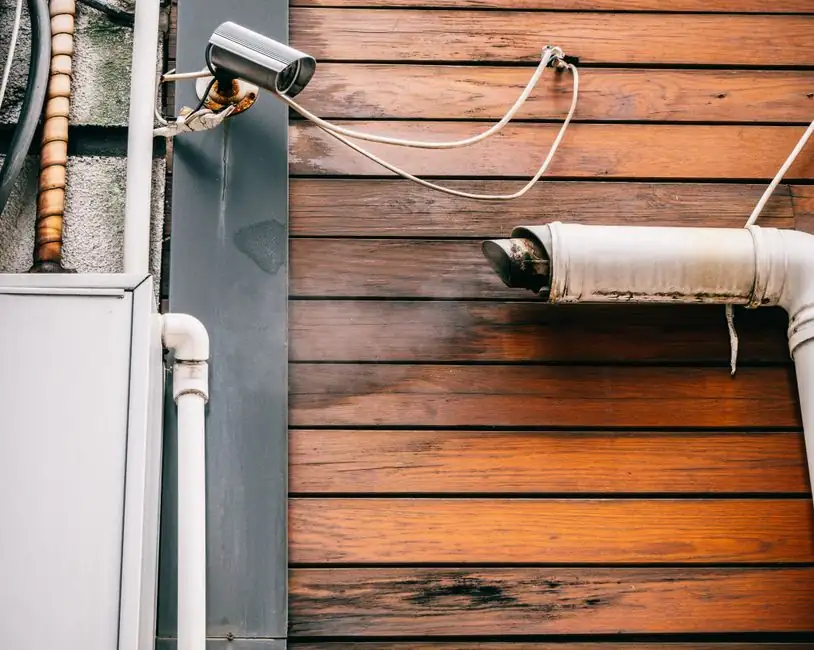
Specify 316/316L stainless steel when a fixed gas detector faces chloride-containing moisture, coastal exposure, or demanding washdown, because 304 can pit under those conditions [S1].
The material decision is not a stand-alone IP rating or explosion-proof claim: enclosure suitability depends on the tested assembly, sensor gas path, seals, cable entries, maintenance, and hazardous-area certification [S1].
Material Selection by Corrosion Exposure
304 stainless steel is often suitable for general industrial service with moderate corrosion exposure, while 316 or 316L is generally preferred where chloride-containing moisture, coastal exposure, or demanding washdown is present [S1]. Material selection depends on the corrosive atmosphere, installation location, hazardous-area requirements, sensor gas path, thermal conditions, maintenance practices, and total installed cost.
A compatible engineering polymer may be suitable for certain non-hazardous or specially certified applications. A polymer selected only for low weight can therefore be unsuitable in a chemical washdown area even when its dry housing looks unaffected [S1].
Coated aluminum can provide a robust, lighter enclosure for many fixed detectors. For detailed guidance on stainless steel, compare the alloy grade and exposure rather than treating “stainless” as one performance class.
Stainless Steel or Polymer: Decision Criteria
The best enclosure material is not automatically the most expensive one. A compatible engineering polymer may be suitable for certain non-hazardous or specially certified applications, depending on the installation conditions.
Neither thermal conductivity nor material choice alone establishes a detector’s certified temperature range or ingress rating [S1].
For a fixed installation, stainless steel is the stronger default where mechanical damage, washdown, chloride exposure, or long field service is credible. Polymer is more defensible for a non-hazardous or specially certified installation where exposure is mild, weight matters, and the complete detector has verified chemical and ingress performance [S1].
Sensor Access, Sealing, and Maintenance
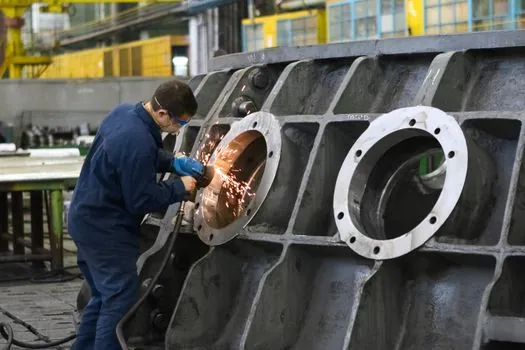
The housing must protect the electronics without preventing the target gas from reaching the sensor [S1]. Housing suitability depends on the sensor gas path, and blocked gas inlets can compromise the monitoring system.
Fast response depends on the housing and gas path working together: a poorly designed housing can delay the arrival of gas at the sensing element [S2]. Housing selection must therefore support sensor replacement without introducing blocked apertures, damaged seals, or incompatible cleaning chemicals [S1][S4].
Stainless steel housing can provide structural protection and environmental sealing, but its benefits depend on the tested enclosure rather than the alloy label [S1][S2]. A polymer housing can also protect internal components, yet its performance in wet, dusty, acidic, or caustic environments must be established for the actual resin and assembled product [S2].
Where Each Material Fits
316 or 316L is frequently preferred where chloride-containing moisture, coastal exposure, or demanding washdown conditions are present.
Use a certified polymer or composite housing where the installation is non-hazardous, the chemical and UV exposure are controlled, and low mass or corrosion-free appearance has engineering value. A non-metallic GRP enclosure can provide corrosion resistance and may be integrated with a strobe and optional horn for hazardous-location applications when that product has the required certification [S6].
Stainless steel is not the right choice solely because the site has a hazardous-area classification. The protection concept, gas group, temperature class, surface-temperature behavior, electrostatic behavior, grounding, and certification of the complete detector must govern the selection. The housing also affects grounding, electromagnetic shielding, and static-charge behavior [S1].
Detection Architecture and Housing Requirements
Fixed detectors are suited to continuous area monitoring, while portable instruments cover locations that cannot economically receive fixed coverage [S4][S5]. This architecture favors a robust enclosure with controlled gas entry and secure cable interfaces rather than a thin portable-style shell.
For toxic gases, a dedicated single-gas sensor can be justified when the target gas, alarm threshold, cross-sensitivity exposure, and maintenance plan are clearly defined; adding gases does not automatically improve protection [S8]. The housing around that sensor still needs an unobstructed diffusion or sampling path, and the sensor module should be replaceable without using incompatible solvents or adhesives [S1][S8].
Combustible-gas and toxic-gas systems should also be coordinated with alarm hardware. A fixed gas alarm controller handles the broader signal and annunciation architecture, but it does not compensate for a detector whose housing leaks, blocks gas flow, or lacks the required environmental and hazardous-area certification [S1][S4].
Procurement Specification and Failure Modes
Write the material requirement as an exposure-based specification: state 304, 316, or 316L; identify chloride, salt, acids, caustics, solvents, washdown frequency, UV exposure, temperature, and cleaning agents; then require compatibility evidence for every seal, gasket, cable gland, and adhesive [S1]. This avoids accepting “stainless,” “plastic,” or “corrosion resistant” as sufficient procurement terms.
The principal failure modes are pitting or crevice corrosion, coating breakdown, galvanic attack, UV embrittlement, seal degradation, blocked gas inlets, water entry, and loss of fastener integrity [S1]. Material selection also does not create an IP66, IP67, or explosion-proof rating by itself; those properties belong to the complete tested enclosure or equipment design [S1].
Require the supplier to identify the detector model, enclosure grade, ingress certification, hazardous-area certification, operating-temperature limits, sensor materials, seal materials, and compatible cleaning agents. For fixed gas detector packages, this model-level review is more defensible than a generic stainless-versus-polymer preference.
Recommended Selection by Installation
For chlorides, coastal air, marine splash, washdown, or chemically aggressive service, specify 316 or 316L stainless steel, verify isolation of dissimilar metals, and inspect seals and fasteners as part of routine maintenance [S1]. For general industrial areas with moderate corrosion and no aggressive washdown, 304 stainless steel can provide a simpler, economical choice [S1].
For a light, non-metallic design, select polymer only after the complete detector has documented chemical resistance, UV performance, ingress protection, temperature limits, and the required hazardous-area certification [S1][S6]. A GRP housing is appropriate only where its tested design covers the actual gas, location, alarm arrangement, and hazardous-area requirements [S6].
For corrosive brackets and mounting hardware exposed to the same washdown or atmosphere, evaluate them separately from the sensor housing. Matching the detector housing to a compatible mounting material limits galvanic and crevice-corrosion risks that an otherwise sound detector enclosure cannot prevent [S1].