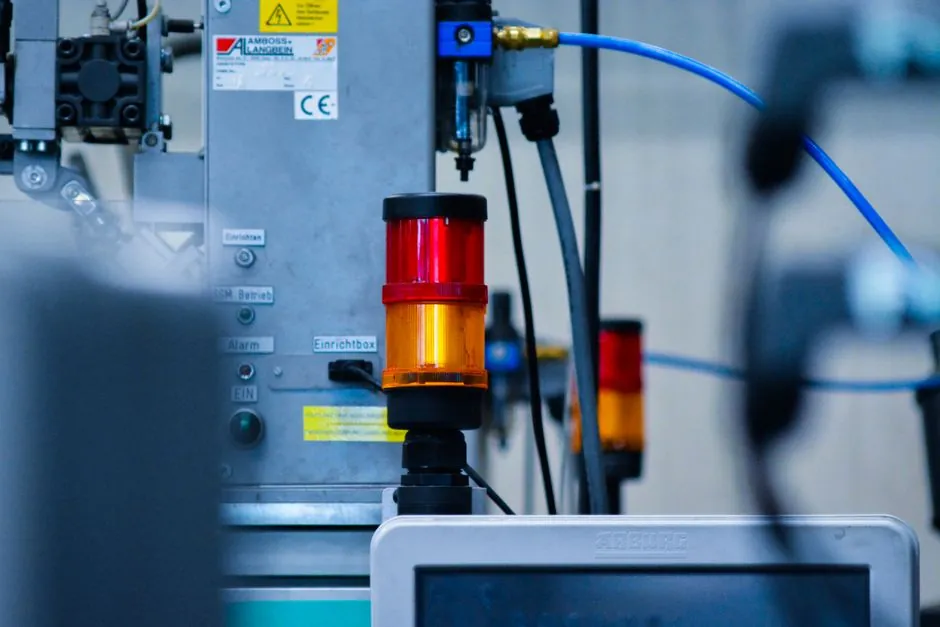
Replacement planning must separate the sensor warranty from actual service life because exposure concentration, temperature, ventilation, maintenance, and cell chemistry determine how long a cell remains reliable.
Electrochemical Cell Life Varies by Gas and Service
Electrochemical cells have no universal expiry date: published guidance describes ordinary sensors lasting 2 to 3 years, while 5 years or more is not unusual under suitable conditions [S1][S4].
Application-specific figures are more useful for maintenance planning.
Use Exposure and Temperature as the Replacement Triggers
These values show why an average annual temperature is insufficient for maintenance planning: peak temperature, duration, and repeat frequency determine whether thermal stress becomes cumulative.
Compare Cell Options by Life and Exposure Risk
For a fixed toxic-gas installation, a 3-year CO service interval is defensible in a garage or car park, whereas a 2-year interval is more conservative for laboratories and general industrial service [S2]. For ammonia, the planning interval should reflect a 1 to 2-year cell life, and for oxygen depletion the comparable galvanic-cell replacement window is 2 to 3 years [S2][S3].
The main selection comparison is therefore service-based rather than chemistry-wide. A 10-year expectation reported for favorable electrochemical service conditions does not override manufacturer-specific replacement intervals [S5].
Electrochemical sensing is suited to toxic gases and oxygen, but infrared sensing remains the established alternative for CO2, while catalytic and infrared technologies serve combustible-gas detection [S2]. A fixed gas detector specification should therefore identify the target gas, measurement principle, cell model, rated range, and documented service interval rather than assign one lifetime to all electrochemical gases.
Poisoning Can End Service Before the Nominal Expiry
Silicones, halogens, hydrogenated hydrocarbons, tetraethyl lead, hydrogen sulfide, and sulfur dioxide are identified as inhibitors or poisons that can alter sensor response and, in some cases, cause irreversible damage [S2]. This creates a failure mode that calendar-based replacement cannot solve by itself because a cell can lose sensitivity while its remaining warranty period is still substantial.
Maintenance access also matters because it determines whether cells and membranes can be inspected before accuracy becomes unreliable. A toxic gas detector should be commissioned with documented bump tests, calibration records, alarm thresholds, and installation data identifying ventilation and contaminant sources.
Electrochemical cells commonly use a permeable or hydrophobic membrane to admit target gas while limiting water and oil ingress. Diffusion cells admit ambient gas through a front opening, while pumped instruments deliver a sample through the cell [S3]. These arrangements influence maintenance requirements, but neither arrangement guarantees a fixed life in a contaminated atmosphere.
Align Warranty, Storage Life, and Service Intervals
Separately, NET states that its PREMIUM LINE and SAFETY LINE electrochemical sensors carry a 2-year warranty against defects, with loss of sensitivity treated as a condition that can reduce remaining useful life [S8].
Those numbers describe different things. A 6-month storage period limits how long a sealed cell can wait before installation, a 2-year warranty covers specified defects rather than guaranteed capacity, and a 2 or 3-year maintenance interval reflects expected field service [S3][S8]. The sensor specification, storage record, calibration history, and exposure profile must therefore be read together.
For procurement, define three separate dates: the cell's manufacturing or installation date, the end of its warranty, and the next condition-based inspection or replacement date. The gas detector maintenance plan should retain those dates alongside measured concentrations and any thermal or chemical exposure events.
Verify the Fixed Installation Throughout Its Life
A fixed electrochemical cell should be checked routinely because its response, zero output, and sensitivity can drift with temperature and service exposure [S3]. Galvanic oxygen cells normally have predefined replacement periods of 2 or 3 years, while toxic-gas cells need condition-based verification because exposure concentration directly changes the remaining useful life [S2][S3].
Specification and maintenance records should state the rated operating range, normally -30°C to +50°C for many instruments; the low-temperature limit where substantial sensitivity loss can occur; the target-gas range; and the applicable replacement interval [S3]. Installation records should also identify persistent CO, ventilation restrictions, thermal peaks, and catalyst or solvent exposure that can reduce cell life below its nominal interval [S2].
The next actionable signal is the installed population's remaining-life profile: compare each cell's installation date, calibration trend, peak exposure, and ambient history, then replace cells when they reach their application-specific interval or show unacceptable drift. For fixed systems where this maintenance burden matters, the multi-gas detector architecture should make cell identity and service data traceable per sensing point.