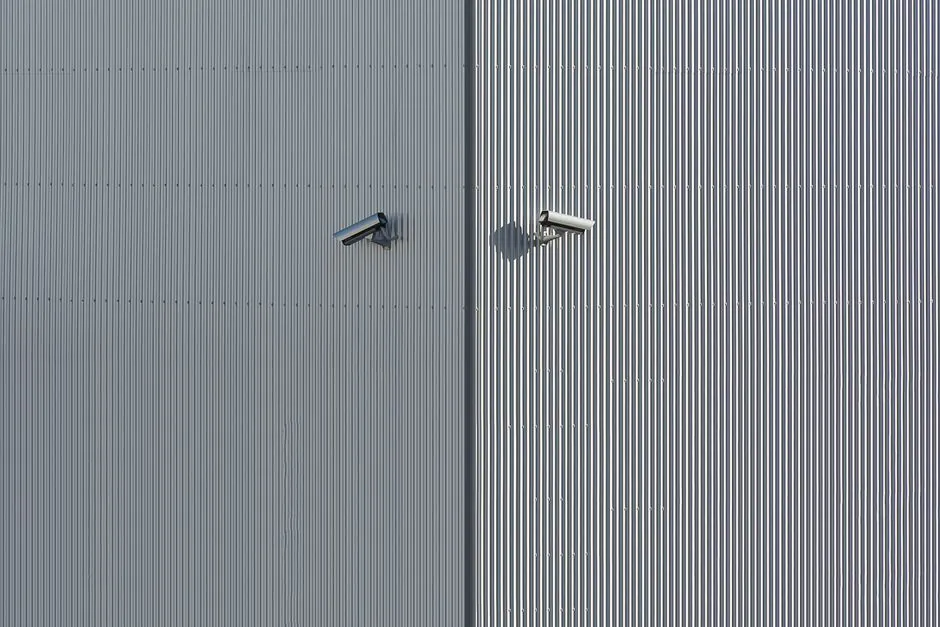
Fixed cameras provide continuous coverage of defined warehouse perimeter points, while PTZ cameras can cover up to 360 degrees horizontally and inspect distant activity using optical zoom.
The practical decision depends on the perimeter geometry, risk points, staffing model, network capacity, and whether evidence must be captured continuously or reviewed actively.
Coverage geometry and operational evidence
A fixed security camera remains aligned with one assigned scene, so it records the same field of view throughout the day. This makes fixed cameras appropriate for pedestrian gates, vehicle portals, fence lines facing storage areas, dock approaches, and other defined locations where an incident must be documented without relying on a live operator [S2][S3].
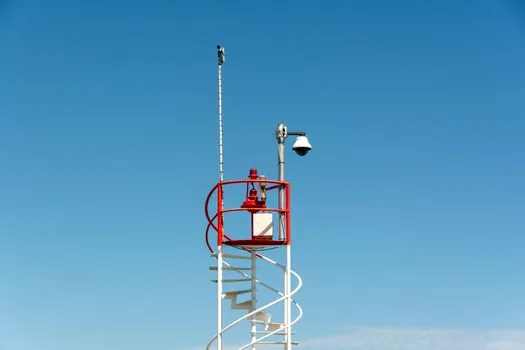
A PTZ camera uses motorized pan, tilt, and optical zoom to move between targets or patrol preset areas. PTZ cameras can pan horizontally, tilt vertically, and zoom in on specific targets, while fixed cameras remain locked in one position with a single field of view. Those figures describe capability, not simultaneous coverage, because a PTZ can monitor only the area toward which it is directed [S1][S5].
For a warehouse perimeter, the critical distinction is persistence. A fixed camera does not look away when an operator follows a suspect elsewhere, but it also cannot redirect toward a new event. A PTZ can inspect a wider yard, yet events outside its active direction or programmed patrol route may be missed [S1][S2][S4].
Decision criteria for a perimeter design
Choose fixed cameras where the scene is predictable, the risk point is known, and the evidentiary requirement is continuous. Choose PTZ cameras where a large yard or irregular perimeter must be searched from one elevated position, an operator is available to direct the camera, or analytics must cue the camera toward detected activity [S2][S4][S8].
Evaluate five project criteria before assigning equipment: the required field of view, the distance to potential targets, the acceptable loss of coverage during movement, the monitoring workload, and the lifecycle cost. For a multi-sided perimeter, list every gate, fence segment, cargo area, blind corner, and vehicle lane before counting cameras [S2][S3].
Fixed cameras are the stronger choice for unattended coverage and predictable evidence capture. PTZ cameras are the stronger choice for flexible, active inspection. Neither type should be used as the sole protection for a broad or high-risk perimeter, because fixed cameras lack reach and PTZ cameras introduce movement-related blind periods [S2][S6].
Fixed and PTZ options compared
This comparison rules out a one-size-fits-all approach. Fixed cameras win on persistence, predictable network loading, and low mechanical complexity. PTZ cameras win on search flexibility and long-range optical detail, but require a control strategy and accept temporary loss of scene coverage. [S3]
Perimeter use cases and correct placement
Deploy fixed cameras at pedestrian entrances, emergency exits, dock-door approaches, parked high-value inventory areas, and fence sections that face storage buildings. These positions require one stable image showing every person or vehicle entering the defined scene. Fixed multi-sensor or panoramic models remain fixed because they lack continuous pan-tilt-zoom positioning [S2][S5].
Deploy PTZ cameras on masts or towers overlooking large truck courts, open yards, and long or irregular fence runs. A PTZ can scan a wide area and zoom toward a suspicious person, vehicle, or package, particularly when a security operator or event-driven analytics directs it [S1][S4][S8].
For thermal perimeter applications, use the type that supports the required cue-and-verification process. PTZ thermal cameras provide movable inspection and cueing capability, while fixed thermal cameras preserve a constant view for persistence. Their selection depends on coverage continuity, detection cueing, and the need to verify an alarm [S8].
Because fencing technology can determine which events reach a video system, fence-mounted versus buried cable sensors should be evaluated alongside camera coverage rather than treated as an isolated perimeter decision.
Failures that appear after installation
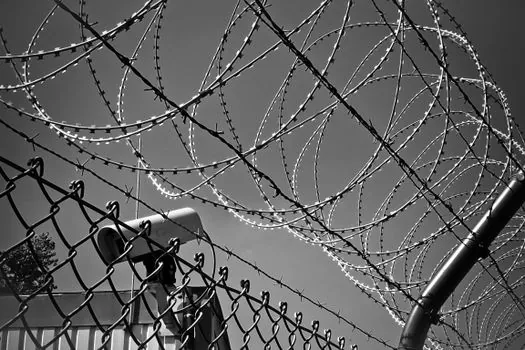
A fixed camera's principal failure mode is poor scene design. If the lens, mounting height, lighting, or aim is wrong, the unit cannot compensate by redirecting toward an intruder. Shelf changes, new gates, yard expansion, and relocated cargo can also create blind spots that require a camera to be added or repositioned [S2][S4].
PTZ failure modes include missed events outside preset waypoints, loss of the assigned scene while panning, mechanical wear, calibration drift, and degraded network performance during high-resolution movement. Dust, wind, and vibration can affect PTZ mechanisms more directly than rugged fixed housings, while preset patrol patterns can miss fast-moving events [S4].
Neither platform removes the need for a defined response process. Fixed systems need dependable recording, retention, and scene-level review; PTZ systems need an operator or validated analytics that can direct the camera. A camera that can zoom but never reaches the correct view is not equivalent to continuous coverage [S2][S7].
Network, maintenance, and ownership planning
Budget for the complete camera architecture, not only the camera price. PTZ cameras support dynamic tracking and wide-area coverage, but their motors and greater bandwidth, PoE, mounting, and power requirements can increase deployment demands relative to fixed cameras.
PTZ streams generally consume more bandwidth and power while panning, tilting, or zooming, whereas fixed cameras usually produce steadier network loads [S3][S4]. Include switch capacity, PoE budget, structured cabling, storage for moving high-resolution streams, preventive maintenance, and spare-unit logistics in the lifecycle comparison [S3].
The selection is clear when the operating requirement is explicit. Use fixed cameras where the warehouse needs continuous evidence from a stable perimeter zone, and use PTZ cameras where the site needs active search and zoom across a larger area. Most warehouse perimeters perform better with a hybrid layout that combines both, rather than a single camera type applied uniformly.