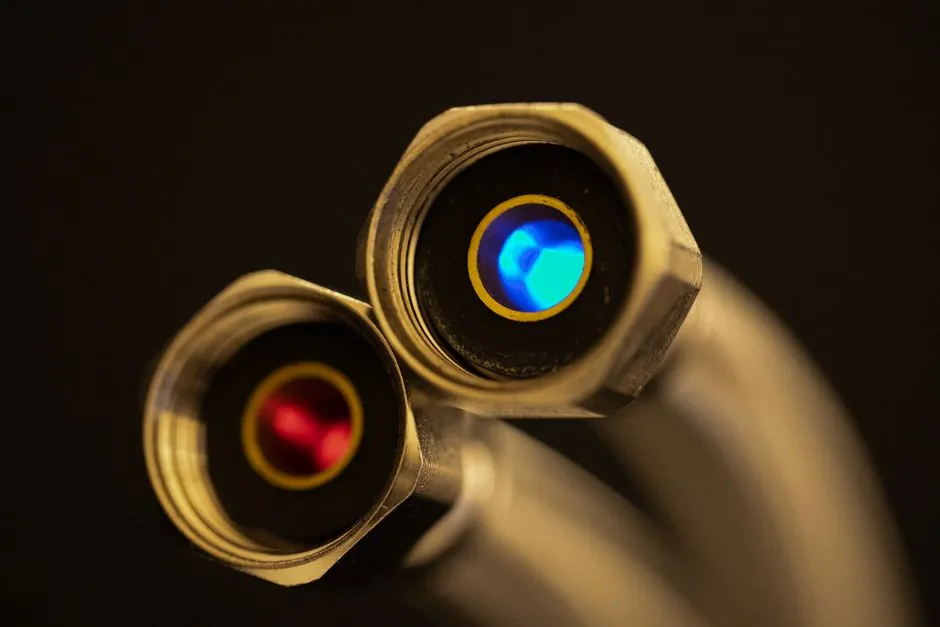
An FKM O-ring compression set test at 200°C commonly holds the seal at 25% compression for 22 hours before its permanent height loss is measured [S1][S4][S5].
The test is suitable for comparing FKM compounds for static seals, but specimen geometry, cure chemistry, cross-section, recovery time and service conditions can change the reported result [S1][S2][S3].
What the 22-Hour FKM Test Measures
Compression set is the residual deformation retained after an elastomer specimen has been compressed to a defined deflection, held at temperature, released and allowed to recover [S1][S5]. ISO 815-1 and ASTM D395 are the applicable test standards cited in the elastomer testing guidance, with constant deflection typically used for qualification testing [S1][S5].
For FKM, the commonly listed condition is 22 hours at 200°C, compared with 22 hours at 100°C for NBR and 22 hours at 125°C for EPDM; peroxide-cured EPDM is commonly associated with 22 hours at 150°C [S4]. These conditions are comparison points rather than universal proof of service life, because the standard method and compound specification must be stated together.
Compression set is expressed as a percentage, with lower values indicating better recovery. A value from 10% to 25% is generally treated as a good result, while a value above 40% is considered critical for O-ring longevity [S4].
Specimen Type Changes the Acceptance Value
ASTM D395 Method B uses parallel plates and spacers to impose a fixed deflection, usually 25%, whereas Method A applies approximately constant force and is rarely used for qualification testing [S1].
Engineers specifying an FKM O-ring should request the compound, hardness, cure system, cross-section and specimen method with the numerical result.
Cross-Section and Compression Stress
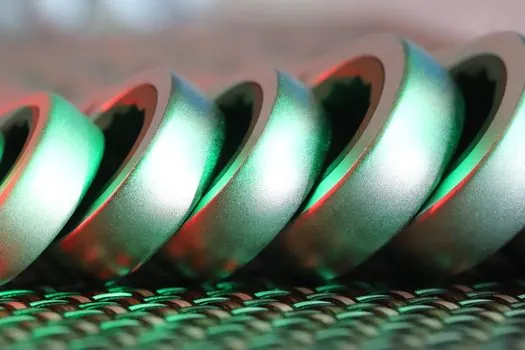
Compression ratio also controls the severity of the test. The reference data used 25% deflection, a common constant-deflection condition for elastomer specimens [S1][S5].
For FKM elastomer selection, the fluororubber family covers formulations whose resistance to heat, chemicals and compression set depends on fluorine content and cure chemistry.
Choosing Between FKM and FFKM
FKM and FFKM can both be screened at 200°C, but their test durations and compound-specific recovery behavior differ. A listed FKM comparison condition is 22 hours at 200°C, while FFKM is commonly associated with 70 hours at 200°C [S4]. FKM and FFKM generally provide the best compression-set resistance for demanding applications [S3].
A 2025 study reported measurements at 200°C for FKM and FFKM O-ring segments, with three segments per material and segments approximately 45 mm long [S6]. Compression stress relaxation measures force loss under sustained deformation, while compression set measures retained deformation after release, so the two results should not be treated as interchangeable [S2].
Material comparison must also account for cure selection, chemical compatibility and the actual sealing load. The decision sequence for an FKM O-ring is compound-grade selection first, 25% compression-set qualification second, and then a fit or seal test using the production gland and operating media.
What the Test Does and Does Not Prove
A 22-hour compression-set result is a screening comparison, not a complete seal-life calculation. Temperature, duration under compression, squeeze, chemical exposure and thermal cycling all influence permanent deformation [S3]. A compound that passes the 200°C test can still lose sealing force in a gland that applies high squeeze, aggressive chemicals or repeated temperature swings [S3].
Compound-specific qualification on the intended cross-section is therefore more defensible than accepting a generic datasheet number.
For static applications, a target of 25% or less is a practical initial screen because it falls within the commonly cited 10–25% good range [S4]. A result near 40% requires review of cure chemistry, recovery behavior, gland compression and operating media before the seal is approved.
Reading and Recording the Result
A complete test record should state ASTM D395 or ISO 815-1, the specimen type, 25% deflection, 22-hour dwell at 200°C, recovery period and calculated compression set [S1][S5]. The cited Viton ETP procedure allowed 30 minutes of unrestricted recovery after oven removal before measurement [S1]. Recording only “compression set at 200°C” leaves the specimen method and recovery condition undefined.
The result must also be linked to the commercial O-ring specification. A test of a generic FKM compound cannot establish performance for a different hardness, fluorine content, cure system, pigment package or manufacturer. The FKM cure selection guide provides a related framework for comparing how cross-linking choices affect compression set and chemical limits.
The next verifiable engineering step is to repeat or review the compound test at the production cross-section and specified squeeze, then verify that the recovered seal still develops the required contact pressure under the worst expected temperature and chemical exposure.