For static and dynamic sealing in mineral oil service, FKM (fluoroelastomer) is the specified elastomer; EPDM (ethylene propylene diene monomer) is not, because petroleum fluids are outside EPDM's compatibility window regardless of temperature or pressure class [S1][S3][S5].
The decision is fluid-driven first, temperature-driven second. EPDM tolerates hot water and steam up to about 150°C in many compounds, but performs poorly with mineral oils, hydraulic fluids, fuels, and most hydrocarbon lubricants, where it absorbs fluid, swells, loses hardness, and suffers compression-set creep [S3][S4][S5]. FKM, by contrast, is engineered for petroleum media, with continuous service commonly cited near 200°C and strong resistance to mineral oil, synthetic lubricants, fuels, and aromatic hydrocarbons [S2][S5]. A companion fluororubber selection primer walks through the FKM family, while the EPDM material profile covers the peroxide-cured grades that dominate water and steam lines.
Fluid compatibility: where the two elastomers actually diverge
Standard chemical-resistance charts are built on laboratory immersion at room temperature and do not by themselves capture additive packages, elevated temperature, or sustained mechanical load [S2]. EPDM is rated strongly for hot water, steam, glycol coolants, dilute acids and bases, ketones, and alkalis, and is the default elastomer for hydronic, plumbing, chilled-water, and outdoor exposure [S1][S3][S4]. FKM is rated strongly for mineral oils, synthetic lubricants, fuels, aromatic hydrocarbons, and many aggressive chemicals, and is the default for automotive fuel systems, chemical processing, oil and gas, and aerospace sealing [S2][S3][S4]. The two envelopes barely overlap on the petroleum axis: a fluid that is benign for FKM is typically aggressive for EPDM, and vice versa for water and steam [S5].
Operating-temperature ranges reinforce the split. Merit Brass publishes FKM service spans of -20°C to 180°C on stainless press systems and -10°C to 145°C on carbon steel press systems, against EPDM at -20°C to 110°C on stainless press systems and -40°C to 148°C on carbon press systems [S1]. For high-temperature capability in general elevated-service framing, EPDM compounds cluster near 150°C, FKM compounds near 200°C, and silicone near 200°C with specialized compounds higher, but each polymer is paired to its native fluid family, not used across the board [S5].
Mechanical behaviour under sustained oil contact
EPDM in mineral oil typically exhibits volume swell in the range of dozens of percent, accompanied by a sharp drop in hardness and tensile strength, which destroys the gasket's ability to maintain bolt load on a flanged joint [S2][S3]. The failure is not a temperature failure first; it is a fluid-compatibility failure that gets worse as temperature rises. EPDM is also noted for poor compression-set recovery in some formulations once it has absorbed oil and then been depressurized, which leads to weep paths on cooling cycles [S3][S7].
FKM in the same mineral oil at the same temperature typically shows single-digit percent volume swell, stable hardness, and stable tensile strength across the rated window, which is why it is the baseline for oil-pan gaskets, transmission seals, hydraulic O-rings, and chemical-process flange gaskets [S2][S3][S4]. The reference framing in the oil-seal design notes treats FKM-class materials as the mineral-oil default, with HNBR and NBR as cost-down alternatives where the temperature ceiling allows. For a closer read on the upper thermal limit and what "around 200°C" actually permits in continuous service, the FKM continuous vs peak temperature piece is a useful cross-check.
Decision matrix: FKM vs EPDM on the criteria that matter
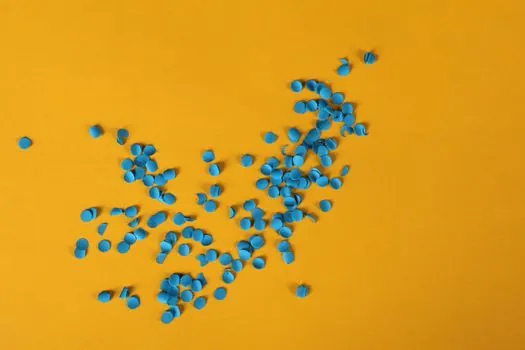
The four criteria that drive the call in mineral oil service are fluid compatibility, continuous-temperature ceiling, mechanical durability, and unit cost. FKM wins three of the four by a wide margin and loses on cost; EPDM wins only on cost, and only when the fluid is water or steam, not oil [S1][S2][S4][S5].
Mineral oil swell resistance is rated strong for FKM and poor for EPDM, which is the single most important line in the matrix [S3][S5]. Continuous-temperature ceiling sits near 200°C for common FKM compounds versus roughly 150°C for typical EPDM, with both numbers compound-dependent [S5]. Mechanical wear and extrusion resistance is generally stronger for FKM than for EPDM in dynamic service, while EPDM is the better low-temperature flexibility choice for cold-start water systems [S4][S5]. Unit cost is the only line on which EPDM beats FKM, and that gap is the reason EPDM is sometimes wrongly substituted into oil service on price-driven purchase orders [S4].
Use cases and explicit non-recommendations
Specify FKM, including Viton-class FKM, for any gasket or O-ring that sees sustained contact with mineral oil, synthetic lubricants, hydraulic fluid, diesel, gasoline, or aromatic hydrocarbons, including engine, transmission, hydraulic-pump, compressor, and chemical-process flange service [S2][S3][S4][S6]. Specify EPDM for hydronic heating, potable water (with the correct certifications), chilled water, steam, glycol coolant, and outdoor or UV-exposed service where no petroleum fluid is present [S1][S3][S4]. The base sealing principles reference and the gasket material overview frame the joint-design and bolting inputs that go with either choice.
Do not specify EPDM for mineral oil service, even at room temperature, even at low pressure, and even on a cost-driven requisition; the failure mode is swelling, hardness loss, and compression-set creep, not a clean leak that trips an alarm, which makes it one of the more expensive ways to save a few dollars per gasket [S2][S3]. Do not specify standard-grade FKM for hot water and steam above its rated window without checking compound data, and do not specify FKM for ketones, esters, amines, or certain aggressive chemicals where compatibility must be re-verified against the specific medium [S5]. For a deeper read on the polymer backbone that gives FKM its oil resistance, the FKM polymer composition and trade-offs piece is the right next stop. Air-compressor service with hot oil carryover and intermittent steam exposure is a known edge case where FKM is preferred for continuous hot-oil duty and EPDM is acceptable only on the cool, water/steam side of the cycle [S6].
Two trackable signals to watch going forward: (1) compound-specific FKM data sheets for sustained service above 200°C in synthetic ester and phosphate-ester lubricants, where grade selection matters more than the generic FKM label, and (2) any plant incident-data updates that quantify how often EPDM ends up in oil service by mistake, since the cost gap between the two elastomers is small relative to the cost of an unplanned hydrocarbon release [S2].