
FKM is the stronger choice for valve stem seals exposed to sustained heat, aggressive lubricants, or extended service intervals, because it resists hardening and retains sealing stability better than standard NBR [S1][S2].
NBR is usually more economical for conventional engines operating within moderate temperatures with mineral oil, while FKM targets hotter engines, turbocharged systems, synthetic fluids, and longer replacement intervals [S2][S5].
Temperature and Chemical Limits Drive the Decision
Standard NBR is commonly considered across approximately -20°C to 100°C for continuous automotive service, whereas FKM is commonly used across -10°C to 240°C, subject to the specific compound and application [S1]. Published comparison tables show somewhat different generic limits: -30°C to +120°C for NBR and -20°C to +230°C for FKM [S3], and approximately -30°C to +100°C versus -20°C to +200°C for continuous use [S5]. These are screening ranges, not a substitute for grade-specific limits.
NBR provides good resistance to mineral oils, greases, and many petroleum-based fluids, but its resistance falls with oils containing polar additives, biofuels, and other aggressive media [S1][S4]. FKM generally performs better with hot oils, fuels, synthetic lubricants, and additive-heavy fluids, but neither polymer family is universally compatible with every chemical, steam, hot water, or fuel [S4].
For a valve stem seal, the practical temperature duty is more important than a headline maximum. Intake and exhaust zones can experience different heat loads, while a low-speed vehicle, a turbocharged engine, and a motorsport application can impose different lubricant, pressure, and stroke conditions on the same elastomer family [S1][S5].
Wear Life, Hardening, and Sealing Force
FKM generally retains elasticity and resists high-temperature hardening better than NBR, which reduces the likelihood of lost contact pressure, oil migration, and premature leakage in hot service [S1][S3]. One comparison reports a 40–50% reduction in NBR sealing force above 100°C, while FKM maintains consistent sealing contact pressure over its operating range [S7]. That value is a comparative research result rather than a universal design allowance.
FKM is generally preferred over NBR for high-temperature and more demanding chemical environments, while NBR is often suitable for standard applications under moderate conditions [S1][S3][S4]. Greater initial hardness can support durability and resistance to extrusion, but it may increase installation force and make the sealing lip less tolerant of poor guides, sharp edges, surface defects, or misalignment. Dynamic wear depends on the complete seal design, lubricant, reciprocating speed, pressure, and contamination, not polymer family alone [S5].
A direct dynamic-seal comparison covering friction, wear, and service life is useful when the valve stem motion, lubricant, and contact pressure can be quantified. For routine service work, NBR remains defensible where the operating envelope is mild and replacement cost is low [S2][S8].
Cost and Service-Interval Trade-Off
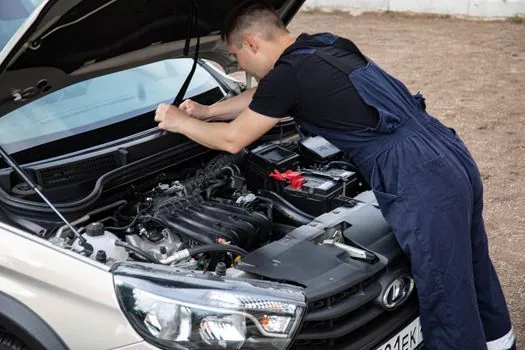
FKM raw material and seal cost are higher than NBR, while NBR is easier to process and normally less expensive in mass-produced or cost-sensitive applications [S1][S2]. That cost difference should be tested against replacement labor, oil contamination, exhaust emissions, and the consequence of an in-service leak rather than seal price alone [S2].
A seal material should be selected by matching it to the operating temperature, fluid exposure, maintenance interval, service-life requirement, and total cost of ownership rather than by price alone [S2]. FKM becomes economically stronger when heat, chemical exposure, or labor access makes early failure disproportionately expensive [S1][S2]. No universal mileage figure can be assigned without the engine, oil, temperature spectrum, and replacement interval.
A service decision can use three measurable variables: peak and continuous stem-seal temperature, lubricant and fuel composition, and the interval between oil consumption checks or valve-train inspections. The fluororubber choice is justified when at least one of those variables is severe enough that standard NBR hardening would compromise sealing before the planned service point.
Application-by-Application Material Selection
Use NBR for a non-turbocharged production engine with compatible mineral oil, moderate metal temperatures, and a short, accessible replacement interval. The material combines good oil resistance, practical mechanical properties, and lower cost, and it is commonly used in standard engines, gearboxes, pumps, and general machinery [S2][S5].
Use FKM for a turbocharged or high-output engine, a transmission or gearbox exposed to elevated oil temperature, or a service interval extending into sustained high heat. FKM is also appropriate where synthetic or additive-heavy lubricants create chemical exposure beyond ordinary NBR capability [S1][S5]. The relevant material background for nitrile rubber confirms that compound formulation, including acrylonitrile content, can change temperature, hardness, compression set, and chemical behavior [S4].
Do not select FKM merely because the engine has a high peak exhaust temperature. A short heat spike does not establish a continuous high-temperature duty, and FKM does not compensate for poor stem-guide geometry, excessive clearance, damaged guides, contaminated oil, or incorrect preload. Conversely, do not retain NBR solely to avoid material cost if the measured continuous zone exceeds its compound limit or the lubricant is outside its verified compatibility envelope [S4][S5].
Selection Criteria Compared Side by Side

On cost, NBR is normally lower; on high-temperature aging and compatibility with aggressive lubricants or fuels, FKM is normally stronger; on low-temperature flexibility, NBR is often more forgiving; and on long replacement intervals in hot service, FKM is generally the more defensible option [S2][S4]. These criteria explain why there is no universally superior valve stem seal material.
FKM is the better specification for hot-duty valve stems, turbocharged applications, aggressive fluids, and replacement intervals where failure cost is high. NBR is the better specification for moderate-duty engines, compatible lubricants, accessible replacement points, and cost-sensitive maintenance programs. The material names are polymer families, so the final purchase specification must identify the actual compound and verify its fluid compatibility, temperature limit, hardness, and compression set [S4].
Verification Before Installing a Replacement Seal
Record the measured or traceable stem-seal temperature, oil type, fuel content, engine speed, and planned service interval before ordering. Do not substitute a generic NBR or FKM seal merely because its nominal size fits: valve stem seals also need the correct internal diameter, outside diameter, width, lip geometry, spring or expansion-control feature, and installation relationship to the guide [S5].
Condition-based validation is the next practical node. After replacement, inspect the seal for lip deformation, hardening, cracking, swelling, guide scoring, and carbon deposits, then check oil consumption and visible leakage at a defined mileage or operating-hour interval. If the duty exceeds NBR limits, specify a documented FKM compound rather than a generic FKM label; the differences between polymer families are outlined for industrial rubber compounds.