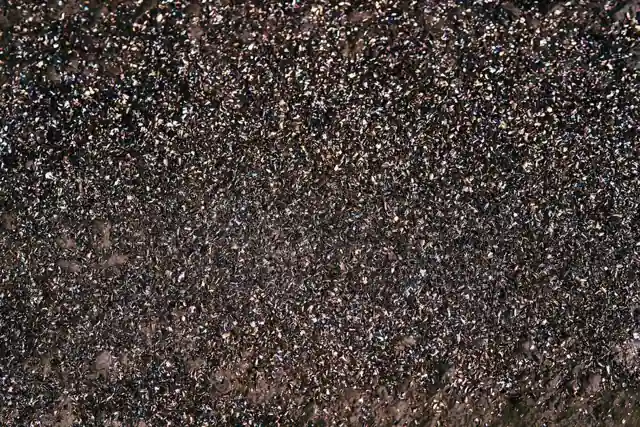
Spheroidal graphite cast iron has greater ductility than gray iron, while gray iron contains flaky graphite and spheroidal graphite iron contains nodular graphite particles [S1][S4].
Both are iron-carbon-silicon castings containing more than 2% carbon, but graphite morphology changes stress concentration, fracture behavior, damping, and casting selection [S3].
Microstructural Difference and Stress Effect
Flake graphite iron contains interconnected graphite flakes, whereas spheroidal graphite iron contains approximately spherical graphite nodules produced by magnesium and/or cerium treatment [S1][S3][S4]. A flake behaves as a sharp internal notch and creates a concentrated stress path through the matrix. A nodule has a rounded interface, reduces local stress concentration, and therefore supports ductile deformation.
The matrix is a separate design variable. Spheroidal graphite iron can have ferritic, pearlitic, acicular, or austenitic matrices, depending on heat treatment and alloying [S1]. Flake graphite irons are classified by graphite type, size, and matrix; Type A has uniformly distributed, randomly oriented flakes and commonly provides the best gray-iron properties for powertrain parts [S3].
Flake graphite morphology is also classified beyond Type A. Type B forms random rosettes, , and Type D consists of fine flakes formed in rapidly cooled interdendritic regions [S3]. Inspecting graphite type, size, distribution, and matrix condition is therefore more useful than classifying a casting simply as “gray iron.”
Criterion-by-Criterion Material Comparison
On tensile strength, spheroidal graphite iron is the stronger option at 400–600 MPa, compared with 200–300 MPa for gray flake graphite iron [S4]. These are representative grade-level ranges, not acceptance values for a particular casting.
Gray iron remains useful where vibration damping and thermal transfer are priorities, but its graphite flakes produce lower toughness and greater crack sensitivity under impact [S1][S3]. Spheroidal graphite iron is the appropriate choice for crankshafts, pressure-containing pipe, heavily loaded brackets, and components where fracture tolerance matters [S4].
Gray iron normally wins on first cost, casting ease, machinability, damping, and heat-transfer performance [S3]. Spheroidal graphite iron requires nodularization treatment and tighter chemistry control, adding process complexity, but it can use the same general iron-carbon-silicon casting system. For a heat-resistant manifold, vibration-sensitive housing, or brake-disc blank, gray iron may deliver the better functional-to-cost ratio. For a safety-critical loaded joint, ductility generally outweighs a modest process-cost premium.
Application Fit and Real Operating Constraints
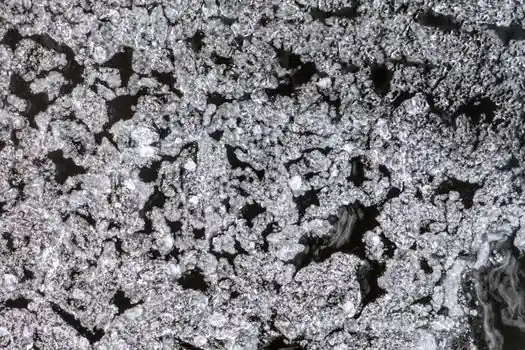
Gray flake graphite iron has established use in cylinder blocks, cylinder heads, brake discs, and heavy housings because it combines good castability, machinability, damping, and thermal transfer [S3]. A 2024 brake-disc study evaluated flake graphite cast iron microstructure and hardness using destructive tests, metallography, and the non-destructive Barkhausen noise method, and related graphite-precipitate volume, size, and anisotropy to magnetic parameters [S2].
Spheroidal graphite iron is better suited to crankshafts, pipe fittings, gears, shafts, and heavy machinery parts subjected to dynamic or tensile loading [S4]. Its graphite nodules permit a matrix dominated by iron to sustain load with less crack initiation than the sharp flake interfaces [S1]. The decision is not that every ductile component outperforms gray iron, but that its ductility and toughness become valuable where impact, bending, or crack propagation governs service life.
Corrosion and wear can change the selection. A reviewed application notes that gray cast iron has poor resistance to corrosion, especially impingement attack, while spheroidal graphite iron has enhanced ductility but can still suffer rapid corrosion and erosion [S1]. Austenitic nodular cast iron contains around 20%–22% nickel and 2.5% chromium and has an austenitic matrix, but it remains subject to rapid corrosion and erosion [S1].
Manufacturing, Inspection, and Quality Control
Graphite morphology is controlled by cooling rate, alloy content, inoculation, and the presence of elements such as copper, manganese, sulfur, and phosphorus [S3]. Magnesium treatment is used to obtain nodular graphite in spheroidal graphite cast iron [S4].
Metallographic examination should assess more than nodularity or flake type. It should include graphite size, distribution, matrix structure, and section-specific variations. Quantitative metallography of a brake disc found a linear relationship between Barkhausen-noise amplitude and graphite-flake length, while magnetic parameters were used to characterize graphite-precipitate size [S2]. Ten non-destructive Barkhausen measurements were made before sections were cut for destructive metallography and hardness evaluation [S2].
Brinell hardness is a common basis for grade assessment, and eddy-current methods can evaluate matrix composition and hardness [S2]. Neither hardness nor magnetic response alone proves graphite morphology, so acceptance should combine hardness testing with metallography or another validated morphology method. The relevant cast-iron grade and section thickness must also be defined before comparing supplier data.
Selection Rules by Design Driver
Specify flake graphite iron when the component must provide good damping, efficient heat transfer, straightforward machining, high castability, or minimum first cost, and when brittle behavior is acceptable [S3]. Gray iron is a strong candidate for brake discs, engine blocks, heads, and machine bases where loads are mainly compressive or where stiffness and thermal management dominate. Its density is about 7.05 Mg/m³, while its Young’s modulus spans 100–145 GPa [S1].
Specify spheroidal graphite iron when tensile loading, impact, bending, pressure integrity, or damage tolerance controls the design [S4]. It is the stronger candidate for crankshafts, pipe, gears, and structural brackets. The represented ranges of 400–600 MPa tensile strength, 250–400 MPa yield strength, and 10–18% elongation provide a useful first screening, but final selection must use the applicable grade standard, section size, and casting quality class [S4].
Do not choose by tensile strength alone. Gray iron has useful damping and thermal properties that ductile iron does not dominate, while SG iron offers elongation and toughness that gray iron cannot match. The decision matrix is therefore: gray iron for damping, heat transfer, and cost; SG iron for strength, elongation, and impact resistance. For cast iron versus steel in vibration-control applications, cast graphite morphology must be evaluated alongside the competing steel design rather than treated as a generic “cast iron” category.
Property Qualification and Procurement Checks
Require the purchase specification to identify graphite form, graphite size class, matrix condition, tensile or yield properties, elongation where relevant, hardness, maximum section thickness, and test method. For gray iron, include the required ASTM graphite type because Type A, B, C, and D represent materially different morphologies [S3]. For SG iron, require nodularity, nodule size, and matrix structure rather than accepting the general label “ductile iron.”
Graphite classification in ASTM gray iron is normally tied to cast-iron grade standards, including ASTM A48 for gray iron castings and ASTM A536 for ductile iron castings. Use the edition and grade required by the drawing or contract, and do not substitute representative property ranges from [S4] for certified grade requirements. The American Foundry Society and Ductile Iron Society organize relevant process and material programs in North America [S3].
Before ordering a production batch, verify section sensitivity with test castings, because cooling rate can change flake size, eutectic-cell size, matrix structure, and nodule distribution [S3]. For safety-critical SG components, pair tensile and elongation testing with fracture-critical inspection and, where required, impact or proof testing defined by the governing design code. Final acceptance should be tied to the specified grade and section, not to a generic comparison table.
Track graphite morphology, hardness, and mechanical-property results on production heats, with at least one sample representing the critical section thickness; for wear-sensitive gray iron, record the wear and noise requirements that connect microstructure to brake or machinery performance [S2][S3].