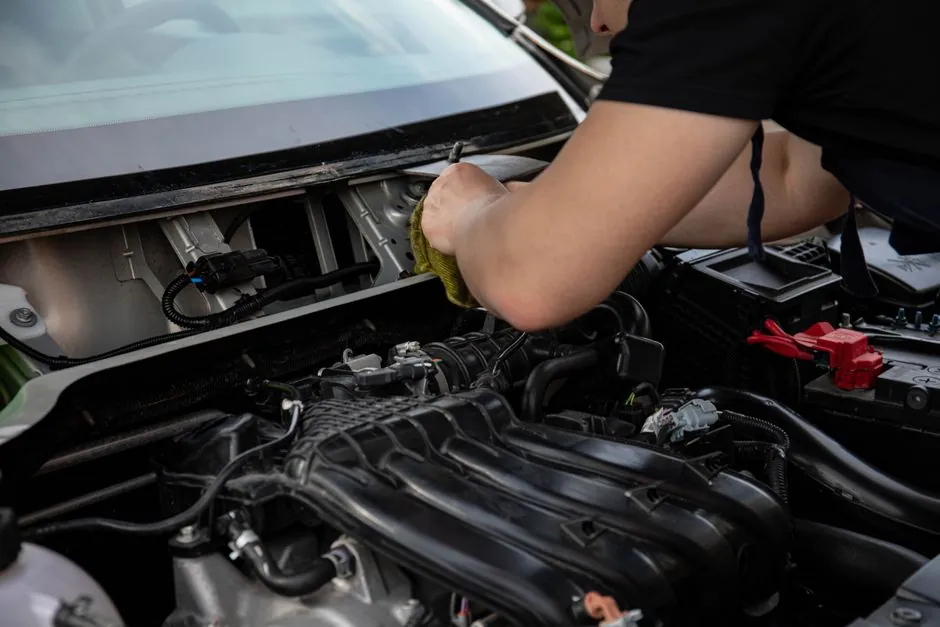
In automotive assembly and component plants, flat belts are commonly specified for low-to-moderate load drives running at 10-30 m/s, with reported efficiencies up to 98% and low bending loss thanks to their small cross-section [S3].
For conveying duties on body-in-white, paint, and final-assembly lines, custom flat belts in polyurethane, nylon-rubber, vulcanized rubber, and fiber-reinforced constructions are cut to width and length in 1/16 in. increments, which gives automotive engineers more design freedom than standardized timing or V-belt profiles [S5][S7].
Core selection criteria: load, speed, environment
Flat belts are designed for light-duty power transmission and high-performance conveying, and they are best suited to applications with smaller pulleys and large-diameter driven sheaves [S1]. In practice, the four decision drivers for an automotive line are: peak torque at start-up, continuous belt speed, ambient temperature at the drive location, and the coefficient of friction needed between belt and pulley face.
For light to moderate loads in horizontal drives, flat belts give high efficiency, lower maintenance, and longer service life than V-belts, because the broad contact face distributes load and reduces wear [S4]. The trade-off is grip: V-belts deliver a higher coefficient of friction through the wedge effect, which is why high-tension, high-torque duty points (for example engine assembly spindle drives) still default to V or ribbed profiles, not flat belts [S4].
Material and construction options for plant duty
Common constructions specified in automotive plants include: (1) nylon-rubber flat belts with drilled holes and air-suction surfaces for packaging and printing sub-lines; (2) vulcanized flat belts with anti-aging compounds rated for oven and paint-curing zones; (3) fiber-reinforced vulcanized belts with high tensile cores for heavy duty or long-center drives; (4) thermoplastic polyurethane (TPU) flat belts for cleanroom-adjacent electronics assembly [S5].
Heat resistance is the first filter in paint shop and e-coat oven areas, where vulcanized rubber compounds with anti-aging packages are typical [S5]. For trim, final assembly, and instrument-panel lines, low-friction TPU and silicone cover options support stable high-speed running and quieter operation, which matters when the line is co-located with operator stations [S2][S5]. A complete drive-belt overview from RS Components notes flat belts are typically used where low power is required but speed is high, which lines up with most transfer and indexing conveyors on automotive lines [S8].
Flat belt vs V-belt vs timing belt: decision criteria
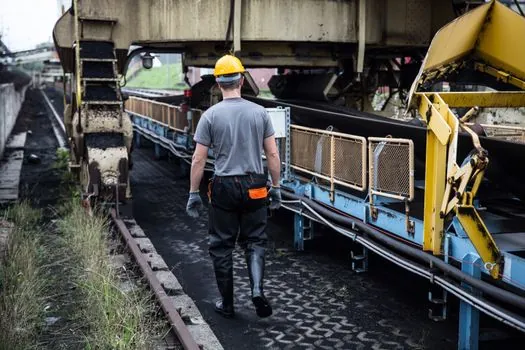
The headline differences automotive maintenance and process engineers should track are: contact area, friction coefficient, efficiency, alignment tolerance, and service life. Flat belts win on contact area, efficiency (up to 98% per Fractory), and ease of width/length customization [S3][S4]. V-belts win on friction grip, self-aligning wedge action, and tolerance of higher torque at lower belt speed [S4][S6].
Timing belts are positive (non-slipping) drives and are the right call where synchronism between input and output shafts matters, for example in cam-actuated or index-and-dwell transfers; flat belts are friction drives and cannot guarantee phase, so they are not a drop-in for those positions [S3]. If a line is currently maintained on V-belts and the failure mode is slippage, dust, or short belt life, the spec-first move is to verify the drive can accept a flat or ribbed belt on the existing pulleys, not to switch constructions blindly. For purely conveying roles on a belt conveyor, flat belt is the default and a flat belt selection is the right starting point.
Application fit: where flat belts earn their place on a vehicle line
Goodlybelt documents flat belt use in automotive manufacturing as part of its general heavy-industrial, food processing, and specialized industrial scope, and the constructions it lists (nylon-rubber, vulcanized, fiber-reinforced) cover the typical duty points seen in tier-one supplier plants [S5]. Practical use cases on a vehicle program include: light-duty transfer conveyors between stations, indexing tables where friction drive is acceptable, and accumulation zones with low back-pressure requirements.
For high-load, long-center drives or drives that must hold exact ratio under shock load, the correct upgrade path is a timing belt or a chain drive, not a thicker flat belt, because friction drives will slip before they break and that slip is what causes the downtime event. Where a flat belt is selected for a conveying span, pairing it with the right belt tensioner and crowned pulleys is what keeps tracking stable and extends service life [S3].
Pulley compatibility, tensioning, and tracking
Flat belts tolerate some misalignment, but excessive misalignment causes improper tracking, uneven pulley wear, noisy operation, and edge wear, and the intensity of these issues is directly proportional to belt width [S3]. Crowned pulleys are the standard fix for tracking drift on long flat-belt conveyors, and a properly specified belt tensioner keeps the tight-side tension in the design window so the drive does not run slack or over-tensioned.
FN Sheppard's selection guidance for conveyor and timing belting in automotive plants lists conveyor rollers and pulleys, lagging, and timing clamps as the hardware that has to be matched to the belt compound, and it offers custom fabricating for TPU round, V, and flat belts, which is the realistic way most automotive lines land on a final spec rather than catalog part numbers [S2]. Width and length availability in 1/16 in. increments, noted in Machine Design's flat belt reference, is the reason automotive lines can usually retrofit a flat belt onto an existing conveyor frame without re-machining the structure [S7].
Common failure modes and how to spec against them
Fatigue is responsible for more belt failures than any other issue in friction drives, and fluctuating tension between tight and slack sides is the root mechanism [S3]. Three failure modes show up repeatedly on automotive flat-belt lines: edge wear from misalignment or poor tracking, slippage from under-tension or contaminated pulleys, and heat ageing in paint-shop or oven zones.
The spec-first mitigations are: specify a crowned pulley or tracking idler, set initial tension to the manufacturer's recommended value (not "as tight as possible"), and pick a cover compound rated for the actual ambient temperature at the drive, not the room temperature in the cabinet [S3][S5]. On a chain belt or flat belt conveyor that carries oily or greased parts, specify a nitrile or polyurethane cover that resists oil swell rather than a general-purpose rubber compound.
Standards, sourcing, and what's trackable next
There is no single ISO or ANSI standard that defines "automotive flat belt"; selection is driven by manufacturer datasheets, the conveyor OEM's mechanical drawing, and the duty cycle on the line. The trackable signals for a sourcing engineer are: belt compound and temperature rating on the datasheet, tensile cord material and minimum pulley diameter, and whether the supplier offers vulcanized endless splicing (which gives longer life on high-speed drives) versus mechanical lacing [S2][S5].
For a buyer comparing offers in 2026, two checkpoints separate a real automotive-grade belt from a commodity one: (1) a published minimum pulley diameter for the chosen belt width, and (2) a documented operating temperature range with the specific compound called out (TPU, nitrile, neoprene, silicone) [S2][S5]. For broader process-engineering context on adjacent driveline components, see Shaft Coupling Selection for Pulp and Paper Mills; for material-process match logic that applies to wear parts and pulleys, the framing in Additive Manufacturing Material Selection for Marine Engineering is directly transferable.