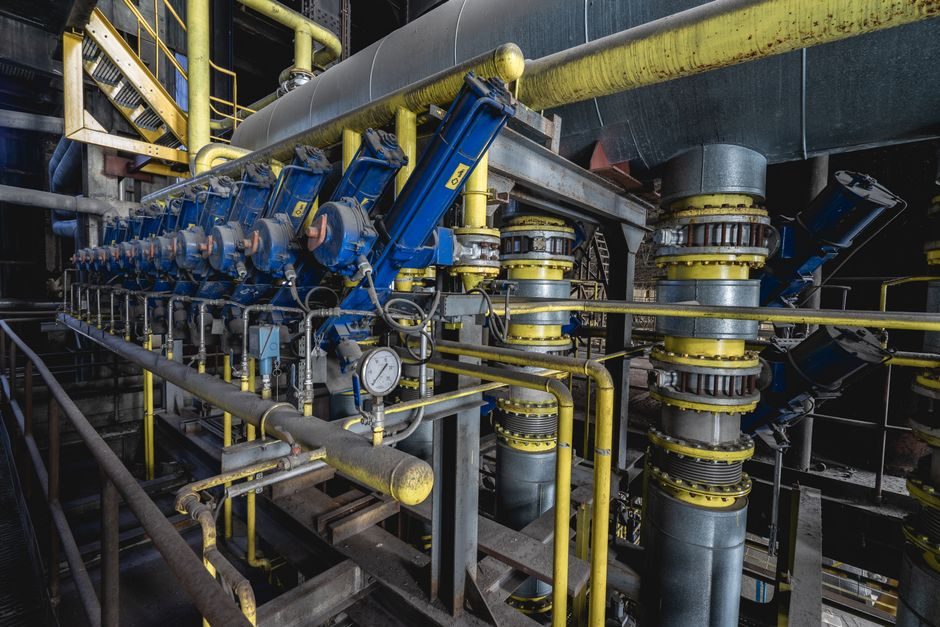
Every orifice plate flowmeter is a flow meter, but the reverse is false: a flow meter covers Coriolis, magnetic, ultrasonic, vortex, turbine, thermal-mass and DP families, while the orifice plate is just one DP implementation built around a concentric thin plate and a downstream pressure tap [S1][S2].
The confusion comes from catalog language. OEM listings on Made-in-China show "Flowmeter, Electromagnetic Flowmeter, Water Meter, Turbine Flowmeter, Insertion Flowmeter" grouped as one supplier's product family, with SS orifice plate flowmeters priced around US$198.52 per piece at 1-piece MOQ [S3]. That pricing tier is the first tell: an orifice plate is a commodity element, not a full metering instrument.
Definition split: flow meter (category) vs orifice plate flowmeter (technology)
A flow meter is any device that quantifies the mass or volume rate of a fluid moving through a pipe, and the English-Chinese dictionaries surveyed on 2026-06-12 translate it uniformly as flowmeter / flow meter / flow meter [S1][S6][S4].
An orifice plate flowmeter is a differential-pressure flowmeter in which a sharp-edged concentric plate is clamped between flanges and the flow rate is inferred from the square-root relationship between differential pressure and volumetric flow, as illustrated in 2026-06-09 dictionary references to "standard orifice flow meter" / "standard orifice flowmeter" [S5]. Because it relies on a calculable geometry, it is the DP technology with the most published installation practice and the lowest unit hardware cost.
Selection criteria that actually separate the two
Fluid cleanliness is the first gate. Orifice plates need a single-phase, reasonably clean stream — suspended solids, slurries, wet steam and two-phase mixtures will foul the plate edge and bias the discharge coefficient. Magnetic, Coriolis and ultrasonic units tolerate those conditions better, and Coriolis additionally delivers density and temperature on the same spool. [S1]
Required turndown is the second gate. A square-root DP law caps useful orifice plate turndown at roughly 4:1 before differential-pressure uncertainty and minimum Reynolds-number limits degrade accuracy. Magnetic, vortex and Coriolis instruments routinely deliver 10:1 to 100:1 turndown with linearized output.
Pipe size and straight-run availability are the third gate. ISO 5167 dimensional practice for orifice plates typically demands 10D upstream and 5D downstream of straight pipe; that is feasible in main header lines but unrealistic in retrofit skids, where a clamp-on ultrasonic flowmeter or insertion turbine is more practical.
Comparison of the common flow meter technologies vs an orifice plate
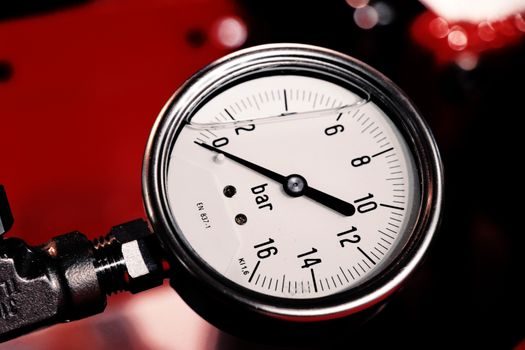
Reading horizontally, the main alternatives on the four decision criteria engineers actually use: [S2]
• Differential pressure (orifice plate): low hardware cost (US$198.52 baseline per piece on 2026-05 reference listings [S3]); ±1–2% of rate accuracy with calibration; turndown ~4:1; requires long ISO 5167 straight pipe and pressure taps.
• Electromagnetic: no moving parts, no pressure drop; accuracy ±0.3–0.5% of rate; turndown 30:1+; conductive liquids only, minimum conductivity typically required.
• Coriolis: ±0.05–0.1% mass flow accuracy; turndown 100:1+; measures density and temperature; high capital cost and non-trivial pressure drop; coriolis flowmeter is the workhorse for custody transfer and chemical batch.
• Vortex: ±0.5–1% of rate; turndown ~15:1; unsuitable for very low flow or highly viscous fluids because the shedder cannot resolve weak vortices.
• Ultrasonic (clamp-on or inline): no pressure drop, no wetted moving parts; accuracy ±1–2% of rate; sensitive to aeration, scaling and certain pipe liners.
Who an orifice plate flowmeter is for — and who it is not for
An orifice plate is a sound specification for clean natural gas, steam, air, water and light hydrocarbon service in a plant that already has a DP transmitter rack, a 3- or 5-valve manifold, and the straight pipe the geometry demands. It is also the only flow meter where the primary element is itself a serviceable, replaceable commodity, which matters when the process is dirty enough to warrant a spare plate on the shelf. [S3]
An orifice plate is a poor specification for batch chemical dosing, sanitary food-and-beverage lines, slurries, low-flow laboratory service, custody transfer with mass-balance audit risk, or any line with limited straight run. In those cases a magnetic, coriolis flowmeter, vortex or ultrasonic instrument is the correct pick, even at higher unit cost. For a worked example of matching technology to a process stream, see the wastewater selection guide on this site.
Failure modes and installation constraints specific to the orifice plate
Plate-edge erosion or buildup is the dominant long-term failure mode, because the sharp inlet edge is the calibrating feature and any rounding shifts the discharge coefficient outside ISO 5167 limits. Operators schedule periodic plate inspection on abrasive or fouling services, and many plants keep a refurbished spare. [S4]
Tap location also matters. Flange taps, corner taps and D-D/2 taps each have defined accuracy bands; mixing tap style between calibrations is a common source of disagreement between fiscal and master-meter readings. Finally, orifice plates generate a permanent non-recoverable pressure loss (typically 40–80% of the measured differential), which is relevant for low-pressure gas lines where the cost of the lost pressure is non-trivial.
Sourcing, standards and what a 2026 quotation should include
Buyers on 2026-06 should still expect a 2026-06 quotation to include plate material (typically 304/316 SS as in the US$198.52 SS reference unit [S3]), bore calculation per ISO 5167, tap style, flange class, calculated beta ratio, expected permanent pressure loss, and the DP transmitter range derived from the design flow. If any of those are missing, the line item is not yet a specification — it is a part number.
For adjacent selection problems where the decision is between a primary-element DP device and a smarter meter, the Pressure Gauge vs Differential Pressure Transmitter: 2026 Selection Criteria piece on this site walks the same decision logic for the transmitter side, and the Wastewater Flow Meter Selection guide covers the fluid-classification reasoning. Two trackable signals to watch: ISO 5167 is the governing dimensional standard; AGA Report No. 3 and API 14.10 govern orifice measurement of natural gas; in a 2026 RFQ, request the discharge coefficient and expansibility factor computed per those documents rather than relying on vendor default tables.