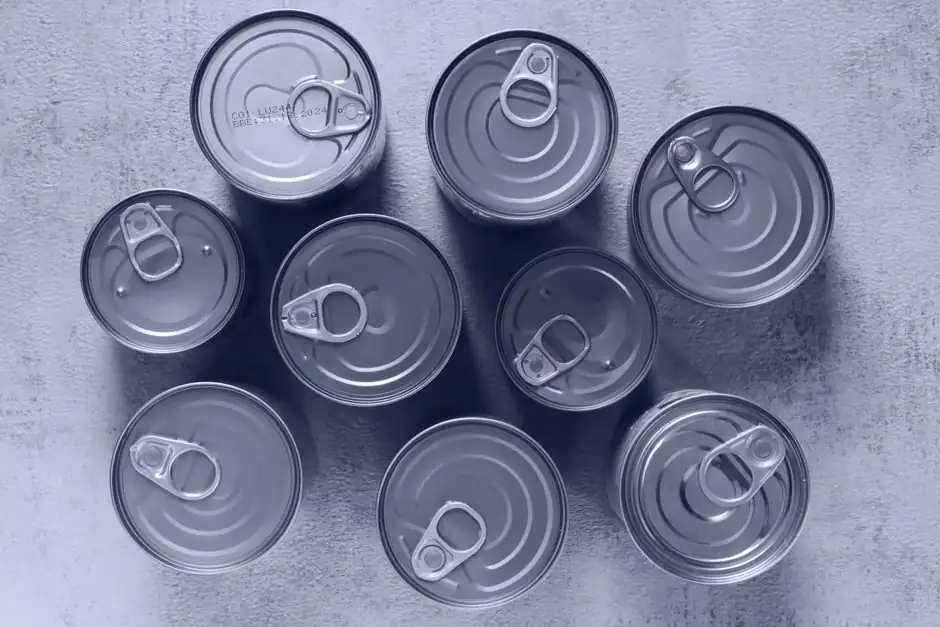
Food and beverage MES can reduce a lot recall from hours to minutes by linking every finished batch to its ingredient lots, production records, inventory, and customer destinations [S1][S6].
The required scope spans receiving, formulation, processing, packaging, warehousing, and shipment, with backward trace from finished goods and forward trace from an affected ingredient lot [S3][S4].
What MES lot tracking actually connects
Lot traceability is the controlled linkage of a unique batch identifier through raw-material receipt, production, storage, and distribution. The lot record can include supplier name, vendor lot number, sourcing location, production date and time, expiry or use-by date, storage conditions, processing conditions, and shipment destinations [S4].
An MES adds the execution context that a paper record or isolated ERP transaction often misses. Ingredient scans at weighing and charging can connect supplier lots to the production batch, while food-safety checks are recorded at the point of activity [S3].
The output is a genealogy chain: one ingredient lot can map to multiple production batches, and each production batch can map to multiple ingredient lots. For a mixed or co-packed product, the same structure can represent multiple contributing lots rather than forcing the record into a single identifier [S3][S4].
Backward and forward recall searches
A backward trace answers which supplier and ingredient lots entered a finished batch, while a forward trace identifies every batch made from a suspect ingredient and the customers or destinations that received those batches [S3]. These are complementary operations, and an operational recall process needs both.
A forward-only search identifies exposed product but does not prove why it is implicated. A backward-only search proves the composition of a finished batch but leaves its distribution unresolved. The strongest recall workflow combines the two, then generates a single impact report rather than reconciling separate inventory, production, and shipping spreadsheets [S3].
The practical objective is targeted containment. Tracking raw-material lots to warehouses, distributors, or retailers can restrict the recall to affected product instead of withdrawing every item from a production period [S2]. One inventory-management case reports that accurate lot tracking cut a lot recall process from hours to minutes [S6].
Traceability criteria for plant selection
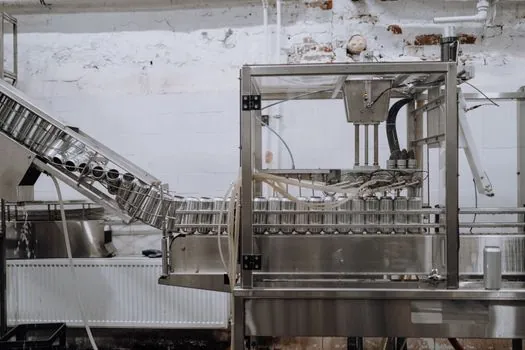
Lot identity must be captured at the point material enters the process. A food-focused MES should support ingredient-lot scanning at weighing and charging, validate the selected material, and retain the link between supplier lot and production batch [S3]. Scan-only traceability is weaker because a barcode can prove a label was read without proving which record was selected.
Batch execution must preserve material, process, and quality context. A defensible record links the batch to the recipe version, ingredient quantities, equipment or line, operator and shift, critical-control results, actual yield, and label information. A full food MES covers recipes and weighing, batch records, lot tracking, quality checks, scheduling, and production data associated with OEE [S8].
Distribution closure matters just as much as factory execution. Inventory movements need to retain finished-goods lot numbers, quantities, shipment dates, customers, and destinations so that the impact analysis continues beyond the loading dock [S4]. Without this step, the MES can identify affected batches but cannot tell the recall team where to recover them.
The acceptance test is not whether a dashboard loads, but whether an investigator can reconstruct a production event and its lot relationships without asking operators to reconstruct missing paper.
Comparison of traceability approaches
Paper records, ERP transaction history, and a food MES solve different parts of the recall problem. MES adds batch execution and genealogy, while still needing ERP or warehouse functions for purchasing, inventory valuation, and master-data ownership. [S3]
For a 2025 comparison, MES data migration becomes relevant when an existing plant must preserve lot relationships during system replacement. Migrating only current inventory while losing historical ingredient-to-batch links would leave the new MES effective from deployment onward but unable to investigate older complaints or recalls.
Where MES adds operational value

Recall readiness is only one benefit of a correctly configured food MES. Ingredient-lot capture can enforce approval and expiry checks, while finished-goods labels can carry batch, manufacturing, and expiry dates [S3]. The same genealogy can therefore support targeted withdrawal, FEFO picking, near-expiry alerts, and investigation of supplier claims.
Food-focused MES supports recipe control, batch tracking, and yield management [S3]. It also supports recipe control, because approved recipes can be versioned, scaled to batch size, and presented to operators as controlled steps.
Cleaning and allergen control add operational evidence rather than recall genealogy alone. A food MES can require cleaning checklists, line-clearance confirmation, and allergen-changeover verification, with the identity of the operator and the time of the action retained in the record [S3]. These controls help determine whether a suspect batch was produced under the intended conditions.
Line-level OEE tracking is another advertised MES function for food and beverage operations [S1]. OEE and recall readiness should not be conflated. OEE measures production performance, while traceability determines whether the output can be isolated, released, or recovered with confidence.
Limits, failure modes, and control gaps
Traceability quality is limited by the weakest recorded transaction. Scanning every pallet is insufficient if the system does not preserve the selected ingredient lot, production batch, label, warehouse movement, and shipment destination. Batch genealogy also fails when reworked material is mixed without creating a new parent-child relationship [S3][S4].
Time synchronization is a practical risk in distributed plants. If receiving, line execution, warehouse, and shipping systems use inconsistent clocks, sequence analysis becomes unreliable even when every individual timestamp is present. The MES should also enforce unique identifiers and prevent unrelated supplier, production, and customer lots from being merged accidentally.
No MES can recover records that operators never captured. Paper-based critical-control checks, clipboard temperature logs, delayed ingredient scans, and incomplete cleaning records create gaps that no search interface can close [S3]. A plant claiming minute-scale recall response must test the full chain, including receiving, rework, relabelling, warehousing, and customer shipment.
Data ownership must be explicit. MES, ERP, laboratory, warehouse, and quality systems can hold different parts of the record, so duplicate lot identifiers and disconnected release statuses create conflicting answers. The implementation should define which system is authoritative for recipes, quality disposition, inventory status, and shipment history before testing recall scenarios.
Standards and source verification

Lot tracking supports food-safety controls and audit evidence, but MES software is not itself a traceability standard. The FDA Food Traceability Rule is cited as effective from January 2026, while the research also identifies the Food Safety Modernization Act as part of the compliance context [S2][S4]. The applicable requirements depend on the product and jurisdiction, so the plant must map its critical tracking events and key data elements to the applicable FDA rules rather than treating a generic MES feature list as compliance.
Verifiable lot records should preserve supplier identity, production date, ingredient lot, expiry, processing conditions, and destination [S4]. At the plant level, that record should also carry controlled recipe version, operator and shift, measured process values, yield, and quality disposition. These fields support both internal release decisions and external traceability inquiries.
The acceptance test should be quantitative and repeatable. Select one received ingredient lot, complete one production batch, move the finished lot through inventory, ship it to one customer, then retrieve the backward and forward traces in under 10 minutes. Repeat after a rework, repack, partial shipment, and label change. If the system cannot return the same affected-batch and destination set, the recall claim is not operational.
Track two signals after deployment: the percentage of production batches with unbroken ingredient-to-shipment genealogy, and the elapsed time from a simulated complaint to a completed impact report. Both should be reviewed by quality, operations, and warehouse teams because lot tracking succeeds only when supplier receipt, plant execution, and distribution movements agree on the same identifiers.