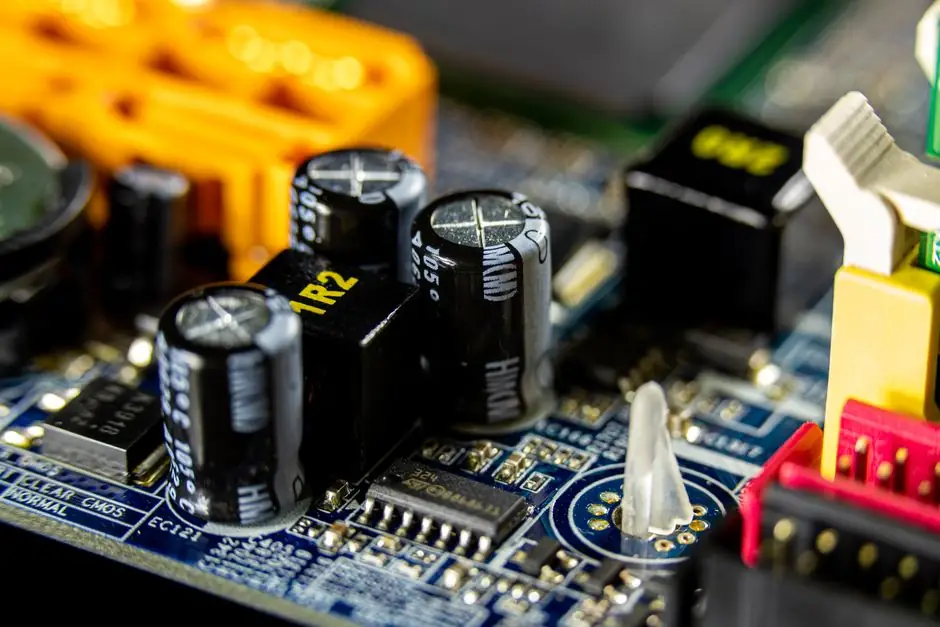
SEMICONDUCTOR back-end MES connects assembly, packaging, inspection and testing operations, with SECS/GEM equipment integration supporting real-time monitoring and factory control [S1].
Back-End MES Scope and Control Points
The back-end begins with wafer testing, followed by packaging and package test, so MES control points must cover materials, equipment, recipes, operators, lots and test results across the full sequence [S3]. Backend environments can include wafer packaging, die bonding, wire bonding, testing and final inspection, each requiring coordination between machines, production systems and factory host platforms [S1].
MES provides a production-level layer rather than a replacement for ERP or product lifecycle management. Modern semiconductor MES platforms integrate production flows, recipes, recipe programs, parameters, reticles, bills of material, data collections, specification limits and sampling strategies with PLM or ERP systems [S4]. The control model must also cover master-data revisions, lot assignments and reusable process-flow blocks so that changes do not remain hard-linked to a particular product or lot [S4].
The operating environment of front-end wafer manufacturing is materially complex: a product can pass through multiple layers and hundreds of production stages across sophisticated tools, while fabs run around the clock under controlled clean-room conditions [S4].
Core Functions Across Assembly and Test
Production scheduling, quality management and maintenance operations are core MES functions in semiconductor production, while real-time data collection supports operational control and decision-making [S5]. In OSAT factories, that control extends to packaging equipment, inspection systems and testing tools connected with MES and factory host systems [S1].
Quality functions should distinguish wafer test from package test and preserve results across the manufacturing sequence. Semiconductor testing includes temperature, speed and operation classifications, with core tests evaluating whether the main function of the semiconductor operates properly [S3]. The MES should preserve test context and results, including testing practices conducted at different temperatures, rather than reducing inspection to a pass or fail flag [S3].
Maintenance and equipment-health functions matter because test time, equipment, manpower and manufacturing cost increase when inspection is extensive [S3]. OSAT software can integrate with existing tools across production lines when the development partner understands equipment communication protocols and factory integration standards [S1].
SECS/GEM Integration and Data Architecture
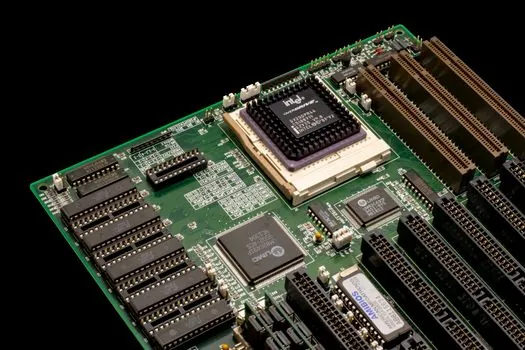
Equipment communication protocols and factory integration standards are key considerations for connecting semiconductor equipment with factory systems [S1]. An OSAT automation partner should understand equipment communication protocols and factory integration standards so that software can integrate with existing tools across production lines [S1].
This separation prevents an equipment interface from becoming the only repository of production history.
Master-data governance is a distinct requirement rather than an optional reporting feature. A modern MES must coordinate new versions and revisions of master-data objects, incorporate flow revisions and lot assignments, and resolve conflicts across manufacturing elements [S4]. It should also reuse data collections, recipes and other common elements without restrictive hard links to product-specific or lot-specific flows [S4].
Integration quality should be tested against defined failure cases. SECS/GEM capability alone does not establish semantic traceability or process control.
Selection Criteria Across MES and MOM
The principal deployment choices are a semiconductor-specific MES, a manufacturing operations management platform configured for back-end operations, or a combined MES and MOM architecture [S6]. Selection should compare 4 criteria: process coverage, equipment connectivity, traceability depth and implementation fit.
A semiconductor-specific MES is the stronger fit when production control requires recipe, reticle, limit, experiment and multi-stage routing management [S4]. An MES and MOM platform is suitable when the priority is assembly coordination, production sequencing, material handling and end-to-end traceability across back-end lines [S6]. camLine offers MES, MOM and AI-powered solutions focused on assembly coordination and traceability in semiconductor backend manufacturing [S6].
Cost and implementation effort cannot be compared credibly without a defined scope. A factory running die bond, wire bond, inspection and package test must price each tool interface, routing model, test-result flow and history migration separately. General-purpose software is not automatically cheaper once semiconductor-specific dispatch rules, genealogy and equipment connectivity are configured. For deployment planning, How Long Does an MES Implementation Take? provides a separate framework for assessing rollout duration before line-specific MES selection.
Fit for OSAT Operations and Other Manufacturers
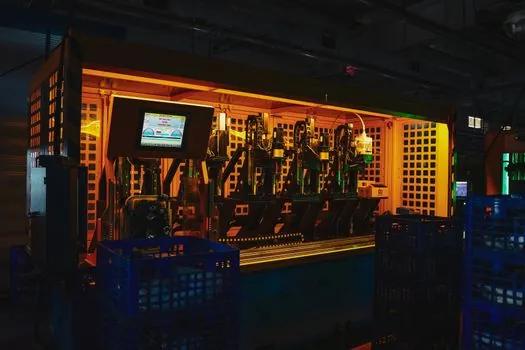
OSAT MES is intended for organizations that package and test wafers or devices and need lot-level genealogy across assembly and inspection steps. OSAT providers operate across wafer packaging, die bonding, wire bonding, testing and final inspection, making tool connectivity and process coordination core requirements [S1].
The solution is not an ideal first system for a simple job shop with one product family and few standalone tools. Semiconductor back-end work contains more material states, test stages, equipment relationships and revision controls than a generic shop-floor workflow. An IDM with captive assembly and test may also require MES integration with front-end master data, but that broader scope changes the architecture and validation load [S4].
For a mid-sized OSAT operation, the best initial boundary is the back-end line where traceability failures are measurable: incoming wafer or die lots, assembly routing, bond and attach steps, inspection, package test, rework and shipment release. Once that flow is stable, extension to other lines or front-end interfaces becomes less risky. A traceable 2-way boundary with ERP, PLM, test handlers, inspection tools and shipping systems is more valuable than a broad rollout with weak event capture.
Yield, Test Data and Maintenance Constraints
Yield improvement is an outcome that must be measured against a defined baseline, not a guaranteed MES benefit. One semiconductor-industry article cited an instance in which automation and process control contributed to a 50% yield increase, but that figure is not a universal benchmark [S5]. MES should instead expose first-pass yield, test-time distribution, retest rate, scrap by step, defect by package type and equipment availability.
Temperature testing gives a concrete verification model: hot tests apply a temperature at least 10% above the product's specified maximum, cold tests apply a temperature at least 10% below the specified minimum, and room tests commonly use 25°C [S3]. These are test-condition definitions rather than universal MES operating limits, but they show why MES records must preserve applied conditions rather than only final pass or fail status.
The operational limitation is data quality. Predictive maintenance, yield analytics and automated disposition all depend on complete equipment events, accurate genealogy, controlled recipes and synchronized timestamps. If tools report state but omit lot or carrier context, if operators bypass the MES, or if recipe versions are not enforced, dashboards can look complete while failing to support defensible release decisions [S1][S4].
Implementation, Governance and Traceability
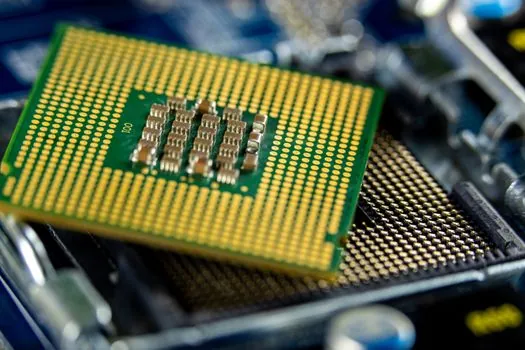
A phased implementation should begin with 1 high-mix assembly and test route, 2 reconciliation controls for equipment state versus MES state, and at least 3 end-to-end trace checks covering material input, process history and shipment release. These are deployment controls, not sourced performance metrics. Each phase should include recipe-version testing, tester-result validation, inspection-result handling and recovery procedures for interrupted transactions. [S1]
Master data requires formal ownership across 4 domains: product and route definition, recipe and test-program control, material and supplier records, and equipment capability [S4]. Change control must record revision history, approval status and affected lots. The MES should support reusable process-flow blocks, but reuse must preserve the validity of limits and specifications when a recipe, reticle or product revision changes [S4].
Traceability history should remain queryable from final package back to incoming material and forward to test disposition. The related MES Data Migration: Preserving Traceability History End to End procedure addresses a common migration risk: historical genealogy can be disconnected when legacy identifiers and lot relationships are not normalized before deployment.
Acceptance should be operational, not a software demonstration. Track unbinned or orphan material, unexplained recipe mismatches, missing tester results, manual route overrides, interface latency, reconciliation errors and the percentage of released lots with complete genealogy. Expansion decisions can then follow evidence from the pilot line rather than vendor claims about general-purpose AI or Industry 4.0 capability [S1][S6].
Two trackable signals define whether the MES is becoming production infrastructure: a rising share of equipment events reconciled without manual adjustment, and complete genealogy for shipped lots in the pilot route. Both must be demonstrated through audits before broader rollout.