A bench-top digital force gauge typically measures from 0.5 lbf to 500 lbf (2.2 N to 2,225 N) with ±0.2% full-scale accuracy, while an industrial crane scale measures suspended loads from roughly 1,000 lb (0.5 t) to 100,000 lb (50 t) on a hook-and-shackle rigging [S1][S2][S3].
The two are not interchangeable: a force gauge is a hand-held or test-stand push-pull load cell with a reversible display, and a crane scale is a suspended dynamometer hung from a hoist, crane hook, or gantry with an integrated eye-hook and shackle [S1][S3].
Force Gauge Operating Envelope and Spec Floor
The SEALS USA FGE-XY series covers 0.5 lb to 200 lb (0.23 kg to 90.72 kg), or 1 N to 50,000 N, with ±0.2% full-scale accuracy and a 1,000 Hz sample rate for peak capture in push and pull modes [S1]. The 180° reversible display and dual-labeled keypad let the same instrument run compression and tension tests in any orientation, which is why it is sold as a portable gauge or a test-stand mount [S1].
Chatillon's DFE3 series ships the same ±0.2% FS accuracy spec, a 10 kHz peak capture rate, 30 kHz data sampling, and 150% maximum overload protection, with 50,000 resolution points across capacities from 10 lbf to 500 lbf (#10-32 thread for 10–100 lbf, 5/16-18 UNC for 200–500 lbf) [S2]. Battery life is 30 hours with the LCD full-on and 40 hours with dimming, which is the field-data point most QC buyers ask about first [S2].
Both units display in ozf, gf, lbf, kgf, and N, and both store results internally for later export — the DFE3 has 32 GB of flash memory and USB-C, the FGE-XY relies on a single-button peak hold and unit toggle [S1][S2]. The 5 to 45 °C operating window on the DFE3 is the same envelope most lab and shop-floor force gauges share, and is the first number to check before specifying a gauge for a cold warehouse or a hot-press line [S2].
Crane Scale Operating Envelope and Rigging
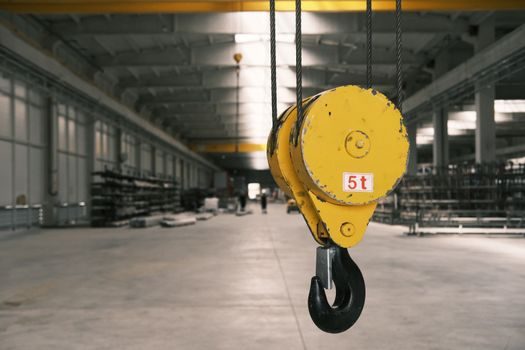
A crane scale is built around a top eye-hook and a bottom swivel hook with a safety latch, so the load path is the rigging itself — sling, shackle, hoist drum — and the cell sits inline [S3]. Capacities below 1 t are dominated by mechanical dial-face units; 1 t to 50 t is where the digital dynamometer with wireless handheld indicator (typical 100 m / 330 ft line-of-sight) is the common configuration.
Unlike a bench scale that weighs a static object on a platform, a crane scale weighs a swinging, lifted, or shock-loaded object, so overload margin and dynamic filtering are the first specs to lock. Most vendors publish 150% safe overload to 200% ultimate on the load-cell body, and the indicator is typically IP65 or IP67 to survive outdoor scrap-yard and foundry service [S3].
R.D. Jacobs stocks Dillon dynamometers in this suspended category and supports repair and calibration for them, including force gauges and crane scales that have drifted out of spec — that calibration loop is the practical reason a plant keeps one trusted supplier across both instrument types [S3].
Decision Matrix: Force Gauge vs Crane Scale on 4 Criteria
On capacity, force gauges span 0.5 lbf to 500 lbf (0.2 kg to 225 kg) and crane scales span roughly 0.5 t to 50 t — there is no overlap, and any specification that puts the two side-by-side is mis-scoped [S1][S2][S3]. On accuracy, both are typically ±0.2% full scale, but force gauges ship this as a published spec on the data sheet while crane scales quote it at the indicator and depend heavily on rigging alignment [S1][S2].
On integration cost, a force gauge needs only a bench fixture or test stand (manual or motorized, e.g. 500 N to 5,000 N stands at 30–500 mm/min) [S6], while a crane scale needs a hoist, a certified lifting point, and a load-tested shackle. On data output, force gauges have moved to USB-C and on-board SD storage with 32 GB [S2], while crane scales typically use wireless RF to a handheld or a 4-20 mA / RS-485 link to a plant PLC.
Pick a force gauge when the load is sub-500 lbf, the test is push or pull, the operator is at a bench, and the result drives a pass/fail on a part. Pick a crane scale when the load is hung from a hook, the reading drives inventory or shipping weight, and the operator cannot put the part on a platform scale [S1][S2][S3].
Use Cases by Industry
Incoming quality and R&D labs use the FGE-XY and DFE3 for trigger pull, wire crimp tensile strength, spring rate, syringe plunger force, blister pack peel, and muscle-strength or ergonomic studies — the listed FGE-XY application list reads like a QC checklist [S1]. Production-line end-of-line tests use a force gauge on a motorized test stand for repeatable speed and stroke, e.g. 500 N stand at 30–500 mm/min or a 5 kN stand at 60–300 mm/min stroke 220 mm [S6].
Crane scales dominate scrap metal recycling, steel coil receiving, bagged-cement and fertilizer loading, and shipyard / port container weighing where the only way to weigh is to lift. Compared to a hopper scale, which weighs material flowing through a vessel, a crane scale weighs the whole suspended unit and is the only practical instrument when no platform is available [S3].
For high-volume shipping where pallet weight is known, a platform scale is cheaper per reading; a crane scale only earns its keep when the load is awkward, hanging, or on a hook that cannot be set down [S3].
Failure Modes and Spec Traps

Force-gauge spec traps: peak-capture rate vs sample rate (the DFE3 publishes both — 10 kHz peak, 30 kHz data — and conflating them is a common buying error) [S2]. Overload margin of 150% rated capacity is the published floor, but side-load from a hand-held operator can damage a cell faster than a clean axial overload [S1][S2]. Thread-end mismatch is a recurring problem: 10 lbf to 100 lbf cells use #10-32, 200 lbf and 500 lbf use 5/16-18 UNC, so a fixture built for one will not accept the other [S2].
Crane-scale spec traps: the hook and shackle are not part of the "capacity" — a 5 t scale with a 3 t shackle is a 3 t scale. Shock load from a sudden lift can read 2× to 3× the static weight, and most digital units have a programmable digital filter for this; without it, the indicator latches on a peak and overstates the weight. Wireless range claims assume line-of-sight; a steel service center with scrap piles between operator and scale will see one-third to one-half the rated range [S3].
For process engineers cross-referencing force and weight, the Force Gauge 2026 Buying Guide: Capacity, Accuracy, and Fit-for-Duty Logic covers the gauge side end-to-end, while the load-cell hardware that sits inside both instruments is mapped in Load Cell Selection Criteria: Capacity, Class, Mounting Map for anyone spec'ing the cell before the indicator.
Selection Checklist Before You Buy
Step one: write down the worst-case load with rigging weight, then add 25% safety margin, then pick the next standard capacity up — a 1,200 lb load on a 1,500 lb (680 kg) gauge is the wrong ratio; size for 2,000 lb (900 kg) [S1][S3].
Step two: lock the accuracy spec in writing as ±0.2% FS with the calibration certificate traceable to NIST or equivalent, and require the certificate before payment [S2]. Step three: confirm thread-end or rigging interface — #10-32, 5/16-18 UNC, eye-hook diameter, shackle pin size — before the PO, not at receiving [S2].
Step four: confirm output — USB-C, RS-485, 4-20 mA, wireless handheld — and that the indicator or PLC side can accept it [S1][S2]. Step five: confirm the operating temperature window covers the actual cell location, not the office where the datasheet was read; 5 to 45 °C covers most shops but not a foundry ladle or an unheated cold-storage dock [S2].
Trackable Signals to Watch
First signal: the ITM Canada and MISUMI catalogs are both actively listing Shimpo, SEALS USA, and Chatillon force gauges as of June 2026, with 100 Hz to 30 kHz sampling and USB-C output as the new baseline — a buyer who is offered RS-232-only on a new 2026 unit is being sold old stock [S4][S5].
Second signal: handpi.com and similar motorized test-stand makers are still quoting 500 N to 5,000 N at 30 to 500 mm/min, which means the integration hardware around force gauges has not shifted; the shift is on the indicator side (USB-C, SD card, color LCD) [S6]. Track whether a vendor's next quote includes wireless handheld + PLC output on the crane-scale side, since that is the equivalent indicator upgrade pending in the suspended category.