
Glass-FRP holds the largest share of automotive FRP use cases because it pairs a 1.5-2.5 g/cm³ density window with corrosion resistance, and weights roughly 20-30% of comparable steel sections [S3].
Carbon-FRP, aramid-FRP, and natural-FRP sit alongside it as higher-cost or sustainability-driven alternatives, each tied to a specific matrix and a small set of repeatable manufacturing processes [S1][S4].
Three FRP families automotive buyers actually specify
FRP divides first by reinforcement: Glass-FRP (GFRP), Carbon-FRP (CFRP), and Aramid-FRP (AFRP) [S1]. GFRP is heavier than the other two but remains the cost-effective, impact- and corrosion-resistant workhorse, widely used in vehicle and electrical-insulation parts [S1]. CFRP is water- and chemical-resistant, lighter, fatigue-tolerant, and is reserved for high-performance structural or body-panel applications [S1]. AFRP is impact- and fracture-resistant but temperature- and humidity-sensitive, so it is normally avoided in under-hood or hot-zones and specified for impact or ballistic-duty parts [S1].
Selection starts by matching the FRP family to the duty cycle: cost-driven mass production (GFRP), stiffness- and weight-driven premium structures (CFRP), and impact-driven localized zones (AFRP).
Matrix choice: thermoset vs thermoplastic, with real operating limits
FRP matrices split into thermosets (polyester, epoxy, vinyl ester) and thermoplastics (polyethylene, polyamide, polypropylene, PLA) [S1][S4]. Thermosets keep structural rigidity at elevated temperatures but cannot be remelted once cured; thermoplastics can be reshaped repeatedly and are more impact-resistant, which suits automotive parts that may see rework or recycling [S1][S4].
Automotive interior and under-hood parts typically route to epoxy or vinyl-ester thermosets for thermal stability; non-structural trim and natural-fiber panels route to PP or PLA thermoplastics for cycle time, weldability, and end-of-life recovery [S4].
Process selection: pultrusion, RTM, compression molding, filament winding
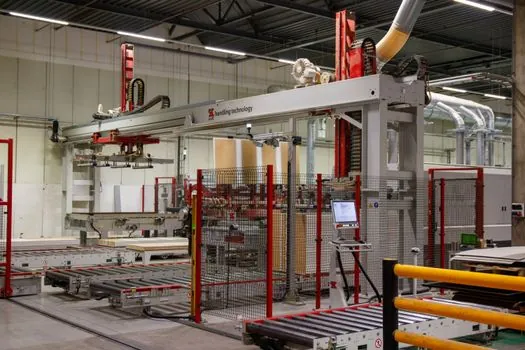
Common FRP process routes are vacuum infusion, pultrusion, filament winding, compression molding, and automated fiber placement, with the method picked to part geometry, volume, and fiber orientation needs [S1]. Pultrusion, RTM, hand lay-up, and filament winding all appear in current FRP product catalogs alongside compression molding [S3].
For automotive, the decision is fairly mechanical: high-volume sheet-molding-compound or compression-molded GFRP for body panels, RTM for Class-A surfaces, filament winding for tubular sections and driveshafts, and pultrusion for constant-cross-section profiles such as bumper reinforcements and battery-tray rails [S1][S3].
Natural-FRP and the sustainability track
Natural-Fiber Composites (NFCs) combine plant fibers (flax, hemp, jute, kenaf, sisal, abaca, coir, bamboo) or animal fibers (silk, wool) with a polymer matrix, and are typically paired with PP, PE, or PLA thermoplastics or with epoxy, polyester, or vinyl-ester thermosets [S4]. The automotive sector is an early adopter, using NFCs primarily in interior components such as door panels, seat backs, and headrests [S4].
Where weight or sustainability targets dominate, NFCs replace glass or mineral-filled PP in door modules and parcel shelves, trading the higher thermal ceiling of GFRP for lower density and a renewable-fiber supply chain [S4].
FRP vs steel vs aluminum: a criteria-based comparison

On the four criteria that drive automotive material decisions, FRP compares as follows against steel and aluminum. Weight: FRP sits at roughly 20-30% of steel at equivalent stiffness design, between aluminum and steel on a per-volume basis [S3]. Corrosion: FRP is non-corroding in moisture, salt, and most chemical exposures that attack steel, with no painting needed for weather protection [S3]. Thermal/electrical: FRP is electrically non-conductive and is specified for electrical-insulation parts, but most matrices cap continuous service below 150-200°C, well under steel and aluminum [S1][S3]. Cost and cycle time: GFRP molding cycles are competitive with sheet steel on volume parts, while CFRP still carries a 5-10x cost premium versus GFRP for equivalent parts [S1].
What FRP is NOT a good fit for, in an automotive context
FRP is the wrong choice where continuous operating temperatures exceed the matrix ceiling, where the part must carry sustained compressive loads that would creep a polymer matrix, or where the design relies on steel-like ductility for crash energy absorption [S1][S3]. AFRP is additionally excluded from humid or high-temperature zones because it absorbs moisture and softens with heat [S1].
If a battery enclosure, exhaust-adjacent bracket, or high-cycle suspension link is on the table, drop FRP from the shortlist and compare aluminum, magnesium, or high-strength steel against the same spec gate.
Standards, verification, and where to dig deeper
Buyers should require the resin system, fiber type and orientation, glass-transition temperature (Tg) of the cured matrix, and the manufacturing process in writing, then tie each to a part-level test rather than a generic FRP brochure [S1][S3]. Creative Composites Group, an established FRP fabricator, lists pultruded structural shapes, panels, grating, and bridge decking as core product families built on similar process control logic that automotive buyers should demand from tier-1 molders [S5].
For the broader composite-materials baseline before you sit down with a molder, the FRP composite reference page covers the same fiber, matrix, and process taxonomy in encyclopedia form, and the additive manufacturing material page is the right next stop if the part geometry is being considered for 3D-printed tooling or short-run composite layups. Process engineers mapping out die and sand-casting routes for fixture or jig components that ride alongside an FRP line will also find the casting mold selection for energy equipment spec map useful for cross-comparing metal tooling options.
Trackable signals over the next two quarters: NFC tier-1 announcements tied to specific interior trim programs, and any OEM disclosure of a carbon-FRP body-in-white cycle-time milestone that would shift the cost-per-part math for CFRP.
The underlying component specifications are covered under steel plastic composite pipe.