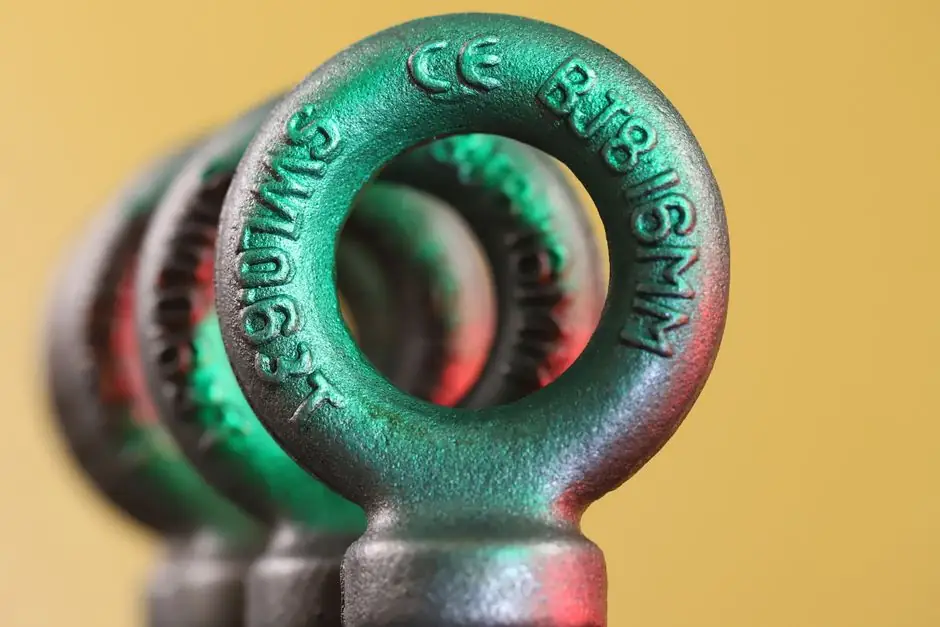
Die casting dominates aluminum energy components: battery trays for midsize EVs span 1,200 to 1,800 mm in length and 900 to 1,300 mm in width, requiring ultra-large die casting machines of 6,000 tons clamping force and above [S1].
Motor housings add a second tight tolerance window, with cylindrical sections reaching 500 mm long at only 4 mm wall thickness, the geometry that drives modern mold design choices for energy and EV drivetrain parts [S5].
Process family vs SPI class: the two-axis selection gate
Casting mold selection runs on two independent axes: process family (sand, die, investment, centrifugal, plaster, shell) and production volume class (SPI Class 1-5), and specifying only one of the two lands the wrong tool [S4].
Sand casting accepts virtually any alloy and any size at the lowest tooling cost, with surface finish typically 6.3 to 25 micrometers Ra and tolerance typically plus or minus 0.5 to 2.0 mm; investment casting tightens that to plus or minus 0.1 to 0.3 mm and broadens material reach into superalloys and titanium, but caps part weight near 50 kg [S4]. For readers new to the language, the casting mold overview frames expendable versus permanent tooling, and the sand casting mold page walks through the bonded-aggregate variants (green sand, no-bake, resin-shell) used in heavy energy castings.
Die casting material and heat-management specification
Aluminum die casting dies are typically machined from H13 hot-work tool steel, vacuum heat treated, and run at 46 to 50 HRC for Class 1 production, while prototype Class 5 dies can be cut in pre-hardened P20 at 30 to 32 HRC or even aluminum for sub-1,000-shot runs [S4].
Mold material selection in aluminum die casting is driven by two coupled properties: heat resistance, which stops the cavity from softening or losing dimensional integrity under molten-aluminum contact, and thermal conductivity, which pulls heat out of the casting fast enough to keep cycle times short [S2]. For energy components where thermal cycling is severe, mold steel must combine high-temperature stability (resistance to softening at the die surface) with thermal-fatigue resistance against repeated heating and quenching, and systematic alloy selection typically benchmarks against H13 plus higher-Mo variants such as H11 or H21 for hot-spot zones [S9].
Conformal cooling channels, often produced by selective laser melting of tool-steel powder, reduce cycle time by 15 to 30% and cut cavity-surface temperature differential by 40 to 60% compared to conventional drilled cooling, which directly reduces thermal-fatigue damage and lengthens die life [S10].
Energy equipment components: which route fits which part
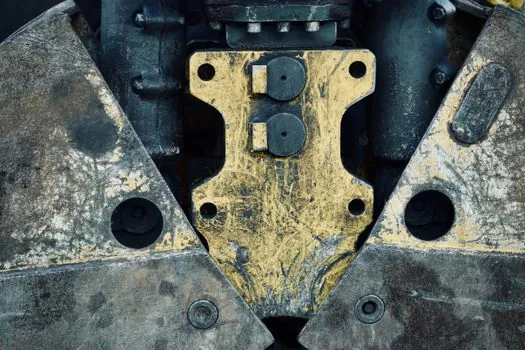
For an EV battery pack, the largest single category of aluminum die castings in new energy vehicle production by projected area, a full-size tray on a midsize passenger EV is the canonical case for 6,000+ ton high-pressure die casting with multi-slide tooling [S1].
For motor housings and end caps, H13 dies built around a 1,000 to 30,000 psi injection-pressure window and molten-aluminum temperatures near 650 degrees C are the standard, and a properly maintained standard H13 die can clear a 100,000-shot minimum lifetime with some designs exceeding 1,000,000 parts [S5]. For larger frames, superalloy turbine housings, and any component where aluminum's service temperature is too low, the cross-reference at casting mold helps separate die-cast aluminum from superalloy investment-cast and no-bake sand routes used in turbines, gasifier housings, and large pump bodies [S7]. The mold base page covers the support structure that holds the cavity inserts, waterlines, and ejector systems together across these families.
Failure modes, limits, and selection traps
Die-cast aluminum is bounded by alloy melt point (cold-chamber machines cycle aluminum above the roughly 660 degrees C liquidus) and by achievable section thickness, with thin walls in long flow paths creating hot-spot and fill problems that demand simulation-driven gate and overflow layout [S4].
Investment castings tolerate thinner sections and finer surface detail but lose on part size (typically under 50 kg) and per-piece cost, and are reserved for superalloy and titanium hardware where the alloy alone forces the choice [S4]. Sand and no-bake iron routes remain the default for engine blocks, large pump housings, and wind-turbine hub castings, where pattern cost is small relative to melt cost and the alloy cannot be die-cast [S8]. Over-specifying a Class 1 die for a 20,000-shot run wastes 200,000 to 800,000 dollars in tooling premium; under-specifying a Class 3 die for a million-shot EV program burns through tooling in months.
Volume and sourcing gate for energy castings
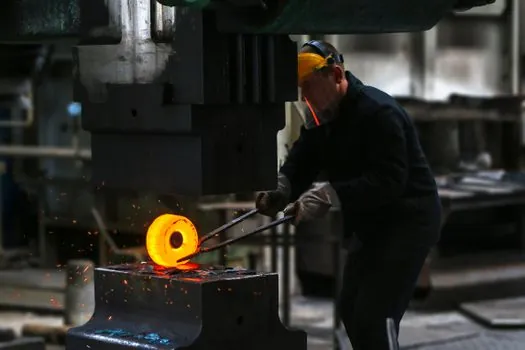
SPI Class 1 is reserved for production injection molds built for lifetime cycles above 1,000,000 shots; Class 2 caps at 1,000,000; Class 3 at 500,000; Class 4 at 100,000; and Class 5 (prototype only) caps at 500 cycles [S4].
Hard-component requirements scale with that class: runnerless molding, stainless or electroless-nickel-plated mold bases, and stainless water plates are mandatory only in Class 1, while automatic side actions are required in Classes 1, 2 and 3, and pre-hardened cavity and core inserts enter the spec at Class 3 [S4]. For energy-equipment buyers the practical sourcing gate is a three-line check: (1) alloy and service temperature fix the process family (die-cast aluminum below roughly 200-300 degrees C service, superalloy investment for hot sections, iron sand for large structural); (2) annual volume and program life fix the SPI class and hence the insert steel and cooling layout; (3) part size and wall thickness fix the machine tonnage (6,000+ tons for full-size EV trays, 800 to 2,500 tons for motor housings) [S1][S5][S10]. Sourcing pages for related cast components, including die casting mold selection for electronics housings and casting mold selection for telecom enclosures, use the same three-line gate, which makes cross-program tooling decisions easier to align.
Trackable signals for the next sourcing cycle: H13 versus higher-Mo hot-work steel pricing spreads, additive-manufactured conformal-cooling insert lead times at Chinese and Korean mold shops, and the next published SPI revision language on Class 3 hard-component rules; readers should also watch 6,000+ ton machine install rates in China, which currently set the floor for full-size EV battery-tray die sourcing.