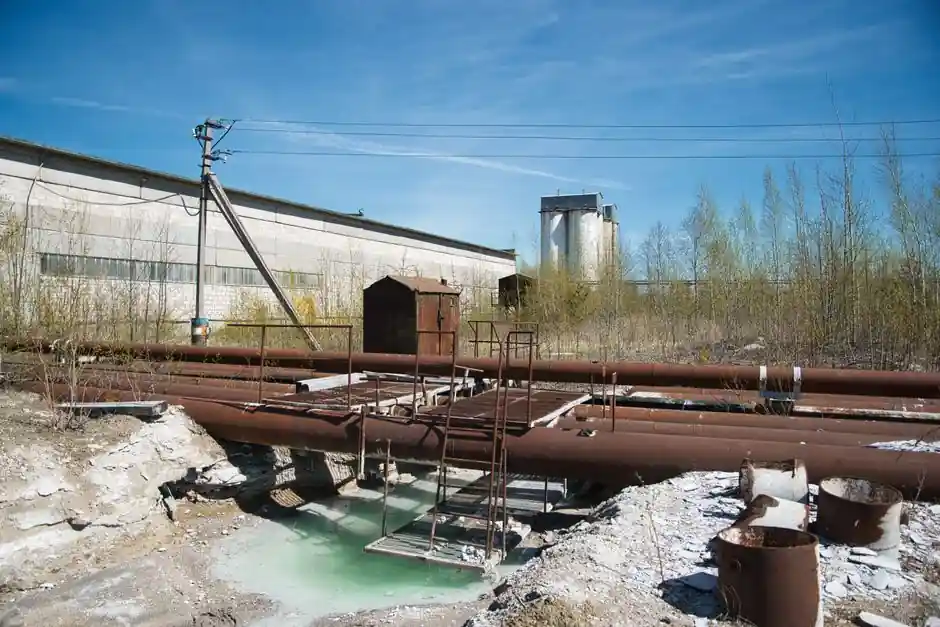
Properly applied FRP linings can help prevent internal corrosion and leaks for 10 to 20 years.
The practical decision is chemical compatibility versus installation complexity: FRP adds a load-bearing laminate, while a coating provides a thinner barrier with lower initial cost and greater recoating flexibility [S1][S2].
Decision Criteria for Chemical Tank Linings
FRP is a composite of thermosetting resin and reinforcing fiber, whereas a tank coating is primarily a formulated resin system applied to the prepared substrate. FRP can be installed on steel, concrete, or existing fiberglass equipment, while field-applied coatings are also substrate-dependent [S1][S5].
For chemical storage, specify every operating variable before selecting a system: stored chemical, concentration, operating temperature, substrate condition, regulatory requirements, and maintenance tolerance. These variables matter more than a generic label such as “epoxy” or “FRP” [S1].
A good lining should create an impermeable barrier, remain fully adhered to the substrate, and seal gaps. These three requirements directly address chemical attack, under-film corrosion, and leakage paths that can contaminate the stored product or accelerate substrate deterioration [S4].
FRP Lining Performance and Service Limits
FRP combines the chemical protection of the resin with the mechanical contribution of the reinforcement. The fiber supplies strength, dimensional stability, and resistance to loads; the resin binds the laminate, provides the primary chemical barrier, limits water absorption, and establishes thermal resistance [S2].
Service life is formulation-specific rather than universal, and properly applied FRP linings can help prevent internal corrosion and leaks for 10 to 20 years.
FRP lining selection depends on the stored chemical, operating temperature, and tank condition, and FRP maintains its corrosion resistance even at elevated temperatures. These figures are comparison values, not universal material maxima, and the selected resin must be checked against the actual chemical and temperature exposure.
The FRP liner should be treated as a designed chemical barrier, not as a generic waterproof coating. Resin choice controls compatibility with acids, caustics, solvents, and oxidizers, while reinforcement controls structural performance [S1][S3].
Coating Lining Performance and Service Limits
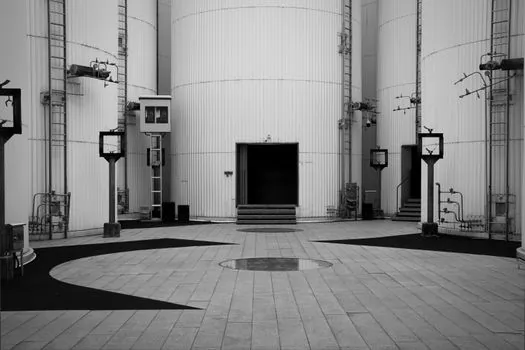
Coating systems have a lower initial cost and can recoat degraded areas when the underlying steel remains serviceable. Epoxy is identified as the standard option for potable-water and food-grade environments requiring NSF/ANSI 61 certification, but product-specific novolac grades extend performance into more severe chemical and temperature service [S1].
That result belongs to the named formulation and application, not to every epoxy, and it demonstrates why a generic epoxy specification cannot be accepted without chemical-temperature substantiation [S1].
Coatings demand disciplined surface preparation and periodic inspection. Blistering, loss of adhesion, and substrate corrosion can occur in aggressive service, particularly when the coating system does not match the exposure [S1]. For a repair strategy, the industrial coating should be evaluated against the exact substrate, chemistry, temperature, and future recoating interval.
FRP and Coating Systems Compared
FRP generally carries a higher upfront cost than a conventional coating, but it adds reinforcement and can avoid tank-bottom replacement. Coatings cost less at installation, require less application labor, and are generally easier to recoat [S1][S3][S5].
FRP wins on aggressive chemical service, structural reinforcement, resistance to wear when an abrasion-resistant build is specified, and long service life. A coating wins when the tank handles mild or moderate chemistry, the budget favors lower initial expenditure, and the substrate can be prepared and recoated without adding significant laminate thickness.
FRP requires more planned application effort than a coating. Common methods include hand lay-up, spray-up, vacuum infusion molding, and filament winding, and field systems are built directly against the prepared tank [S2][S5]. A coating offers faster local repair, whereas damaged FRP generally requires laminate removal, primer, and rebuilding through sound material [S1][S5].
The comparison is not simply FRP versus epoxy. FRP can use epoxy, polyester, or vinylester matrices, and reinforcement can include glass, carbon, basalt, or aramid. The coating classification describes resin performance and application thickness, while FRP describes a fiber-reinforced laminate system [S2].
Surface Preparation, Thickness, and Application
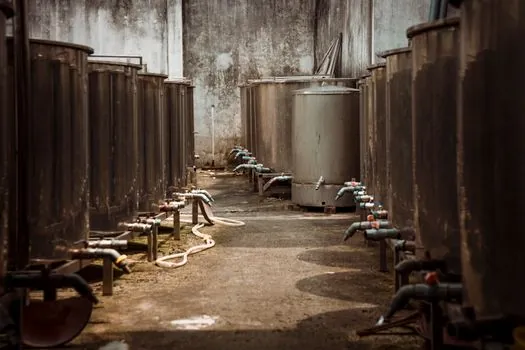
Surface preparation controls adhesion and therefore the failure mode of either system. One documented FRP procedure for steel specifies abrasive blasting to white metal for a hand-laid fiberglass laminate.
That procedure builds chopped strand mat and veil layers first for adhesion and chemical resistance, then adds woven roving where structural reinforcement is required. Each layer is wet-out and rolled to remove trapped air, and the interior finish uses a compatible resin wax as the final chemical-resistant barrier [S5].
Documented FRP corrosion barriers run from 100 to 250 mils, while structural zones may be heavier. Abrasion areas such as inlets and downshoots can incorporate silicon carbide into the resin matrix, but the added abrasion resistance does not remove the need for chemical compatibility [S5].
Because blast profile depth can determine coating-system performance, specify the surface preparation with the lining supplier rather than accepting a generic “clean steel” requirement. The same principle applies to FRP: steel, old FRP, and concrete require different preparation sequences [S5].
Use Cases and Failure Modes
Use FRP for acids, caustics, solvents, oxidizers, and other aggressive exposures when the resin has documented compatibility and the vessel needs structural reinforcement or major corrosion rehabilitation. Chemical-specific FRP systems are used for sulfuric acid, hydrochloric acid, caustic service, and oxidizers, while abrasion-resistant grades serve bins, chutes, flumes, silos, and slurry-handling equipment [S3].
Use a coating for moderate chemical exposure, potable-water or food-grade applications, and facilities that prefer low-cost localized recoating. Epoxy, polyurethane, rubber, and HDPE each have a different service envelope, and the material selected must match chemical, concentration, temperature, substrate, and regulatory requirements [S1].
Principal FRP failure modes are interfacial loss of adhesion, voids from poor wet-out, delamination, chemical attack of an incompatible resin, and damage where the laminate is too thin for local structural loads. Coating failure modes include blistering, pinholes, edge lifting, abrasion, and under-film corrosion [S1][S4][S5].
Do not use an FRP compatibility statement as proof that every chemical mixture is safe. Require a written compatibility assessment for the actual concentration and temperature, inspect periodically, and perform a compatibility check before introducing a new chemical into an FRP-lined tank [S3].
Standards, Procurement, and Inspection
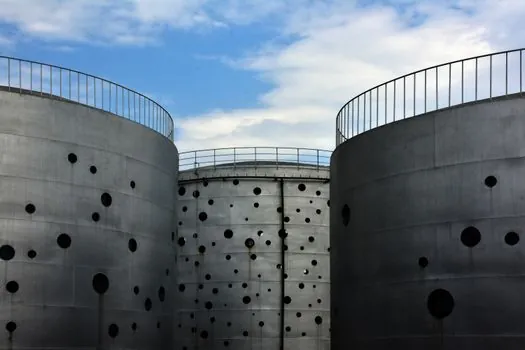
ASTM D5421 addresses FRP installation in metal tanks, pipes, and components, and NACE International guidance is used for corrosion-protection performance. These references support installation and performance expectations, but they do not replace chemical-specific compatibility data [S3].
The procurement package should identify the substrate, tank capacity, chemical and concentration, normal and maximum temperature, agitation or impact conditions, vent conditions, inspection access, shutdown duration, and required repair method. Tank lining work must also preserve containment performance, and the selected barrier must address both internal chemical attack and external substrate corrosion [S4].
Before awarding the work, compare written alternatives on resin family, reinforcement, dry film or laminate thickness, surface-preparation standard, adhesion method, curing requirements, inspection interval, repair procedure, and warranted service life. The FRP composite option is the stronger engineering choice when long-term corrosion protection justifies a thicker, composite system; the coating option is stronger when initial cost and repair simplicity dominate the evaluated risks.
Next, obtain two compatibility-qualified proposals for the actual chemical service and compare their specified thickness, preparation, inspection interval, repairability, and exclusion clauses. Track tank-bottom corrosion and coating-degradation records as the acceptance test for the selected lining system.