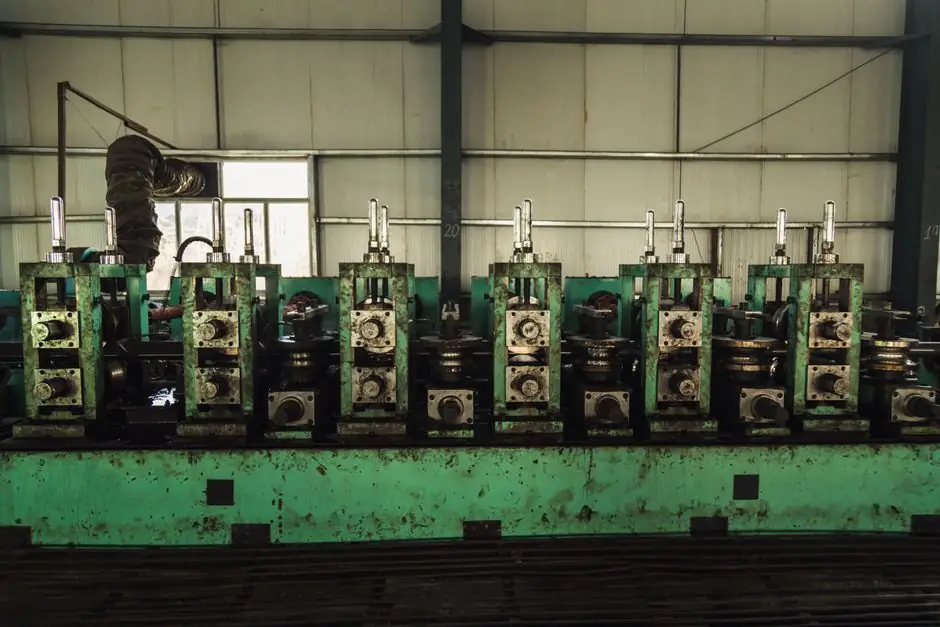
For a like-for-like thickness, stainless steel pipe is the stronger and more corrosion-resistant option; galvanized steel coil is the cheaper and more formable option, with the decision driven by environment, water chemistry, and lifecycle math rather than by unit price alone [S1][S2][S5].
Both products use a steel substrate, but the protection system is fundamentally different: a hot-dip or electroplated zinc layer bonded to the outside of a carbon-steel coil versus a chromium-rich alloy (typically 10.5% minimum Cr) where corrosion resistance is built into the bulk material [S1][S2][S5]. A working reference for the steel-pipe side is our stainless steel pipe encyclopedia entry, and for the coated coil side the steel pipe family page.
Material System: Zinc Cladding vs Chromium Alloy
Galvanized steel is a layered system: a carbon-steel core (sheet, coil, or tube) protected by an external zinc coating applied by hot-dip immersion in molten zinc, by electrogalvanizing, or by thermal diffusion for complex geometries [S1]. The zinc layer is metallurgically bonded but is mechanically sacrificial: once scratched through to the base steel, the surrounding zinc continues to act as a sacrificial anode, slowing but not stopping substrate corrosion [S2].
Stainless steel is a single-material system where chromium oxidizes spontaneously to form a passive chromium-oxide film, typically a few nanometers thick, that regenerates in oxygen-bearing environments after surface damage [S1]. This self-healing behavior is the structural reason stainless pipe is specified for chloride exposure, while galvanized coil degrades predictably once the zinc is consumed.
Cost Differential and Where It Comes From
Galvanized steel sheet and coil are generally significantly cheaper than stainless steel, which is the reason galvanized remains the default for roofing, purlins, and budget-driven water service [S6]. Stainless carries an alloy surcharge driven by nickel, chromium, and molybdenum content, and a more complex annealing and pickling process [S2].
For tubing specifically, galvanized steel pipe is the cost-efficient choice at first purchase, while stainless steel pipe is the more expensive choice with greater longevity and easier cleanability [S5]. The 2022 condenser-tubing comparison quantified the gap: an all-stainless evaporative condenser cost roughly 24.6% more than a standard all-galvanized unit for the same duty, with about a 3% thermal performance penalty [S3].
Corrosion Performance: Saltwater, Passivation, and Condenser Service
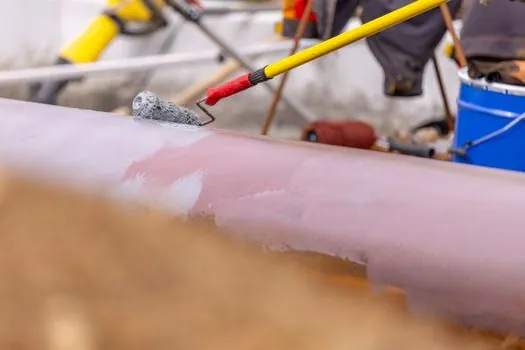
Saltwater corrodes metals roughly 5x faster than freshwater; seawater, with biological activity, accelerates that to roughly 10x the freshwater rate, and tropical seawater is faster still due to temperature [S2]. In that environment, the zinc layer of galvanized pipe erodes predictably and the pipe is the wrong material; stainless steel (austenitic 304/316) is the established default for sea-going and coastal service [S1][S2].
In evaporative condensers, the operational wrinkle is passivation: galvanized tube bundles and sump basins need a chemical or natural passivation step before they can resist wetted-service corrosion, and a missed passivation cycle is the most common cause of premature galvanized bundle failure [S3]. Stainless condenser coils do not require passivation, although the surrounding sump and cabinet are often upgraded to stainless at the same time because a mixed system still wets galvanized wetted parts [S3].
Strength, Formability, and Welding Behavior
At equivalent thickness, stainless steel pipe is consistently the stronger of the two, and galvanized steel is the more supple and formable of the two [S1][S2][S5]. Galvanized coil feeds bending, roll-forming, and stamping with less springback; stainless requires more force, sharper tooling, and matched filler metals during welding to avoid sensitization in austenitic grades [S2].
Welding galvanized steel introduces a specific fume hazard: zinc boils below the steel's working temperature, vaporizes in the arc, and produces zinc-oxide fume that requires respiratory protection for the welder [S2]. Welding stainless requires tighter control of heat input and interpass temperature to preserve corrosion resistance in the heat-affected zone, especially on 304 where chromium-carbide precipitation can be a concern in heavy sections [S2]. See our seamless steel pipe reference for how these welded-versus-drawn distinctions translate into service ratings, and the stainless steel overview for the underlying alloy behavior.
Decision Matrix: Pick by Service Environment
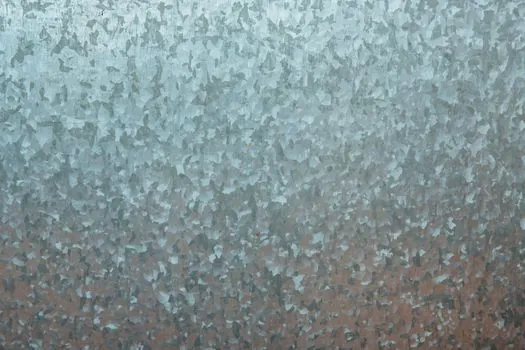
Use galvanized steel coil or pipe when the fluid is potable cold water at neutral pH, the installation is indoor or sheltered, the temperature is moderate (zinc holds to roughly 200 °C before scaling), the budget is fixed, and the design life is 15-25 years with planned replacement [S1][S2][S5][S6].
Use stainless steel pipe when the service includes chlorides, salt spray, food contact, high-purity water, repeated wet-dry cycling, or elevated temperatures, when the system is hard to access for replacement, or when the lifecycle calculation (not the unit price) drives the spec [S1][S2][S3][S5]. For mixed systems (a stainless coil in a galvanized cabinet, for example), plan to passivate the galvanized wetted parts and budget for the extra surface area stainless needs to offset its roughly 3% thermal-performance penalty [S3].
Limitations and Common Failure Modes
Galvanized pipe fails at the zinc/substrate interface once the coating is consumed; in white-rust (zinc-oxide/hydroxide) conditions, the coating can convert to a non-protective powder in months rather than years if passivation is skipped or the water chemistry is aggressive [S3]. In addition, galvanized pipe is not allowed for combustion venting in many code regimes where stainless is required, because the zinc volatilizes at flue temperatures and produces visible white smoke at the cap [S4].
Stainless pipe fails by pitting and crevice corrosion in chloride service when the grade is misapplied: 304 in warm chloride is a known false economy, and 316 or duplex is the upgrade path [S1][S2]. Stainless also fails by stress-corrosion cracking in specific chemistries (caustic, high-temperature chloride) and by galvanic interaction when coupled to a less-noble metal in a wet joint, where a dielectric union is the standard mitigation.
Sourcing, Standards, and Specifications to Verify
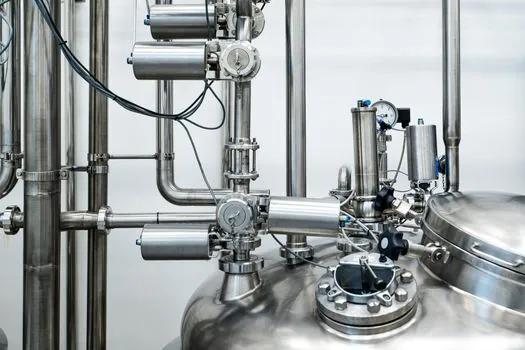
On the sourcing side, galvanized steel sheet is typically ordered to ASTM A653 (hot-dip zinc coating) with coating weight designated G60 or G90 (oz/ft²) depending on service life target; stainless steel pipe is commonly ordered to ASTM A312 (seamless and welded austenitic) for process pipe or ASTM A554 for mechanical/structural tube, with the grade (304 vs 316 vs 316L) declared on the MTR [S1][S2].
For welding and fume control on galvanized steel, OSHA general-industry and construction standards govern zinc-oxide exposure limits (the PEL is 5 mg/m³ as an 8-hour TWA for zinc-oxide fume, with a short-term ceiling of 10 mg/m³), and the welder-side mitigation is local exhaust ventilation plus appropriate respirator selection per the SDS for the specific zinc-rich consumable. For stainless in food or potable service, NSF/ANSI 61 and FDA food-contact listings are the usual gating documents; in marine or offshore service, NACE MR0175 / ISO 15156 is the controlling standard for sour-service material selection, though it does not apply to galvanized carbon steel at all.
Track the next two signals: (1) 2026 H2 nickel and zinc spot prices, which directly reset the galvanized-vs-stainless cost ratio and may shift the breakeven service life for water-service pipe by 2-4 years; (2) revised NSF/ANSI 61 clarifications on zinc-corrosion-product release in low-pH potable water, which historically have driven specifiers from galvanized to 304 stainless in residential distribution.
Related analysis: VLM vs Vertical Carousel: Spec-Driven Selection for AS/RS Buyers.