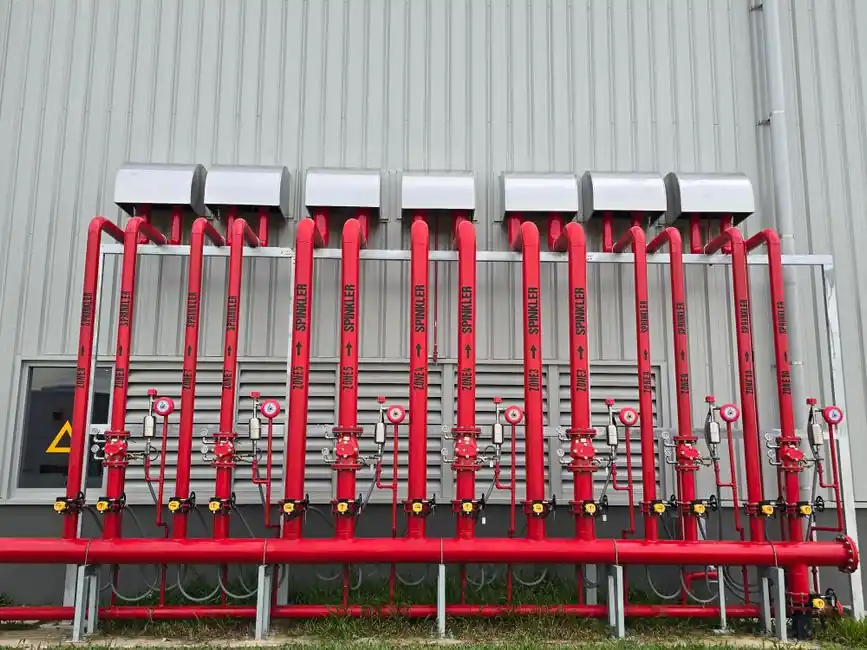
Chinese OEM controllers dominate the 4-32 channel mid-market: Shenzhen YuanTe (Safegas) ships a 1-4 channel wall-mount unit (YT-1100H) with 4-20 mA input and sound/light alarm, plus an RS485 bus system that can monitor 128 gas sensors on a single trunk [S1]. GasDog's GD900-32C lists 8/16/24/32 selectable channels, supports up to 32 fixed gas detectors, and retails at $754.89 with a 6-12 day delivery window, giving buyers a published price point for low-end multi-channel panels [S5].
Western suppliers push higher channel density and safety-integrity ratings. Dräger's fixed-detection portfolio spans the REGARD 3900 (16 channels, SIL 1/2) through the REGARD 7000 and 7000F (each 1536 channels, SIL 2c3) and the VarioGard controller (100 channels) [S3]. Pem-Tech complements that with PT500/PT2008 multi-channel controllers and a PT900 modular monitor aimed at toxic and combustible gas panels, while GDS Corp positions its alarm-controller line as integration-grade hardware for legacy 4-20 mA loops [S2][S7].
Channel count and architecture: where the 1-4, 8-16, and 100+ tiers separate
Entry-level Chinese units cluster at 1-4 channels (Safegas YT-1100H) or 8/16/24/32 channels (GasDog GD900-32C), with 4-20 mA signal acquisition and RS485 Modbus as the dominant fieldbus [S1][S5]. Mid-range American controllers occupy the 4, 8, 8-16, 12, and 16-channel slots, with the Pem-Tech PT500/PT2008 family explicitly offered in 4/8/8-16 and 6/12/8-16 multi-channel configurations, wall or rack mount [S2].
High-density European panels jump to hundreds or thousands of channels: Dräger's REGARD 7000 and 7000F both support 1536 channels in a SIL 2c3 architecture, with HART communication, Modbus RTU interface, and a bridge module for connecting to existing REGARD networks [S3]. The VarioGard central unit handles 100 channels for area monitoring applications where a SIL-rated controller is not required [S3]. Buyers should treat channel count as a hard functional spec, not a marketing line, because it directly constrains detector loop length, power budget, and the type of gas alarm controller integration the plant can support.
Selection criteria: certifications, comms, and hazardous-area class
Three specs decide the shortlist for any fixed gas-detection retrofit or new build: hazardous-area certification, digital communications, and safety integrity level. The Safegas YT-1100H ships with 4-20 mA analog input and 24 V DC operation, with the RS485 bus unit extending to 128 sensors, but neither product page references ATEX or IECEx on the controller body itself [S1]. Dräger REGARD 7000F is published with SIL 2c3, UL 864, Modbus RTU, and HART support, while REGARD 3000 Plus supports 8 channels (expandable to 192) at SIL 2c3 [S3].
Pem-Tech's alarm-station line is segmented by NEC class: Class I Division 1 explosion-proof, Class I Division 2 hazardous locations, and a NEMA 4X safe-area station, an explicit three-tier offering that maps directly to U.S. NFPA 70 wiring practice [S2]. For European process plants, the equivalent split is ATEX zones 0/1/2, and an OEM selling only an IP-rated wall-mount unit will not cover a Zone 1 detector farm. Selection rule of thumb: confirm the controller's hazardous-area certificate first, then comms, then SIL, not the other way around.
Vendor comparison: cost vs density vs safety rating
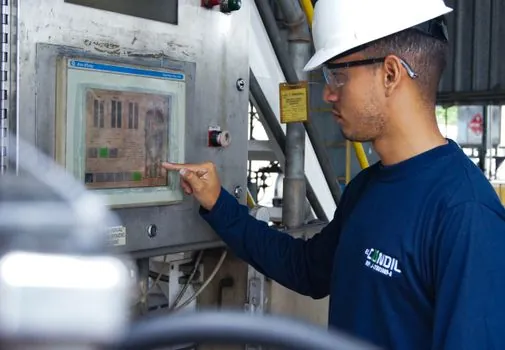
On a like-for-like spec sheet, the suppliers split cleanly. Safegas and GasDog compete on cost and lead time at the 4-32 channel tier, with published prices under $1,000 and shipping windows of 6-12 days for catalog SKUs [S5]. Pem-Tech targets the 4-16 channel North American mid-market with modular rack or wall options, priced on quote [S2]. GDS Corp and Dräger sit in the upper bracket, where channel density, SIL 2 certification, and multi-vendor integration (HART, Modbus, bridge modules) drive cost over raw sensor count [S3][S7].
A 2025-11 industry roundup of the top 10 global gas-alarm system suppliers placed Honeywell, Siemens, Johnson Controls, and Tyco (now part of Johnson Controls) at the top of the integrated-systems tier, with the rest of the list filled by detection specialists [S8]. Independent 2026 supplier directories list 101 gas-detector manufacturers, with Global Detection Systems Corp (League City, Texas) named as one fixed-detection specialist alongside dozens of Chinese OEM factories [S6]. The practical conclusion: if the panel must talk to a DCS or fire-alarm system via HART or Modbus, default to a Western brand; if it is a standalone alarm panel for a small facility, a Chinese OEM unit at one-tenth the price is a defensible spec.
Use cases: who the 4-32 channel tier is for, and who it isn't
For small-to-medium plants (boiler rooms, gas-metering skids, parking garages, food-grade CO2 storage), 4-32 channel controllers with 4-20 mA input and RS485 output are the right fit: they cover typically 1-30 fixed detectors, support sound/light alarm annunciation, and integrate with a single PLC or SCADA gateway [S1][S5]. The 8-16 channel Pem-Tech PT500/PT2008 family serves the same use case on the U.S. side, with wall or rack mounting and modular expansion to 16 channels [S2].
High-channel panels are not aimed at this market. The Dräger REGARD 7000 with 1536 channels exists for refinery, petrochemical, and offshore platform F&G systems where SIL 2c3 and UL 864 are project requirements, and where the controller must aggregate detectors from multiple vendors over Modbus RTU and HART [S3]. Specifying a 1536-channel panel in a 10-detector warehouse is wasted capital, just as specifying a 4-channel Chinese unit in a Zone 1 hydrocarbon process area is a safety non-conformance. The hardware envelope of a perimeter alarm or fire alarm control panel in a small plant will overlap with the gas-detection controller's wiring practice but is rarely a substitute for it.
Limitations and integration failure modes to watch

Three recurring failure modes show up across the supplier base. First, comms interoperability: a Safegas or GasDog 4-20 mA controller cannot decode a HART-only Dräger detector without an external HART-to-analog converter, and conversely a REGARD 7000 expects HART or Modbus RTU, not raw 4-20 mA, on its analog inputs [S1][S3][S5]. Second, hazardous-area rating gaps: wall-mount Chinese controllers are typically safe-area devices, so a Zone 1 detector must be wired through an intrinsically safe barrier, a cost and engineering step the controller's data sheet does not flag [S1][S2].
Third, SIL documentation: only the Dräger REGARD family in the surveyed set publishes explicit SIL 1 or SIL 2c3 ratings on the controller, and UL 864 on the 7000F [S3]. Chinese and most U.S. mid-market controllers are sold as general-purpose alarm panels with no published SIL claim, which blocks their use in IEC 61511 SIL-2 instrumented protective functions [S1][S2][S5]. Maintenance and calibration access follow from this: Pem-Tech ships calibration accessories (PT301 H2S generator, disposable gas cylinders) alongside its controllers, which signals an expectation of regular bump-testing on the loop, while OEM Chinese suppliers typically do not bundle calibration gas with the controller [S2]. Buyers should treat absence of a published SIL rating or calibration kit as a red flag, not a cost saving.
Sourcing signals to track into Q4 2026
Three trackable signals should drive the next sourcing decision. Watch for new channel-density entries on Chinese OEM 4-20 mA controllers, where the 8-32 channel catalog line has already compressed to sub-$800 list price and is likely to extend toward 64 channels with built-in cloud relay [S5]. Watch for Dräger REGARD 7000F order lead times, since 1536-channel SIL 2c3 panels are typically the long-pole item on refinery F&G projects and any published lead-time reduction would be a buy signal [S3]. Cross-reference the 2025-11 top-10 list against any new entrants in the 2026 directories: with 101 gas-detector manufacturers indexed in one 2026 directory alone, the mid-market is still expanding [S6][S8].
For related coverage, see LiDAR sensor capacity planning: ramp evidence, calibration bottlenecks, and the 2026 EMS.