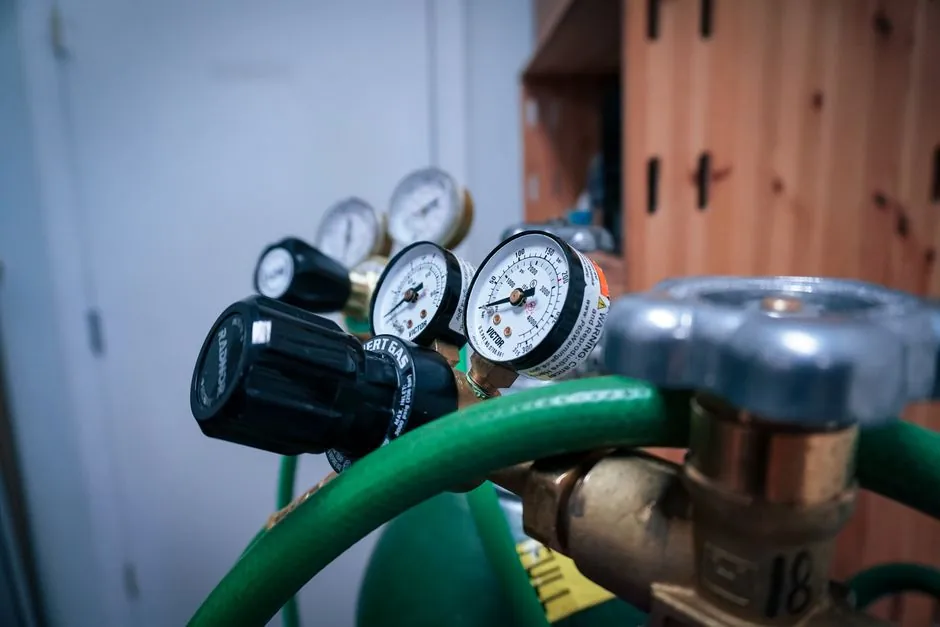
A gas alarm controller is the central decision node of a fixed gas detection installation: it accepts 4-20 mA, mV bridge, or digital inputs from one or more gas detectors, runs threshold logic, drives audible/visual alarms, and switches relays for ventilation, shutoff, or fire-suppression tie-in [S2][S5].
For industrial buyers, the controller selection is dominated by four numbers: channel count (1, 2, 4, 8, 16, 32), sensor compatibility (catalytic bead, electrochemical, infrared, semiconductor, PID), output protocol (relay, 4-20 mA, Modbus RTU/TCP), and hazardous-area certification (ATEX, IECEx, SIL) [S1][S2][S3]. Get any of these wrong and the system is either non-compliant, non-expandable, or both.
Channel Count: 1 to 32 Inputs Decides Form Factor and Cost
Single-channel controllers handle one detector and are typically DIN-rail or compact wall-mount units sized for a single analyser point, a refrigerant compressor skid, or a domestic boiler room; their installed cost is dominated by the detector, not the controller [S5].
Multi-channel controllers are the workhorses of plant fixed-gas systems, available in 2, 4, 8, 16, and 32-channel variants. Examples on the market include 2- and 4-channel graphic-display units, 16-channel wall-mounted units, and 32-channel rack systems with touchscreen HMI [S2]. A practical rule of thumb: a single 32-channel unit replacing sixteen 2-channel units cuts panel space, wiring terminations, and spare-parts SKUs by roughly 50-70% in a refinery or wastewater treatment plant. For retail, hospitality, and small commercial kitchens, a 1- or 2-channel unit is the correct fit; over-specifying here is the most common waste I see on small jobs.
Sensor Compatibility: Match Detector Output, Not Just the Gas
Electrochemical cells suit toxic gases (CO, H2S, NH3, Cl2) at ppm levels and output 4-20 mA; catalytic-bead sensors suit combustible gases at %LEL and output an mV bridge signal that requires a dedicated controller input module [S3][S5].
Infrared (NDIR) point or open-path detectors are the default for hydrocarbons and CO2 where poison resistance matters, while semiconductor sensors (tin-dioxide, resistance drops from 0 to roughly 3.5 kohm at 1% methane) suit low-cost oxygen, hydrogen, and alcohol-vapour monitoring in non-classified areas [S5]. A buyer who specifies a controller accepting only 4-20 mA but pairs it with a catalytic-bead detector will discover the mismatch only at commissioning. A sensor-to-gas matching guide for fab and high-purity environments walks through the same matrix for cleanroom duty, where cross-sensitivity and poisoning by dopants like silane or phosphine are the deciding factors.
Output, Relays, and Protocol: How the Controller Talks to the Plant
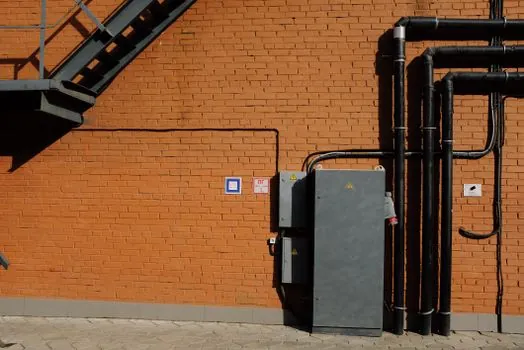
Hard outputs fall into three tiers: dry-contact relays (typically 2-8 SPDT per controller for low/high alarms and fault), analogue 4-20 mA retransmission per channel for DCS/SCADA, and digital fieldbus (Modbus RTU over RS-485, Modbus TCP, PROFIBUS, or Ethernet/IP) for plant-wide integration [S2].
A SIL-rated controller in safety duty (IEC 61508 SIL 2 or SIL 3) must have certified relay outputs and watchdog diagnostics; a non-SIL controller used only for indication is acceptable for comfort monitoring but never for life-safety shutdowns [S2]. For parking-garage CO/NO2 systems, controllers with built-in Modbus and dedicated traffic algorithms (demand-controlled ventilation) are common, and for car-park duty, a SIL 1 unit is typically the minimum specified by EU codes.
Standards, Certifications, and Zone Rating: Non-Negotiable in Hazardous Areas
Inside ATEX Zone 1 or Zone 2, the controller itself (if installed in the hazardous area) must carry ATEX 2014/34/EU and EN 60079-29-1 metrological certification; a controller without EN 60079-29-1 cannot be used to drive safety actions on a fixed gas detection system in the EU [S2].
For global projects, IECEx, CSA, FM, and ETL equivalents are required; for marine and offshore, MED (Marine Equipment Directive) is added on top [S2]. A 17-product OEM controller portfolio on the market breaks down as 7 CE-marked, 3 ATEX, 7 US-approved (CSA/FM/ETL/UL), 5 SIL-rated, and 2 MED; the overlap shows that most multi-channel units carry three or four approvals simultaneously [S2]. Outside hazardous areas, look for general-purpose IP54/IP66 enclosures and CE/UL 61010-1 for electrical safety; EN 50271 covers the controller's digital signal processing and is the companion standard to EN 60079-29-1 in Europe [S2].
Calibration, Maintenance, and Lifecycle Numbers
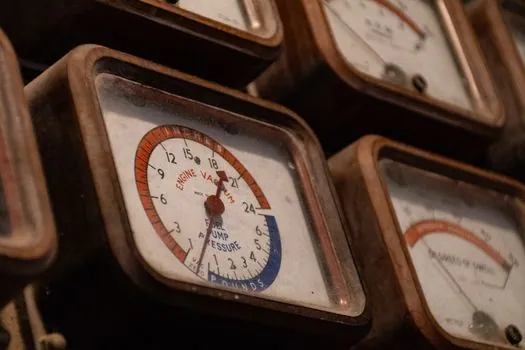
Manufacturer guidance is to perform detector calibration at intervals of no longer than 6 months, and to test audible/visual alarm devices during every calibration event to confirm the full loop [S5].
Response time T90 for most electrochemical and NDIR detectors falls in the 15-60 s range; for life-safety applications, specify T90 under 30 s and confirm the figure on the certificate, not the brochure. Sensor life typically runs 2-3 years for electrochemical toxic sensors and 5+ years for NDIR; the controller's ability to display remaining sensor life and calibration-due date is a procurement requirement, not a luxury. For household CO alarms, an 85 dB minimum siren at 3 m is the residential baseline; commercial kitchens and car parks typically need 100 dB or more with weatherproof sounders [S7].
Who Should and Should Not Use a Multi-Channel Controller
Multi-channel units are correct for: refineries, chemical plants, wastewater treatment, pharmaceutical manufacturing, large commercial HVAC, parking structures, and semiconductor fabs where a single panel consolidates 8-128 detector points [S2][S4].
Multi-channel controllers are the wrong tool for: a single home LPG point, a single CO point in a small restaurant, or any retrofit where only one detector exists; here a single-channel 4-20 mA unit, or even a self-contained smart detector with onboard relay, is cheaper, faster to install, and easier to maintain [S5][S6]. The comparison across controller types: 1-channel (lowest cost, single point, no expansion), 2-4 channel (small commercial, lab, mechanical room), 8-16 channel (mid-size plant, multi-area), 32 channel (refinery-grade, full fire-and-gas integration, SIL 2/3 capable).
Field Reference and Shortlist Logic
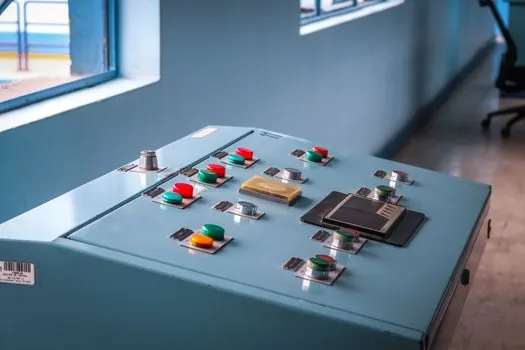
Before you issue a purchase order, lock these four numbers: detector count now and in 5 years (drives channel count and expansion slots), gas list and sensor technology per point (drives input module type), required SIL level and zone classification (drives certification list), and output protocol expected by your DCS or BMS (drives comms card). [S3]
For process-gas online analysis in the same plant, a complementary selection logic applies to online water quality analyzers where parameter count, accuracy class, and protocol dominate. Trackable signals for the next procurement cycle: EN 60079-29-1 certificate scope (does it cover the actual gas?), SIL rating on the relay outputs (not just the controller), and a documented 6-month calibration interval with on-screen remaining-life indication.
The underlying component specifications are covered under gas alarm controller, perimeter alarm, and fire alarm control panel.