
A gas alarm controller is a panel-mounted, multi-channel host that aggregates signals from field detectors and drives relays, sounders, and shut-off valves; a combustible gas detector is the field sensor that resolves the local LEL concentration into a 4-20 mA, RS485, or switch output [S4]. Specifying one without the other leaves a detection loop incomplete, which is the most common procurement error in 2026 small-commercial and light-industrial builds [S2].
The two product families sit on opposite ends of the same safety chain. Sensor-side models like the portable TC-BO3-3 carry intrinsically safe Ex protection for handheld methane/organic-solvent surveys [S1], while controller-side units such as the RS485 4-wire industrial panel with 4G remote monitoring are sold at US$104.35-121.74 per piece for 10-piece MOQ in the China OEM channel [S3]. End-to-end loop integrity depends on matching Ex marking, output type, and alarm logic between the two.
Definition and Scope: Where Each Device Begins and Ends
A combustible gas detector is defined as an instrument that resolves the type and concentration of a flammable gas in ambient air, producing a usable electrical output for indication, recording, or downstream processing [S4]. The category covers portable, hand-held, stationary, and on-line form factors, with common target gases being methane, propane, hydrogen, and a range of organic solvents [S1][S4].
A gas alarm controller sits one tier up the chain: it accepts inputs from one or more detectors, runs alarm-threshold logic, and drives external actuators. The industrial RS485 4-wire controller documented in current OEM catalogs explicitly lists combustible gas detectors among its accepted inputs, alongside carbon monoxide and toxic sensors, and adds 4G remote monitoring as a value layer [S3]. Multi-gas portable instruments such as the 4-in-1 LCD monitor integrate sensing and local alarm in one enclosure, but the wall-mounted controller remains the canonical aggregation point for fixed installations [S6].
The boundary matters at tender time: a 4-in-1 portable monitor at US$368.00 per piece cannot substitute for a fixed 4-wire controller with valve-driving relays [S6]. For a working comparison of detector-side selection gates, the Gas Detector Selection Criteria 2026 walk-through covers the five build-defining filters; on the controller side, Gas Alarm Controller 2026 Buying Guide maps channel count, output types, and certification gates.
Sensing Principle and Output Signal: Detector-Side Realities
Combustible gas detectors in the documented 2026 OEM catalog predominantly use catalytic-bead or semiconductor sensing for LEL-range work, with NDIR and electrochemical cells appearing in adjacent toxic-gas SKUs [S1][S4]. The TC-BO3-3 portable, for example, is positioned for methane and organic-solvent vapour surveys, with intrinsically safe Ex protection and a sensing head packaged for handheld use [S1].
Output is the first cross-check. Detectors publish 4-20 mA analog, RS485 Modbus, or discrete switch; multi-gas portables such as the JT-portable 4-in-1 add on-board LCD indication but typically still expose a digital bus for host integration [S6]. Pairing a switch-only sensor with a controller expecting a 4-20 mA loop is a wiring-stage failure that is invisible until commissioning.
Detection range and resolution are equally practical. Fixed LEL detectors commonly span 0-100% LEL with 1% LEL resolution, while portable survey instruments may resolve a wider percentage-by-volume range for leak localisation [S1][S4]. The controller must accept the detector's full-scale range and map it to its own alarm-threshold ladder, otherwise a 25% LEL field reading will not trigger the panel's 20% LEL alarm if scaling is mis-set.
Controller Architecture: Channels, Outputs, and Comms
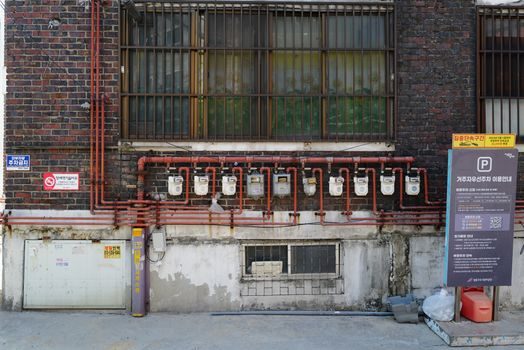
Industrial controllers in the 2026 China OEM channel are typically 4-wire (two power, two signal) RS485 units with multi-channel inputs, relay outputs for shut-off valves and exhaust fans, and optional 4G telemetry [S3]. Pricing on the RS485 4-wire combustible gas alarm controller is US$104.35-121.74 at 10-piece MOQ, with custom OEM/ODM available from Hebei-based manufacturers [S3].
Channel count drives the cost curve more than sensing accuracy: a 4-channel panel is roughly 2x the price of a 2-channel panel, and 8-channel or bus-expandable panels step up further. Outputs typically include passive relay contacts rated 5 A / 250 VAC for valve shut-off, plus 24 VDC switched outputs for sounders and strobes [S3].
Communication is the second spec gate. RS485 Modbus is the workhorse for fixed plant, with 4G remote monitoring layered on top for sites where cable runs are impractical or where a SCADA link is not available [S3]. For a single small commercial kitchen, a 1-2 channel controller with on-board sounder and one shut-off valve output is the minimum viable package; anything beyond that is over-specified.
Selection Criteria: A Four-Gate Comparison
Side-by-side, the two families diverge on four procurement gates. A clean spec must answer each gate for the detector and the controller in the same worksheet. [S1]
Gate 1, Ex rating and area classification. Detectors enter Zone 1 or Zone 2 hazardous areas; the controller is normally mounted in a safe area and the loop crosses the boundary through an intrinsically safe barrier or flameproof cable entry [S1][S3]. The intrinsically safe portable TC-BO3-3 carries its own Ex rating for handheld survey use, but a fixed detector installed in Zone 1 still needs the controller-side barrier sized to the loop [S1].
Gate 2, output protocol. Detectors publish 4-20 mA, RS485, or switch; controllers accept a subset of these. Mismatch here is the single most common commissioning defect in 2026 small-build retrofits, because the detector datasheet and the controller datasheet are read in isolation rather than as a loop [S3][S4].
Gate 3, alarm threshold and logic. Detectors report LEL%; controllers enforce thresholds. A detector with 1% LEL resolution and a 25% LEL full-scale range cannot be paired with a controller that expects a 0-100% LEL range without a scaling factor, and the panel's low/high alarm set-points must be re-entered in engineering units, not raw counts [S3][S4].
Gate 4, power and cable. 4-wire RS485 panels need a dedicated 24 VDC or AC supply plus a screened twisted pair; 2-wire loop-powered detectors run on the same pair that carries 4-20 mA. Mixing 2-wire and 4-wire devices on the same controller channel damages the loop and is not a configuration that any catalog in the research supports [S3].
Who It Is For, and Where It Is Not the Right Tool
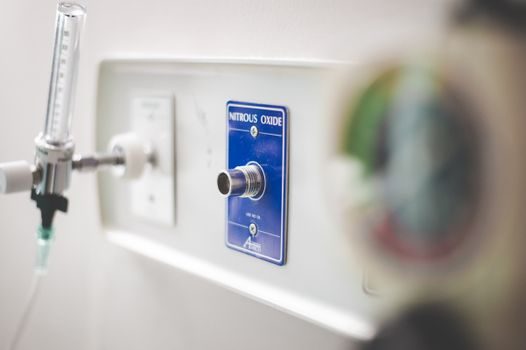
For fixed plant with multiple detection points, valve shut-off logic, and remote telemetry, a 4-wire RS485 gas alarm controller with paired fixed combustible gas detectors is the correct build. The 4G telemetry layer is justified for unmanned sites where the panel must push SMS or app alerts when an alarm fires [S3].
For mobile surveys, leak localisation, or confined-space entry checks, a portable combustible gas detector such as the TC-BO3-3 is the right tool; pairing it to a wall-mounted controller is not a typical use case [S1]. Multi-gas portables like the 4-in-1 LCD monitor at US$368.00 per piece serve technicians who need O2, CO, H2S, and LEL on one screen for hot-work permits [S6].
It is not the right tool when the spec calls for a single-point domestic kitchen alarm. Household SKUs in the 2026 OEM channel, such as the JT-SSJ12W13-B-E natural gas alarm at US$9.90 per piece, are self-contained sensor-plus-sounder units and do not require a separate controller [S6]. Conversely, a US$104 controller with 4G telemetry is overkill for a 1-point domestic install and adds a recurring SIM cost.
Real Use Cases and Failure Modes
Use case 1: a 200 m^2 restaurant kitchen with two gas cook lines and a basement boiler room. Spec is a 2-channel fixed combustible gas detector (methane/LPG) feeding a 2-channel 4-wire RS485 controller with one shut-off valve relay and one sounder output; no 4G needed because the kitchen is staffed [S3][S6].
Use case 2: an unmanned CNG station with 4 detection points and a remote SCADA link. Spec is 4 fixed detectors, a 4-channel RS485 controller with 4G telemetry, and 24 VDC sounders; 4G justifies the SIM cost because site visits are 40 km away [S3].
Use case 3: a hot-work permit inside a refinery vessel. Spec is a portable 4-in-1 multi-gas monitor with O2, CO, H2S, and LEL channels, used by the entry supervisor, with no fixed installation [S6].
Documented failure modes in the research include output-protocol mismatch between sensor and controller, alarm-threshold mis-scaling between detector full-scale and panel set-points, and 2-wire/4-wire hybrid wiring that violates the panel's input specification [S3][S4]. None of these are exotic faults; all three are caught by a 15-minute loop datasheet review before purchase.
Standards and Sourcing Notes

Hazardous-area equipment in this category falls under the IEC 60079 series and the ATEX 2014/34/EU framework for European sites, with IECEx for international projects; portable units like the TC-BO3-3 carry explicit intrinsically safe marking in the OEM datasheet [S1]. Industrial panels from Hebei manufacturers publish OEM/ODM and sample service, which is the practical route for projects that need a private label or a non-standard channel count [S3].
Sourcing channels observed in the 2026-05 OEM catalogs include OFweek Mall for portable detectors, Made-in-China and ECVV for controller panels, and Gold Supplier listings from Zhuhai-based firms founded in 2003 that specialise in combustible and CO alarms for household and light-commercial use [S1][S2][S3][S5]. For loop-level integration questions, a sensor datasheet plus a controller datasheet read in parallel catches more defects than either read alone.