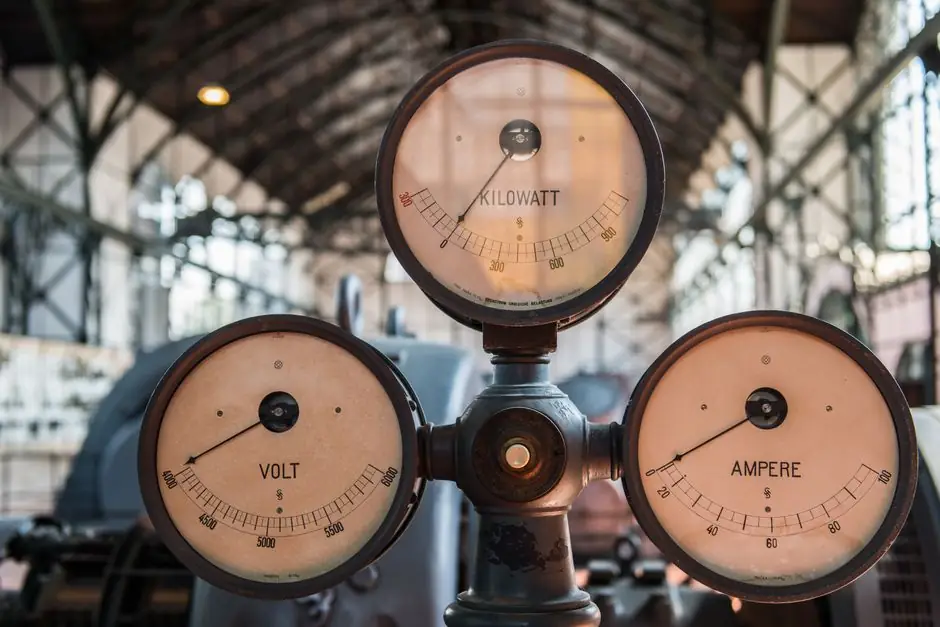
Specifying a gas analyzer in 2026 is a principle-matching exercise first, a brand exercise second: NDIR, TDL, paramagnetic, electrochemical, ZrO2, and FID/PID each have a defined duty window, and the wrong pairing burns budget on calibration drift and unscheduled maintenance rather than on the measurement itself [S2][S4].
Total cost of ownership over a 10-year service life is dominated by calibration gas, consumables, and probe/filter changes, not the purchase price; the published GPro 500 family spec sheet lists in-situ measurement, sub-2-second response, and tolerance to process dust and moisture as the engineering trade that pushes cost out of the maintenance column [S4]. This guide walks the spec-first checklist used on real procurements: principle, range, certification, interface, and lifecycle cost.
Map the duty to a measurement principle before reading a single datasheet
Five measurement principles cover roughly 90% of industrial gas analyzer duties; the wrong pick is the single most common reason an analyzer is replaced inside five years [S2]. Non-dispersive infrared (NDIR) handles CO, CO2, CH4, and most hydrocarbons in clean, dry sample gas at 0–100% volume ranges; tunable diode laser (TDL) is specified where the gas is hot, wet, or dusty, because the optical path sits inside the process, eliminating the sample line, chiller, and conditioning system entirely [S4].
Paramagnetic and zirconium-dioxide (ZrO2) cells are the two main routes for O2: paramagnetic for clean backgrounds (0–100% O2, typically 0.1% accuracy), ZrO2 for in-situ combustion O2 with 600–1400 °C process gas [S2]. Electrochemical sensors remain the lowest-cost option for toxic gas detection (H2S, Cl2, NH3, NO2) at ppm levels with 1–3 year cell life; flame ionization detection (FID) is mandatory for total hydrocarbons below 10 ppm C in regulated source-emission monitoring under EN 15267-3, with heated FID (HFID) required when the sample must stay above 180 °C to avoid hydrocarbon losses [S2][S4].
Decision criteria: the four numbers that decide the build
Selection on a process-gas analyzer reduces to four hard numbers plus the duty gas list: (1) target gas(es) and full scale range, usually expressed as 0–X ppm or 0–X %; (2) required detection limit or accuracy, typically 1–2% of full scale for NDIR and 0.5% of reading for paramagnetic; (3) response time T90, where stack CEMS analyzers must meet 200-second averaging rules under EN 14181 / QAL1, while in-situ TDL reaches T90 in under 2 seconds for closed-loop control [S2][S4]; (4) process temperature and dust loading, which alone can eliminate extractive NDIR and force an in-situ TDL or zirconia probe.
A compact comparison of the four most-commonly specified principles against these criteria (data drawn from the cross-vendor buying guide and the TDL product portfolio at [S2][S4]):
<strong>NDIR (extractive)</strong>, typical 0–100 ppm to 0–100% CO/CO2/CH4, ±1% FS, T90 5–30 s, requires clean dry sample, 2–3 year bench life, low-to-mid capex, suited to clean process streams and ambient air quality.
<strong>TDL (in-situ)</strong>, single gas such as O2, NH3, HCl, H2O, typical 0–100 ppm up to 0–100% depending on gas, ±2% reading or 1% FS, T90 under 2 s, tolerates dust and moisture at 600 °C class process conditions, mid-to-high capex, suited to combustion control, DeNOx, and HCl stack monitoring on wet scrubbers [S4].
<strong>Paramagnetic O2</strong>, 0–5% to 0–100% O2, ±0.1% O2 absolute, T90 4–15 s, clean background only, 5+ year life, mid capex, suited to biogas, medical, and clean process O2.
<strong>Heated FID (HFID)</strong>, 0–10 mg/m3 to 0–10,000 mg/m3 total hydrocarbons, ±0.5% FS, T90 under 1 s, sample line held at 180 °C, regulated route for EN 12619 / EN 13526 stack THC, mid-to-high capex plus fuel gas supply.
Safety certifications that gate hazardous-area projects

Any analyzer installed in a Zone 1 or Zone 2 classified area in a chemical, refinery, or LNG plant must carry a region-specific hazardous-area certificate: ATEX 2014/34/EU with Ex d (flameproof) or Ex ia (intrinsically safe) marking for Europe, IECEx for Asia-Pacific and Middle East, and UL/CSA Class I Div 1 or Div 2 for North America, with the certification body number traceable on the nameplate [S2].
For source emissions compliance in the EU, the analyzer must also be certified to EN 15267-3 and pass QAL1 suitability testing under EN 14181, which is a separate procurement line item from the analyzer itself and a hard prerequisite for any reportable CEMS on a combustion plant above 50 MWth [S2][S4]. Plants running into 2026 with legacy analyzers certified to older EN 15267-2 need to verify certificate validity dates with the manufacturer before specifying a spare, because several certificates are time-limited and re-certification is a 6–12 month process.
Interfaces, sample handling, and the integration tax
The analog output remains 4–20 mA with HART 7 for the field device layer, and modern analyzers also expose Ethernet, Modbus TCP, Foundation Fieldbus, or PROFIBUS PA for plant-wide control; the 4–20 mA loop and HART can coexist on the same two wires, but Foundation Fieldbus and PROFIBUS PA are dedicated digital protocols and do not carry a 4–20 mA signal on the same segment [S2].
Sample handling is where most of the integration cost hides: an extractive NDIR panel typically requires a sample probe, a heated line at 180 °C for hydrocarbons, a coalescing or membrane filter, a chiller or Nafion dryer, and a sample pump sized for 0.5–2 L/min, which is why in-situ TDL analyzers are often specified on wet, hot, or particulate-loaded streams to eliminate the conditioning train entirely [S4]. For biogas, landfill, and digester applications, sample conditioning must include an H2S scrubber and a condensate trap, and a coalescing filter rated to 1 µm or finer is standard practice to protect the NDIR bench from silica aerosols.
Who an in-situ TDL analyzer is for, and who should not buy one

In-situ TDL analyzers fit combustion control, ammonia slip on SCR DeNOx (typical range 0–10 ppm NH3 with 0.1 ppm resolution), HCl on wet scrubbers (0–20 ppm HCl, often 0–1000 mg/m3 SO2 companion measurement), and H2O in chlorine or HCl dryers, where the process stream is too hot, too wet, or too dirty for an extractive measurement [S4]. The TDL portfolio spans multiple process adaptions so the same optical engine can be cross-deployed across a plant, which is the published technical case for standardising on one TDL family across multiple services.
TDL is not the right pick for trace-level multi-component speciation: a process FTIR with a 1 m folded-path gas cell delivers simultaneous measurement of 20+ gases at sub-ppm levels and is the only practical route for hazardous-waste incinerator compliance monitoring, where the regulated list runs from HCl and HF through dioxin precursors. TDL is also wrong for laboratory-grade accuracy on clean bottled gas, where a benchtop NDIR or a paramagnetic analyzer with 0.01% resolution is the cost-effective reference instrument, and the extra cost of a TDL head plus cross-stack mounting does not recover any benefit in that duty. For a quick sanity check on a related flow-side spec sheet, an Orifice plate flowmeter cost guide lays out the same principle-versus-bore sizing logic that drives an analyzer specification.
Lifecycle cost: 10-year TCO math that survives a CAPEX review
A typical extractive NDIR analyzer for a single component at ppm level lands in the USD 8,000–18,000 capex band; the calibration gas bottles, particulate filters, and pump rebuilds add USD 3,000–6,000 per year in operating cost, and certified QAL1 calibration adds a further USD 2,000–4,000 per year on regulated CEMS [S2]. The published TDL product line frames the alternative proposition differently: by removing the sample line, chiller, filter train, and pump, the maintenance and consumables cost is held to a minimum, and the T90 under 2 s improves combustion control loop bandwidth, which in turn lowers NOx and CO trim air demand and pays back the higher capex on fuel cost [S4].
For a 10-year service life, the realistic TCO spread between an extractive NDIR panel and an in-situ TDL on a single-stack service is in the USD 60,000–120,000 range depending on gas list and duty cycle, and the TDL wins whenever the process is hot, wet, or particulate-loaded because the sample-handling cost is the largest single line item on the extractive side. Procurement reviewers should also cost the analyzer shelter (HVAC, purged enclosure, gas cabinet) on hazardous-area sites, because that line can run 20–30% of the analyzer capex on Zone 1 builds.
Encyclopedia grounding and standards to verify before signing
A working specifier keeps three reference points open: the gas analyzer overview for principle-by-duty mapping, the gas detection page for hazardous-area sensor technologies, and the gas detector page for fixed and portable worker-safety instruments, because the procurement question on a fire-and-gas project is a different instrument from the question on a process analyzer project even though both are called gas analyzers in casual usage [S2].
For toxic-gas monitoring and worker safety, the gas detection and gas detector entries map to the IEC 60079-29-2 performance standard for combustible-gas and toxic-gas detectors, which is the reference document for response time, poisoning resistance, and selectivity testing on electrochemical cells. For stack CEMS, EN 15267-3 QAL1 is the hard prerequisite; for stack flow reference and isokinetic sampling, ISO 5167 is the document that drives the probe geometry, and an Electromagnetic flowmeter spec sheet shows the same 4-20 mA plus HART wiring pattern that the analyzer output will land on, which is the easiest place to make a wiring error on a new build.
Selection checklist for a 2026 purchase
Run the following gate before any brand shortlist: (1) lock the duty gas list, full-scale range, and required detection limit; (2) lock the process temperature, pressure, dust loading, and moisture to choose extractive versus in-situ; (3) lock the hazardous-area classification and required certification (ATEX, IECEx, UL/CSA); (4) for any CEMS service, verify EN 15267-3 QAL1 certificate validity dates with the manufacturer in writing; (5) build a 10-year TCO sheet including calibration gas, filters, pump rebuilds, shelter, and 2× the analyzer capex as a spare-inventory line; (6) confirm the output protocol (4–20 mA HART, Modbus TCP, Foundation Fieldbus) against the existing DCS or PLC I/O cards, including the wiring rule that HART and 4–20 mA share a pair while FF/PA are digital-only [S2][S4].
The 2026 buying signal to watch on the supply side is the migration of TDL analyzers from single-gas to multi-gas folded-path heads, which compresses the TCO case on multi-component stack services and is already pushing some plant engineers to specify TDL for duties that were NDIR-only as recently as 2024 [S4]. Trackable signals for the next 90 days: updated EN 15267-3 certificate listings for hot-wet HCl and NH3 services, and any 2026-Q3 product release on the GPro 500 TDL family and competitor lines that expands the process-adaption catalogue [S2][S4].