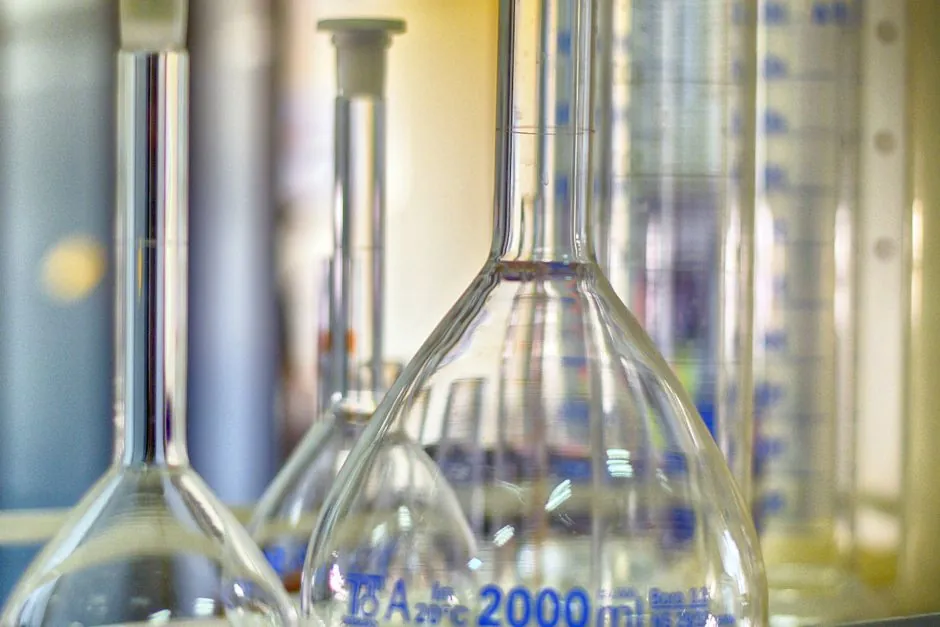
Gas analyzer selection starts with the measurement requirement, not the brand: target gas, full-scale concentration, required detection limit, response time, and the duty cycle of the installation, as set out in METTLER TOLEDO's 10-step process-analyzer guide [S1]. Picking a sensing technology before pinning those numbers down is the most common reason a unit gets returned inside the first year.
A gas analyzer quantifies one or many species and reports a numeric concentration; a gas detector only alarms above a setpoint, and the two categories differ by ±1–5% analyzer accuracy versus ±20–50% detector accuracy in the typical FTIR-vs-electrochemical comparison [S3]. The buyer question in 2026 is not "which brand" but "which duty class, which lower-detection-limit, and which sampling system" the analyzer must live inside.
Define the Measurement Requirement First
List the target gas, the expected concentration range, and the lowest concentration that must be quantified before browsing catalog pages, because the detection limit alone eliminates most candidates [S6]. For OSHA-listed toxic species this is non-negotiable: HF PEL 3 ppm, HCl PEL 5 ppm, HCN PEL 10 ppm, all of which a typical electrochemical detector resolves only as "present / not present" rather than as a measured value [S3]. A buyer who has to prove compliance against 1 ppm of HCl needs an FTIR or PEMS-class instrument, not a 4-gas handheld.
Next, capture the matrix: what else is in the stream besides the target gas, what is the temperature and pressure at the sample tap, and is the measurement continuous, batch, or grab [S5]? Refinery hydrotreater loops, for example, require C1 through nC6 paraffins, C6+ hydrocarbons, H2S, H2, N2, He, O2, CO, and CO2 to be characterized simultaneously, which a single-bean NDIR cannot resolve [S4]. For stacks and flares the same analyzer must return a result in minutes, because heating value can shift inside a single process upset [S4].
Match Sensing Technology to the Gas and Range
FTIR multi-gas analyzers identify and quantify dozens of species simultaneously in seconds and are traceable to calibration standards, while single-gas detectors rely on preset third-party curves and give only threshold alarms [S3]. For unknown or mixed atmospheres such as fire investigation, landfill gas, or HazMat response, FTIR's ability to flag unexpected compounds is the deciding capability. For a known single toxic gas at fixed location, an electrochemical or PID sensor on a gas detection loop is the cost-correct answer.
Refinery streams are dominated by gas chromatography because the analytes are light hydrocarbons and permanent gases that partition cleanly on a column, and GC remains the workhorse for stack, flare, reformer, and hydrotreater duties [S4]. Hydrogen purity in a reformer recycle line is typically done with thermal conductivity or palladium-tube technology; semiconductor/MEMS metal-oxide sensors are used for low-cost leak-spotting but drift in wet streams and should not be used for custody transfer. NDIR is standard for CO, CO2, and CH4 in combustion control where the range sits in the percent band.
Fixed Installation versus Portable Spot Measurement
Handheld portable analyzers are the right tool for spot checks, walking surveys, and short-term incident screening, while fixed continuous analyzers are specified where emissions or process composition must be monitored permanently [S9]. A typical 2026 portable FTIR lists 1–2 kg, 4–8 hour battery, and a handful of pre-loaded spectral libraries; a fixed cabinet version trades weight for heated sample lines, automatic calibration gas injection, and Modbus/TCP or PROFIBUS output to the gas cabinet and DCS.
For a fixed analyzer, the sampling system is half the specification: length of heated line, filter porosity, pump capacity, and return-vent pressure all decide whether the analyzer sees a representative sample or a scrubbed one [S4]. For a portable, the deciding spec is warm-up time, library size, and IP rating; an IP54-rated unit with 30-second warm-up is the practical minimum for refinery turnaround work. Where both are deployed, the handheld is used to find the source and the fixed unit is used to prove it stayed fixed.
Criteria Comparison: Main Analyzer Classes
Four classes cover the bulk of 2026 industrial bids, and they line up against detection limit, multi-gas capability, response time, and total cost of ownership: [S3]
FTIR multi-gas: detection limits in the sub-ppm range for most organics and inorganics, simultaneous quantitation of 20+ species, response in seconds, but capital cost is high and libraries must cover the matrix [S3]. Electrochemical / IR point detector: detection limit at or just below the OSHA PEL, single-gas focus, response in 10–60 seconds, low cost and simple calibration, but no compound identification and drift in temperature/humidity swings. Gas chromatograph: parts-per-million hydrocarbon speciation, 3–30 minute cycle time, high capital and consumable cost, but the only credible option for refinery composition and hydrogen purity [S4]. PID / metal-oxide semiconductor: low-cost VOC screening, 1–1000 ppm range, instant response, but non-selective and humidity-sensitive, so it serves as a screening layer rather than a compliance instrument.
A buyer who needs sub-ppm compliance on HF, HCl, or HCN should write FTIR or PEMS into the spec, because the listed PELs sit at 3, 5, and 10 ppm respectively and most detectors only confirm presence above those values [S3]. A buyer who only needs to know whether LEL has been reached should stay with a catalytic-bead or IR point detector and spend the budget on sensor count and coverage.
When a Gas Analyzer Is the Wrong Tool

If the requirement is purely a go/no-go safety alarm on a single known gas, a gas analyzer is over-specified and the right answer is a fixed-point gas detector with relay output, not a sampling FTIR on a climate-controlled rack. Analyzers cost more to install, more to calibrate, and more to keep running, and they will not deliver better safety on a single-gas loop than a properly spaced detector array. The same applies to ambient leak surveys in tank farms: a handheld PID or LEL meter covers the duty at a fraction of the analyzer's purchase and maintenance cost. [S3]
For ultra-trace mercury or dioxin monitoring, an FTIR alone is also the wrong layer; these analytes need an enrichment or adsorption front-end and a different spectroscopic technique, and any spec that lists 0.1 ppb Hg on a generic FTIR without an amal-gamation step should be rejected. Likewise, an electrochemical oxygen sensor should not be used for percent-level O2 in a flare header, where the high concentration saturates the cell and the analyzer returns a flat-line value at the top of its range.
Standards, Sampling, and Sourcing Discipline
For refinery bids, the analyzer is governed as much by the sampling-system standard as by the instrument standard: BAAQMD and EPA Method 30B-style rules dictate probe location, filter conditioning, and line heat-tracing, and a non-heated line in a wet stack will scrub SO2 and NO2 before the analyzer ever sees them [S4]. The instrument must be traceable to a national standard (NIST, NPL, or equivalent) and the calibration gas certificate must be matched in concentration matrix, not just in target-gas species [S3].
Sourcing from Chinese OEMs in 2026 is feasible for general-purpose NDIR, electrochemical, and PID analyzers, but the buyer should demand the calibration certificate, the IP rating test report, and the protocol library version in writing, because these three documents decide whether the unit is a real analyzer or a dressed-up detector [S7]. For laboratory-grade or process-GC work, Japanese, German, and US suppliers still dominate the credible shortlist. One trackable signal for the next planning cycle: watch for FTIR libraries that add ammonia and refrigerant species, since OSHA and ASHRAE are tightening exposure limits on those families through 2026 [S3].
Related analysis: Serial device server suppliers: 2026 spec map for RS-232/422/485 to Ethernet integration.