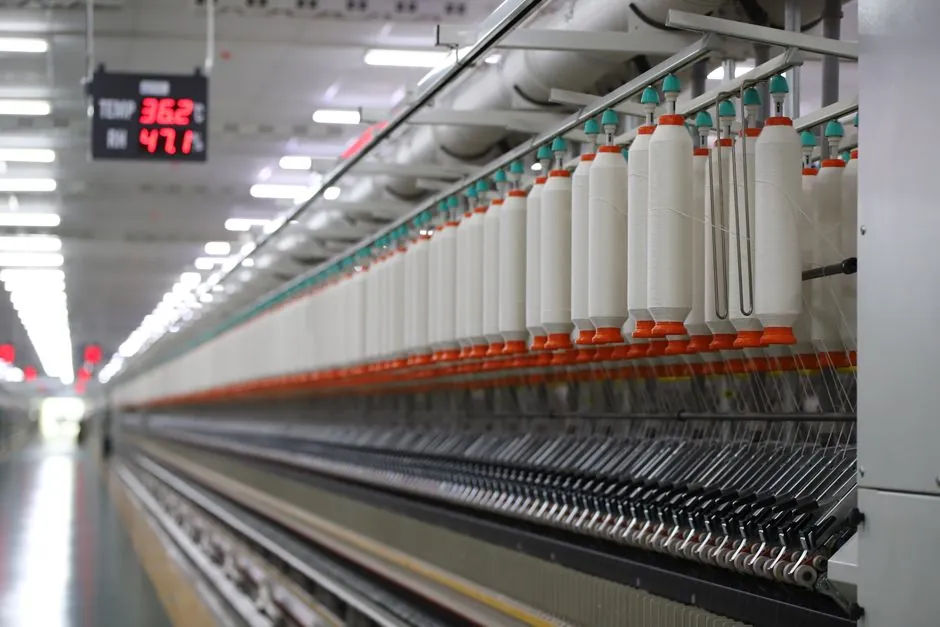
Five producers, Owens Corning, China Jushi Co. Ltd., Chongqing Polycomp International Corp. (CPIC), Nippon Electric Glass Co. Ltd., and Saint-Gobain, consistently anchor the top tier of the global glass fiber manufacturer ranking across independent 2025-2026 market studies [S1][S3].
The fiberglass market is projected to reach USD 34.9 billion in 2030 from USD 27.1 billion in 2025, growing at a 5.2% CAGR, while a parallel narrower-scope forecast puts 2026-2031 expansion at USD 13.5B to USD 17.2B at 4.9% CAGR, the gap reflecting different scope inclusions of glass wool insulation versus reinforcement fiber [S1][S3]. E-glass alone accounted for 48.91% of the 2025 glass fiber market by fiber type and is advancing at 4.32% CAGR to 2031, with E-glass sub-segment value of USD 12.1B in 2025 set to reach USD 23.1B by 2035 at 6.7% CAGR [S7][S8].
Top 5 Manufacturer Tier and Strategic Posture
The five-company anchor group is repeated in three independent studies: MarketsandMarkets names China Jushi, Owens Corning, CPIC, Nippon Electric Glass, and Saint-Gobain as competitive leaders driving capacity expansions and partnerships [S1]; BCC Research's company profile list includes Owens Corning, China Jushi, Nippon Electric Glass, Johns Manville, and CTG Group [S3]; Fortune Business Insights similarly names The Fiberglass Company, Shandong Fiberglass Group Corp., and Nippon Electric Glass as major players [S2].
China Jushi is consistently positioned as the global volume leader, with annual nameplate glass fiber production capacity reported above 2.5 million metric tons across its Tongxiang, Jiujiang, and overseas Egypt and US lines, while Owens Corning operates the largest North American footprint with facilities in the US, Mexico, and Europe, and recently announced a 30% capacity expansion of its Taloja India facility targeting wind-energy rovings.
Manufacturer Comparison Across Decision Criteria
For procurement and spec teams, the five anchor manufacturers diverge on four criteria that matter more than headline revenue share: [S3]
Production base: China Jushi and CPIC are Chinese-domestic heavyweights whose cost-per-kg advantage is roughly 8-12% below Western peers on commodity E-glass rovings, but Owens Corning and Saint-Gobain retain an edge in long-fiber S-glass, ECR-glass, and high-modulus rovings for aerospace and wind blades [S1][S3].<br>Regional strength: Owens Corning leads North America, Saint-Gobain leads Western Europe, Nippon Electric Glass leads Japan and the flat-panel display glass substrate segment, and China Jushi plus CPIC collectively hold the dominant share of Asia Pacific, which itself accounts for 42.2% of 2025 global revenue per Grand View Research and 51.7% of incremental growth in the 2025-2030 window per Technavio [S4][S5].<br>Product mix: Nippon Electric Glass differentiates on alkali-free thin E-glass for electronics and display glass, while 3B-the Fibreglass Co. and Asahi Fiber Glass compete in the high-performance S-glass and AR-glass (alkali-resistant) niches used in cement reinforcement and aerospace [S3].<br>Vertical integration: Saint-Gobain, Johns Manville, and Owens Corning are integrated upstream into glass melting and downstream into insulation and roofing systems, whereas China Jushi and CPIC are more concentrated on reinforcement fiber yarn, roving, and chopped strand output for composite parts.
By-the-Numbers: Market Sizing and Material Split
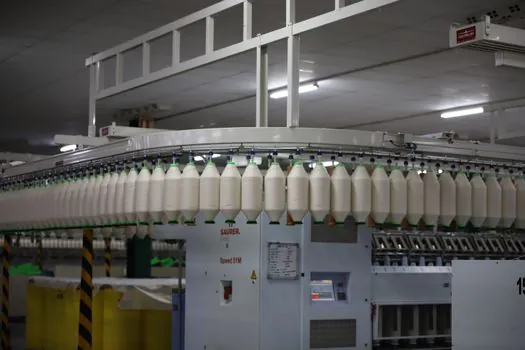
Demand growth is concentrated in composites over insulation: Technavio's 2026-2030 window values the composites segment at USD 11.86B in 2024, with construction as the largest end-user revenue line, and an additional USD 8.80B market opportunity identified across the forecast period [S4]. BCC's parallel 2026-2031 study sizes the base year at USD 13B versus MarketsandMarkets' USD 27.1B, the difference being that MarketsandMarkets includes glass wool insulation output while BCC focuses on reinforcement glass fiber [S1][S3].
On fiber grade, E-glass is the workhorse at 48.91% of 2025 volume and a 4.32% CAGR, ECR-glass leads chemical-resistant service, and S-glass is the higher-modulus grade typically specified where tensile strength is critical [S7]. Lucintel's long-horizon study sees the glass fiber material market reaching USD 16B by 2035 at 4% CAGR from 2025-2035, a more conservative slope than MarketsandMarkets' 5.2% [S6].
Capacity, Furnace Cycles, and Supply Risk
Glass fiber furnaces run on a continuous basis with rebuild cycles every 12-15 years, so a small number of players in any given quarter are absorbing capacity loss during rebuilds, which historically tightens supply and lifts roving prices 5-10% for 2-3 quarters. This dynamic is the key reason that global glass fiber capacity remains stubbornly tight despite headline growth, a constraint reinforced by Technavio's call-out that high energy consumption during production remains a structural challenge [S4].
For spec-driven readers comparing reinforcement options, the carbon fiber manufacturer landscape sits in a different price-performance tier, with carbon fiber costing roughly 8-12x more per kg than E-glass rovings, which is why glass fiber remains the default in wind blade shells, automotive body panels, and pipe-reinforcement laminates. Where carbon fiber wins is on stiffness-to-weight at aerospace duty cycles, while glass fiber wins on cost-per-modulus for any non-flight structure.
Who This Market Is For, and What It Is Not
The glass fiber market as covered by these studies is FOR procurement engineers sizing long-term supply contracts in construction, transportation, wind turbine blade, and pipe-and-tank end uses, AND for materials engineers evaluating E-glass, ECR-glass, and S-glass grades against cost-per-modulus and chemical-resistance metrics. It is NOT for buyers sourcing E-glass preforms for printed circuit board (PCB) laminate, since that sub-segment is dominated by Taiwan and Japanese thin-glass specialists such as Nittobo and Asahi Kasei whose volumes are tracked under separate display-and-electronics reporting. It is also NOT a reliable signal for chopped strand mat pricing in marine applications, where ASTM D578 and ISO 2078 certification of alkali content, not headline market share, drives supplier selection. [S1]
Standards and Sourcing Reference
Procurement specs should anchor to ISO 2078 for glass fiber designation, ASTM D578 for glass fiber strand and roving dimensional tolerances, and ASTM D2343 for tensile strength of E-glass rovings, while wind-blade-grade material typically references DNVGL-ST-0376 for rotor blade design and IEC 61400-1 for the wind turbine itself. EN 14020 covers reinforcement glass fiber yarns and rovings in the European market, and buyers specifying alkali-resistant (AR) glass for cement reinforcement should call out ASTM C1666 or EN 15422 compliance [S1].
For component-level selection of glass and laminate grades in building envelope and façade work, the glass curtain wall material reference covers the architectural side of the same raw material family. Where optical clarity or high-temperature service is needed instead of structural reinforcement, the optical glass property map and fused silica and quartz comparison are the right entry points.
Limiting Factors in the 2025-2026 Datasets
Three cautions for readers using these numbers for board-level decisions: first, headline CAGR and absolute USD values diverge because some studies include insulation glass wool while others (BCC) cover only reinforcement glass fiber, so a USD 27.1B 2025 baseline and a USD 13.5B 2026 baseline are not contradicting each other, they are measuring different baskets [S1][S3]. Second, manufacturer market share percentages are not consistently published across studies, so competitive ranking remains firm at the top tier but ranks 6-10 and below shift between reports. Third, the S2 and S5 sources returned 403 errors during collection, so any figure drawn only from those headers should be re-verified through the live report before being cited in a spec committee.
Track the next data drop from MarketsandMarkets (refreshed report expected in Q4 2026 with updated 2026-2031 sizing) and the next annual capacity disclosure from China Jushi (Q1 2026 interim results around April 2026), and verify any S-glass price spike against the IEC 61400-1 blade-certification pipeline for offshore wind through 2027.