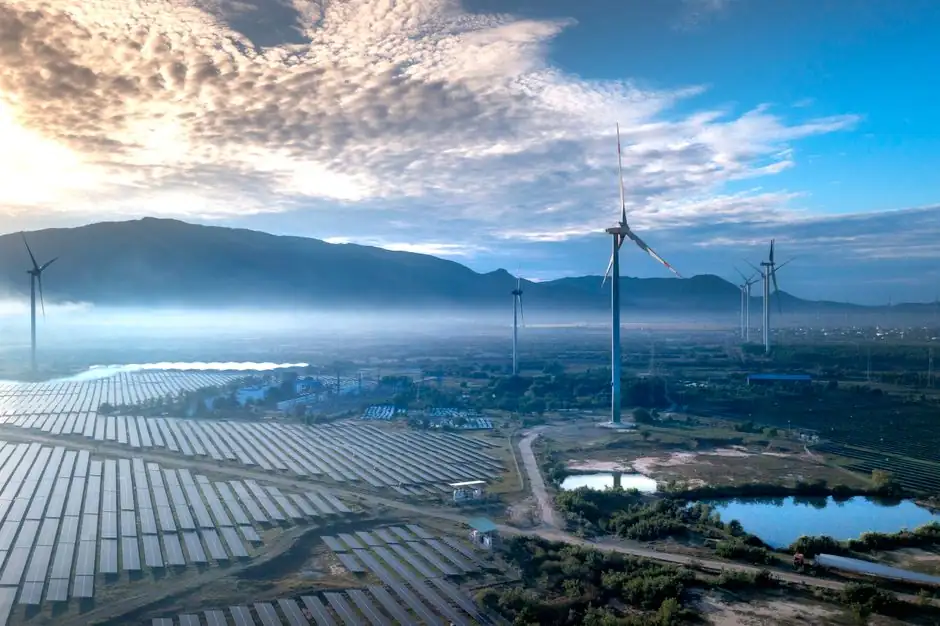
Green hydrogen still costs 1.5x to 6x more than fossil-fuel-derived hydrogen, with installed electrolyzer capacity only doubling in 2023 from a near-zero base, so procurement teams must engineer cost down, not just negotiate price [S5].
The procurement problem is not a single number, it is a stacked system: renewable electricity contract, electrolyzer capex/opex, additionality/temporal-matching rules, and offtake tenor all interact, and a 2026 stochastic-optimization study from ScienceDirect confirms that electricity-procurement design alone swings the levelized cost of hydrogen (LCoH) across a multi-year horizon [S2].
Policy Stack: 45V, RFNBO, Hydrogen Bank
Policy is the single largest cost lever in 2026: the US 45V clean hydrogen production tax credit pays up to $3/kg for the lowest carbon-intensity tier and scales down as emissions rise, which means a project at roughly 0.45 kg CO2e/kg H2 captures the maximum credit, while a grid-tied project at 4 kg CO2e/kg H2 captures far less [S1]. On the EU side, the Renewable Fuels of Non-Biological Origin (RFNBO) Delegated Acts set the binding carbon-intensity and additionality rules that define what legally counts as "renewable hydrogen," and the European Hydrogen Bank runs reverse-auction subsidies to bridge the gap to fossil parity, while ReFuelEU Aviation and FuelEU Maritime create pull demand from airlines and shipping [S1][S3].
The EU Hydrogen Strategy itself is organized as a three-phase roadmap with quantified milestones: at least 6 GW of renewable electrolyzers and 1 million tonnes of renewable H2 by 2024 (Phase 1), 40 GW and 10 million tonnes by 2030 (Phase 2), and up to 23% of the 2050 EU energy mix from hydrogen in Phase 3, with phase-3 demand reaching roughly a quarter of EU renewable electricity production [S3]. Capex for electrolysers alone is sized at €24-42 billion through 2030 in the same strategy, a useful benchmark when sizing a procurement offtake against announced supply [S3].
Cost Stack: LCoH Drivers and the Grey-Hydrogen Gap
Across 2024-2026 datasets, green hydrogen remains 1.5x to 6x the cost of fossil hydrogen, and the spread is driven almost entirely by electricity price, capacity factor, and electrolyzer capex rather than by stack chemistry [S5]. A 2026 stochastic multi-year optimization study quantifies this by showing that the choice between fixed-price PPA, merchant exposure, and hybrid procurement shifts LCoH by a wide margin over the asset's life, and that temporal matching (running the electrolyzer when renewable curtailment is highest) materially compresses both cost and grid carbon intensity [S2].
Industrial demand is concentrated and quantifiable: roughly 60% of industrial hydrogen feedstock went to ammonia and 30% to methanol in 2023, with the remaining 10% spread across refineries, steel DRI, and emerging e-fuel projects, so a procurement strategy should anchor offtake to one of these end-uses rather than treat H2 as a generic commodity [S5]. A 2026 Springer study of seven national strategies (Australia, Germany, Spain, US, Netherlands, UK, France) finds that supply-chain design tracks each country's resource and industrial position: export-oriented producers (Australia, Spain) prioritize shipping and conversion to ammonia/methanol, while import-oriented buyers (Germany, Netherlands, UK) prioritize offtake contract structure and storage buffer [S4].
Who This Is For, and Who Should Skip

Green-hydrogen procurement is built for industrial offtakers with continuous baseload demand: ammonia, methanol, refinery hydrogen, and steel direct-reduction plants, all of which can absorb 50-500 t/day without a redesign and have an existing grey-H2 baseline to benchmark against [S5]. Mid-size chemical or e-fuel projects that can ride 4-7 year offtake tenors and accept take-or-pay exposure are also well-suited, especially if they can site near a curtailed-renewables zone to compress delivered power cost [S2].
It is not a fit for buyers needing seasonal, dispatchable supply, for mobility fleets that can drop to battery-electric, or for any procurement where the offtaker cannot verify additionality and hourly temporal matching against the RFNBO/45V rule set, because the subsidy is denied to non-additional supply and the carbon-intensity value is forfeited [S1][S3]. Operators that need a 99% on-stream factor should also stay on grey or blue H2 with CCS, because current electrolyzer fleets are sized for baseload, not peaking service [S5].
Four Procurement Contract Types Compared
Four contract archetypes dominate 2026 green-hydrogen procurement, and they map cleanly onto cost vs. risk. Fixed-price physical PPA + tolling: lowest LCoH in high-curtailment regions, but locks offtaker into 10-15 year tenor and takes all volume risk. Sleeved PPA via a utility: lifts administrative burden, adds a 3-7% margin, suits buyers without a power desk. Hydrogen Bank auction offtake: subsidized, but requires RFNBO qualification and a 5-year fixed-price bid; best for early-mover projects in the EU. Spot/merchant hydrogen: highest LCoH variance, useful only as a 10-30% swing volume layer above a contracted base [S1][S2][S3].
Selection depends on four decision criteria: (1) LCoH risk tolerance, (2) ability to absorb take-or-pay, (3) RFNBO/45V qualification effort the buyer is willing to fund, and (4) volume reliability needs; a buyer scoring high on criteria 3 and 4 should prefer Bank auction or sleeved PPA, while a buyer with a power desk and a long horizon should price fixed-price PPA directly [S2][S3]. National strategies add a fifth filter: export-led producers (Australia, Spain) will favor long-term offtake with Asian/EU buyers, while import-led buyers (Germany, Netherlands, UK) will dual-source across at least two countries to de-risk geopolitical supply [S4].
FID Checklist and Failure Modes
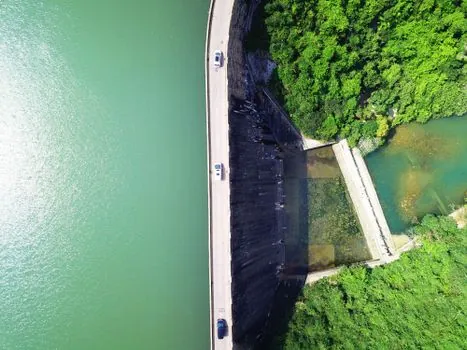
Six items must close before financial investment decision: a signed additionality-compliant PPA or wired renewable asset, a measured hourly-matched carbon intensity below the RFNBO ceiling, an offtake agreement with credit-worthy offtaker at a floor price bridging the 45V or Hydrogen Bank subsidy, an electrolyzer supply agreement with bankable performance warranty, a water-supply and brine-disposal permit, and a storage buffer sized to absorb at least 48 hours of renewable downtime [S1][S2][S3].
Three failure modes recur in 2024-2026 project pipelines: stranded projects that win a Bank auction but cannot prove additionality under revised RFNBO guidance; pre-FID projects that price LCoH on merchant power and collapse when forward curves rise; and offtake contracts that do not bind the buyer to a floor price after the 45V credit phases down, leaving the project unable to service debt [S1][S4]. The Africa-focused 2026 UNECA policy study adds a fourth risk: projects sited in regions without a just-transition framework face local opposition, permitting delays, and reputational damage that can stretch schedules by 18-36 months [S7].
Standards, Verification, and Project Sourcing
Carbon-intensity claims are only as good as the verifier: project ratings from third-party rating platforms (Sylvera's project rating product line is one of the more visible 2026 entrants) score additionality, additionality, and grid emissions hourly, and procurement teams should require a published rating before signing [S1]. The EU hydrogen value chain is governed by the RFNBO Delegated Acts under the Renewable Energy Directive, the Low-carbon H2 Delegated Act in the Gas Package, and the Hydrogen Bank auction terms, all of which sit on top of the EU Hydrogen Strategy's 6/40 GW and 1/10 Mt targets [S3].
For project sourcing, a 2026 sector survey notes that India has become a credible low-cost electrolyzer and project-development hub, with end-to-end EPC and equipment-supply support available for buyers who want a turnkey path, and Africa is positioning for export-oriented production anchored in just-transition frameworks, both of which expand the supplier set beyond the traditional EU/US roster [S6][S7]. Buyers sourcing fuel-cell stacks and power electronics for the broader hydrogen economy can use a 2026 China vendor map as a reference: see the fuel cell stack sourcing guide for a parallel spec map on the equipment side.
Cross-check the policy stack against procurement docs: 45V tier, RFNBO status, Hydrogen Bank award round, and the project's hourly matched carbon intensity should all reconcile to the same LCoH figure before signature, otherwise the buyer is paying twice for the same kilogram of decarbonization [S1][S2][S3]. Track two signals over the next 6-12 months: the next EU Hydrogen Bank auction round results (revealed price ceiling and awarded volumes) and any 45V Treasury rule revision that tightens the three pillars (additionality, temporal matching, deliverability), because either one will reset the floor price for new offtakes across both regions.
Spec-level background on the components involved: linear guide, crossed roller guide, and pressure transmitter.