China's vertically integrated battery materials ecosystem produced an estimated 25-30 billion alkaline units and supports the majority of the world's lithium-ion electrolyte formulation capacity, with cathode, anode, separator, and electrolyte manufacturing clustered within a single geographic footprint [S4][S5].
For an industrial buyer in 2026, the term "electrolyte" covers at least four distinct chemistries, each with a different Chinese supplier map: carbonate-based LiPF₆ lithium-ion electrolyte, sodium-ion NaPF₆ salt in carbonate solvents, hydrofluorocarbon research-grade systems for sub-zero lithium metal cells, and aqueous alkaline electrolyte for primary zinc-manganese cells [S1][S2][S4].
Lithium-Ion Carbonate Electrolyte: Spec Criteria Buyers Must Validate
Lithium-ion battery electrolytes remain a blend of LiPF₆ salt dissolved in carbonate solvents (ethylene carbonate, dimethyl carbonate, ethyl methyl carbonate), with target conductivity in the 10-12 mS/cm range at 25°C and water content held below 20 ppm to prevent HF generation [S1][S4].
Chinese suppliers routinely quote LiPF₆ purity at 99.9% minimum with total metallic impurities (Fe, Na, K, Ca, Mg) under 1 ppm, but a first-cycle coulombic efficiency gap of six points (98% versus 92%) between visually identical NMC cathode batches has been traced to ppm-level metallic contamination and moisture variation in upstream electrolyte feedstock [S4]. This is why the leading Chinese integrated suppliers run in-house battery test labs and validate each powder shipment against a reference full-cell before customer dispatch [S4]. For an international spec sheet, request: LiPF₆ assay, water content by Karl Fischer, free acid (HF) titration, and a 0.2C/0.5C cycling report on an NMC811/graphite reference cell for at least 100 cycles.
Sodium-Ion NaPF₆ Electrolyte: Where China's Supply Chain Lead Is Widest
China's sodium-ion supply chain has formed with remarkable speed, with cathode precursor synthesis, hard carbon anode production, NaPF₆ electrolyte manufacturing, and cell production equipment all available from domestic suppliers, partly because over 80% of lithium-ion production equipment can be adapted for sodium-ion with minimal modification [S2].
NaPF₆ salt is the dominant sodium-ion electrolyte salt, typically formulated at 1 mol/L in propylene carbonate or carbonate blends, with hard-carbon anodes now reaching 85-90% first-cycle coulombic efficiency and full-cell energy density of 140-160 Wh/kg versus LFP at 160-180 Wh/kg and NMC at 200-260 Wh/kg [S2]. Stationary storage, low-speed EVs, two-wheelers, and backup power are the four application sweet spots where cost per kWh, not specific energy, decides the chemistry [S2]. For buyers evaluating Chinese NaPF₆ suppliers, the relevant spec checks are: NaPF₆ assay (target ≥99.5%), chloride (target ≤50 ppm), sulfate (target ≤50 ppm), water (target ≤30 ppm), and a half-cell voltage window test against hard carbon up to 4.0 V versus Na/Na⁺.
All-Weather and Low-Temperature Electrolyte Chemistries (2026 Frontier)
Nankai University researchers published a hydrofluorocarbon electrolyte in Nature that replaced the traditional lithium-oxygen coordination with fluorine coordination, enabling a 700 Wh/kg lithium metal cell to achieve reversible cycling at low temperature [S1].
The motivation is concrete: current carbonate solvents have poor wettability, require a large amount of solvent per cell, and the strong Li-O ion-dipole interaction hinders interfacial charge transfer at sub-zero temperatures, capping the low-temperature operating window of conventional Li-ion packs [S1]. Separately, a March 2026 Chinese all-weather electrolyte report described a system designed to operate more efficiently at room temperature and in extreme cold, framed as a pathway to break the power and energy density ceiling of conventional Li-ion chemistry [S3]. For a sourcing manager, these are not catalog products yet. They are pilot-scale and lab-scale offerings; the near-term procurement path is to engage the research groups or their licensed industrial partners for small-batch sampling rather than to write a PO for volume production.
Alkaline Primary-Cell Electrolyte: The Hidden Volume Channel
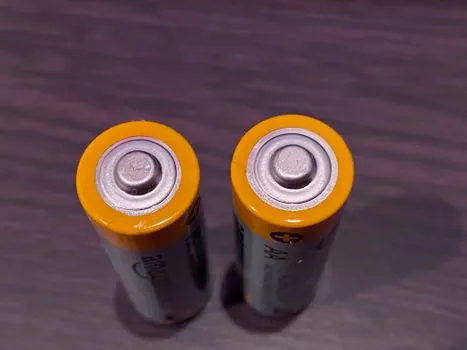
Alkaline cells (AA LR6, AAA LR03, C, D) use an aqueous KOH electrolyte at roughly 30-40% weight concentration, with zinc powder anode, manganese dioxide cathode, and a polymer separator gelling the alkaline solution [S5].
The 2024 global alkaline battery market was approximately USD 8.5-9 billion, projected to reach USD 11 billion by 2030 at a roughly 4% CAGR, and China produces an estimated 25-30 billion alkaline units per year, about 40-45% of global output, concentrated in Guangdong, Zhejiang, Jiangsu, and Shandong [S5]. Major consumers are North America, Europe, Southeast Asia, Africa, and Latin America; Chinese OEM capacity supports private-label runs at six-billion-unit annual scale on automated lines [S5].
Supplier Tiers, MOQ, and Logistics: UN38.3 and IEC 62133 Compliance
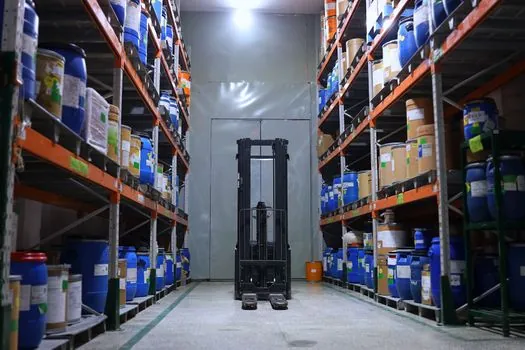
A practical supplier tiering places Tier 1 at integrated material-and-equipment houses (NMC/LFP cathode plus LiPF₆ or NaPF₆ electrolyte plus pilot line equipment under one contract), Tier 2 at single-chemistry specialists (electrolyte-only or cathode-only factories), and Tier 3 at trading-companies relabeling toll-blended material with limited lab validation [S4][S6].
Minimum order quantities vary sharply by tier: Tier 1 integrated orders commonly start at 1-5 metric tons for electrolyte with 30-60 day lead time, Tier 2 at 500 kg-1 t, and Tier 3 at 200-500 kg but with thinner documentation. Shipping compliance is non-negotiable: lithium-ion cells and standalone LiPF₆ electrolyte are UN3480/UN3481 under the UN Recommendations on the Transport of Dangerous Goods, 21st revised edition, and require UN38.3 test summaries plus a 1.2 m drop test report, while sodium-ion cells currently fall outside the stricter lithium classification but still require MSDS and the same UN38.3 thermal, shock, and short-circuit summaries for most freight forwarders [S6]. For QA, request an SDS in both Chinese and English (GHS-aligned), a CoA per batch, and a third-party SGS or CGC report on first article.
Electrolyte Chemistry Comparison: Four Options on Five Decision Criteria
On cost-per-kWh delivered, NaPF₆ undercuts LiPF₆ where cycle life and energy density are sufficient; on temperature window, hydrofluorocarbon leads but is unproven at scale; on safety, aqueous KOH and NaPF₆ avoid the thermal-runaway pathway of LiPF₆ above 60°C; on lead time from China, all four chemistries ship in 30-60 days ex-works from Tier 1 suppliers; on regulatory burden, LiPF₆ and Li-metal carry the heaviest UN/IEС documentation, NaPF₆ lighter, and alkaline the lightest [S1][S2][S5][S6].
Procurement Workflow and Common Failure Modes
A reliable 2026 sourcing workflow for Chinese electrolyte follows five gates: spec freeze with reference cell performance, supplier shortlist by tier and chemistry fit, RFQ with mandatory CoA and SDS, first-article full-cell test in buyer's own lab, and framework agreement with batch-by-batch acceptance criteria [S4][S6][S7].
The most common failure modes are documented in the sourcing guides: first, treating electrolyte as a commodity and skipping the in-house reference-cell test, which lets ppm-level impurities (Fe, Na, K, water) pass through to the customer's cell line; second, accepting a supplier's "battery grade" label without a third-party SGS or CGC verification of metallic impurities; third, ignoring UN38.3 documentation for LiPF₆ shipments and seeing the freight forwarder reject the container at port; fourth, under-specifying the voltage window for sodium-ion hard carbon cells, where over-charging above 4.0 V versus Na/Na⁺ destroys the anode; and fifth, assuming a hydrofluorocarbon or all-weather electrolyte is commercially available when it is still at pilot scale [S3][S4][S6]. For buyers who also need separator and cathode sourcing, the Sourcing Battery Separators from China: 2026 Spec, Chemistry, and Compliance Map and the Cathode Material Sourcing From China: 2026 Spec, Chemistry, and Compliance Map reference pages carry the parallel spec and compliance map.
For buyers who already have a cell line in operation, the next concrete step is to lock a 12-month electrolyte price-and-volume agreement with a Tier 1 Chinese integrated supplier, conditional on first-article full-cell testing in the buyer's own lab. The two trackable signals to monitor over the next two quarters are the publication of industrial-scale hydrofluorocarbon electrolyte pricing by Nankai-licensed partners, and any expansion of UN38.3 classification guidance for sodium-ion standalone cells as Chinese cell shipments to European stationary storage sites scale [S1][S2][S6].
Spec-level background on the components involved: linear guide, crossed roller guide, and pressure transmitter.