Green line lasers carry a purchase-price premium because their 505–550 nm beams are generally 3–4 times more visible than 610–670 nm red beams, while red models usually consume less power and cost less [S1][S2].
This comparison covers cross-line and rotating laser levels for trades, installation, and construction work, with beam visibility, usable range, power demand, environmental stability, accuracy, and total operating cost as the main decision criteria.
How Much Extra Does Green Beam Technology Cost?
Green laser levels tend to be priced higher than red laser levels, but the research does not support a universal percentage premium. A valid comparison must hold the tool format, self-levelling range, accuracy, enclosure rating, accessories, and warranty constant; otherwise, the listed price gap can reflect a different class of tool rather than beam color alone [S1][S7].
For controlled budgeting, treat the green premium as a separate line item from the system cost. A red laser used with a suitable detector may deliver the required working distance at a lower initial outlay, while an indoor green tool can save time through easier line acquisition without adding a detector [S2][S6]. Compare batteries, detector, tripod, and replacement consumables alongside the tool price rather than using the sticker price alone.
Visibility and Working Range Compared
The human eye is more sensitive near the green region, so a green line commonly appears 3–4 times more visible in real conditions [S1]; [S4].
These are application observations rather than guaranteed instrument specifications, and the actual result changes with battery condition, ambient light, and the projected surface [S2]. Red can still be tracked at long distance when paired with a laser detector, which is the better approach for many outdoor or large-space jobs [S2][S6].
Power, Runtime, and Cold-Weather Behavior
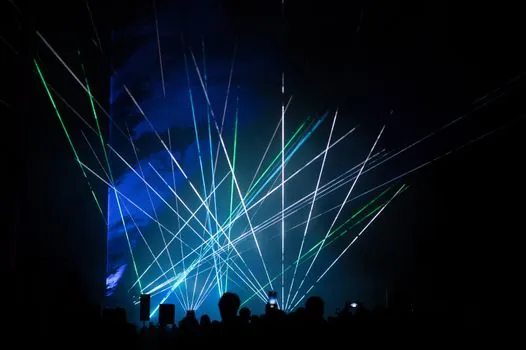
Green line lasers generally consume more battery power than red line lasers, so runtime and battery replacement frequency are realistic ownership costs beyond the initial premium [S2][S4]. Red direct-emission diodes also tend to hold up better in cold outdoor conditions, while green frequency-doubled systems are more sensitive to low temperatures [S4].
That makes red attractive for long outdoor shifts where the instrument remains on for extended periods, especially if it is already paired with a detector. Green is more attractive where frequent line acquisition, less walking to the wall, and rapid indoor installation can recover its purchase premium through labor time. The comparison should use the manufacturer’s stated operating-temperature range, battery platform, and runtime for the exact model, because the research provides comparative behavior but not a universal runtime ratio.
Accuracy Is Not the Purchase Criterion
Beam color does not determine self-levelling accuracy. PLS states that its red and green line lasers offer the same accuracy, with price, brightness, visible range, and battery life serving as the practical differentiators [S2].
Select the format first: a cross-line laser level suits wall and floor reference lines; a 360° plane tool transfers reference heights around a room; and a rotary laser serves larger layout systems. Accuracy, range, self-levelling limits, pulse mode, detector compatibility, enclosure rating, and mounting flexibility should be compared before color [S3][S4].
Red, Green, or Red With Detector?
Red and green are not simply “basic” and “premium” versions of one specification. The decision matrix is visibility versus system cost and power demand: red is strongest for controlled interiors, cold conditions, and receiver-based outdoor work; green is strongest for naturally lit interiors where the operator must read the line directly without a receiver [S2][S4][S6].
Which Beam Color Fits Each Job?
Choose green for indoor tiling, partitions, kitchen fitting, electrical reference heights, and layout work in naturally lit rooms, especially where the operator reads the line from several metres away. A reported UK trades example uses 12 metres of travel as a point where green and red behave very differently, with the green line easier to read from a standing position [S4].
Choose red for controlled indoor work, budget-constrained purchases, extended cold outdoor shifts, or sites where line visibility is secondary to battery endurance. Choose red with a detector for outdoor work or distances beyond 30 ft, particularly when avoiding the green tool and battery-system premium matters [S2][S6]. Green is not the correct default for every large site, because receiver-based working makes beam color much less consequential once the operator no longer reads the visible line directly [S4].
Safety, Source Classes, and Purchasing Checks
Direct eye exposure and reflections into the eye should be avoided [S1]. Beam color must not be used as a proxy for safety class; verify the product label and applicable laser-product documentation.
That extra process complexity helps explain the higher manufacturing cost, but no warranted cost multiplier can be calculated from the supplied material [S4]. Confirm wavelength, laser class, accuracy tolerance, self-levelling range, IP rating, operating temperature, battery type, runtime, pulse mode, detector compatibility, and included tripod before accepting the premium.
The next purchasing action is to compare like-for-like line lasers at the maximum working distance and minimum expected battery life, then total the tool, detector, batteries, and tripod cost. Green earns its premium when direct line reading saves labor in bright interiors; red with a detector earns its place when budget, runtime, and cold-weather resilience dominate.
