
A grey cast iron plant sized between 50,000 and 100,000 MT per year puts pig iron and ferrous scrap at 60 to 70 percent of operating cost, utilities at 20 to 25 percent, and delivers a typical 25 to 35 percent gross margin with 10 to 15 percent net profit on the cost structure published in the IMARC Group 2026 detailed project report [S2].
The capital envelope is set by four physical assets: cupola or induction melting, molding line (green sand, shell, or automatic horizontal flask), sand reclamation, and baghouse/dust collection, while per-piece cost tracks part weight, class rating, gating yield, and machining allowance, as documented across industry cost-driver analyses [S1][S6].
Capital Cost Stack: Where the Money Goes
Capital expenditure for a greenfield grey iron foundry is dominated by the melting furnace, the molding line, and the gas cleaning train. A 50,000 to 100,000 MT/year plant typically specifies cupola or medium-frequency induction melting matched to a horizontal flask or vertical flask molding line, with sand reclamation, shot blast, and dust collection sized to the same throughput. [S2]
Land, building, and cranage scale with part size: a foundry pouring single parts above 5,000 kg needs 50 to 80 ton crane coverage, larger furnace bays, and deeper pit depths for cope and drag, all of which push civil cost faster than the equipment itself. Utility infrastructure (transformers, compressors, water cooling towers, gas cleaning fans) routinely runs 15 to 25 percent of the equipment CapEx line.
Environmental compliance has become a hard floor on the build: a fabric filter baghouse, wet scrubber, or electrostatic precipitator on the cupola stack and a thermal or regenerative afterburner on the pouring line are now standard, and they re-rate the plant capex by tens of millions on a 100,000 MT/year build. Permitting timelines (air, noise, slag handling) frequently gate the schedule more than the equipment delivery.
Operating Cost Stack: Pig Iron Is the Lever
Pig iron and ferrous scrap account for 60 to 70 percent of operating cost, utilities 20 to 25 percent, and the residual 5 to 20 percent covers labor, refractories, consumables, and maintenance. Within utilities, electrical power for the induction furnace (or coke and oxygen for a cupola) is the single largest line, and it is the line that an induction retrofit can shrink the most on a brownfield conversion. [S2]
Foundry work converting to higher-grade grey or ductile iron pays a metallurgical premium: graphite stabilizers, inoculants, and magnesium-bearing additions for ductile iron raise melt treatment cost per ton. For a grey cast iron line held to Class 25 to Class 35 (ASTM A48), the alloy addition set is simpler and cheaper, but the gating yield and feeder design still control scrap, and a 5 point swing in yield moves cost-per-kg in the same direction by roughly the same percentage.
Per-Piece Cost Drivers: Weight, Class, Complexity
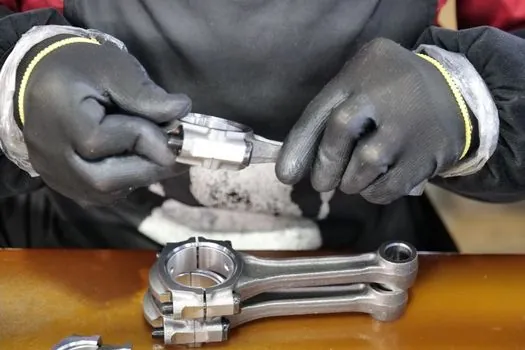
Part weight, casting class, and geometric complexity are the three variables that move the per-piece price more than any macro factor. Weight sets the molten metal pour and the cooling time, class rating (ASTM A48 Class 20 to Class 60) sets the minimum tensile strength and the section size the iron must fill, and complexity (cores, thin sections, internal cavities) sets tooling, core sand, and machining hours [S1][S6].
Gating and riser design controls yield: a well-designed green sand gating system for a grey iron pump housing can run 60 to 70 percent casting yield, while a poorly gated version drops to 40 to 50 percent, and every 10 point yield loss directly inflates the metal portion of the price. Pattern cost (wood, resin, or metal) is amortized over volume: a machined aluminum pattern at 20,000 to 60,000 USD amortizes cleanly at 5,000 pieces/year but punishes low-volume runs.
Machining allowance and surface finish requirements are the second-order cost drivers. Specifying a tighter as-cast finish, a closer dimensional tolerance, or a machined mating face shifts work from the foundry floor to the machine shop, and the cost ratio between casting finish and machining finish is commonly 3:1 to 10:1 in favor of the foundry. For a spec-driven reader mapping grade selection between grey and ductile iron, the A48 vs A536 grade selection map walks the same cost trade-off in detail.
Process Selection: Sand System and Molding Line
Green sand molding is the default for grey iron at 50,000 to 100,000 MT/year, because the tooling cost is low, the cycle time is fast, and the sand system reclaims continuously. Shell molding delivers tighter tolerance and a cleaner surface but pays back only above a sustained volume threshold, typically on parts below 50 kg with high repeatability. Permanent mold and centrifugal molding are niche routes used for cylindrical water and sewer pipe where the geometric fit is clear [S4].
Sand reclamation is the line item most often under-scoped. A new green sand system needs a wet or dry reclamation loop plus a dust collector on the shake-out, and without it, fresh bentonite and sand purchases quietly become the second-largest operating cost after pig iron. Match the reclamation throughput to the molding line beat, or the hopper becomes the bottleneck.
For molten metal transfer from the furnace to the pouring line, the choice between a drum ladle and a bucket ladle changes the metal temperature loss, the slag carryover risk, and the crane utilization; the drum ladle vs bucket ladle comparison maps those trade-offs against pour weight and line layout.
Scale, Automation, and Geographic Cost Spread
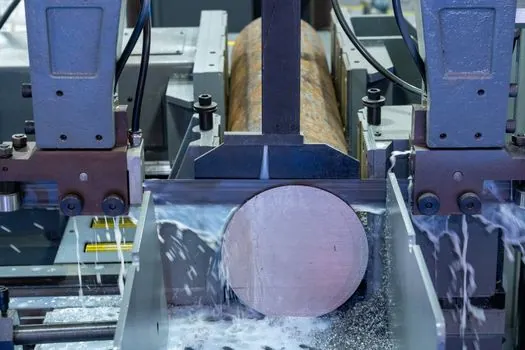
Economies of scale in grey iron foundries are real but flatten above roughly 80,000 to 100,000 MT/year for a single site, because crane, mold, and melt bay logistics scale sub-linearly. Beyond that point, capacity additions are usually a second line, not a stretch, and they re-introduce the full fixed-cost base. Below 20,000 MT/year, the unit cost climbs sharply because the same fixed equipment (furnace, baghouse, lab) is amortized over fewer tons [S2].
Automation moves the operating cost split: robotic pouring and automatic flask handling reduce direct labor, but they raise the capex and the maintenance skill requirement. A new automated molding line at this scale typically lands 3 to 5 times the price of an equivalent manual line, and pays back on labor savings only where shift count and wage rates are both high.
Geographic spread is visible in the demand forecasts. The ductile and grey iron casting products market is projected at USD 72.8 billion in 2025, rising to USD 123.8 billion by 2035 at a 5.4 percent CAGR, with China and Germany as the largest producing regions [S5]. The broader iron casting market is projected at USD 136.70 billion in 2026, rising to USD 233.18 billion by 2034 at a 6.90 percent CAGR [S3]. These two reference forecasts give a useful sense of regional demand pull for new greenfield capacity.
Who a New Grey Iron Foundry Is For, and Who It Is Not
A new grey iron foundry at 50,000 to 100,000 MT/year fits an existing casting buyer that has outgrown the merchant supply base, a steel mill or industrial group looking to internalize a captive iron stream, or a regional government industrial development project with anchor OEM commitments. It does not fit a buyer looking for short-cycle production of small ferrous parts, where jobbing foundries and shell-molding job shops are the correct answer. It does not fit a buyer whose end use requires ductile iron above 60-40-18 (ASTM A536) consistently, because the metallurgical route and magnesium treatment cost are then better justified from day one. [S4]
Limitations, Failure Modes, and Standards Touchpoints
The biggest project-killing failure modes are: cupola or induction permit delay on the air permit, slag and dust handling disposal routing, sand system bottleneck on the molding line, and scrap yield collapse on a complex part set that was quoted assuming 65 percent yield but runs at 50 percent. Each of these is recoverable in operation but turns into a 6 to 12 month delay during commissioning if not designed in. [S4]
Standards touchpoints on a grey iron build include ASTM A48 for the gray iron material specification (Classes 20 to 60), ISO 185 for the equivalent international grade, and customer-specific drawings that layer on dimensional, surface finish, and hardness requirements. For a procurement or quality engineer mapping how the iron grade and the gasket, flange, and downstream equipment specification interlock, the gasket material chart by temperature and pressure and the full-face vs ring gasket on flat face flanges spec map are common adjacencies when a grey iron valve or fitting is being specified into a piping system.
Sourcing, Standards, and Tracking Signals
Two reference points stand out for ongoing cost tracking. First, the IMARC Group grey cast iron manufacturing plant project report (January 2026 update) is the cleanest public source for the 50,000 to 100,000 MT/year cost stack, with raw material share, utilities share, gross margin, and net profit quoted on a consistent basis [S2]. Second, the Future Market Insights ductile and grey iron casting products market report (September 2025) gives the demand-side forecast and segment shares (ductile 54.2 percent, pump housing 47.6 percent of application demand in 2025) that frame the pricing power for a new line [S5].
Trackable signals for the next 6 to 12 months: (a) revisions to pig iron and ferrous scrap benchmark prices, since a 10 percent move in pig iron translates to roughly 6 to 7 percent of total operating cost given the 60 to 70 percent raw material share; (b) updates to foundry-grade coke and electrical power tariffs in the major producing regions; and (c) the next annual update of the iron casting market sizing, which will reset the regional capex narrative for 2027 [S2][S3][S5].
Spec-level background on the components involved: pressure transmitter.