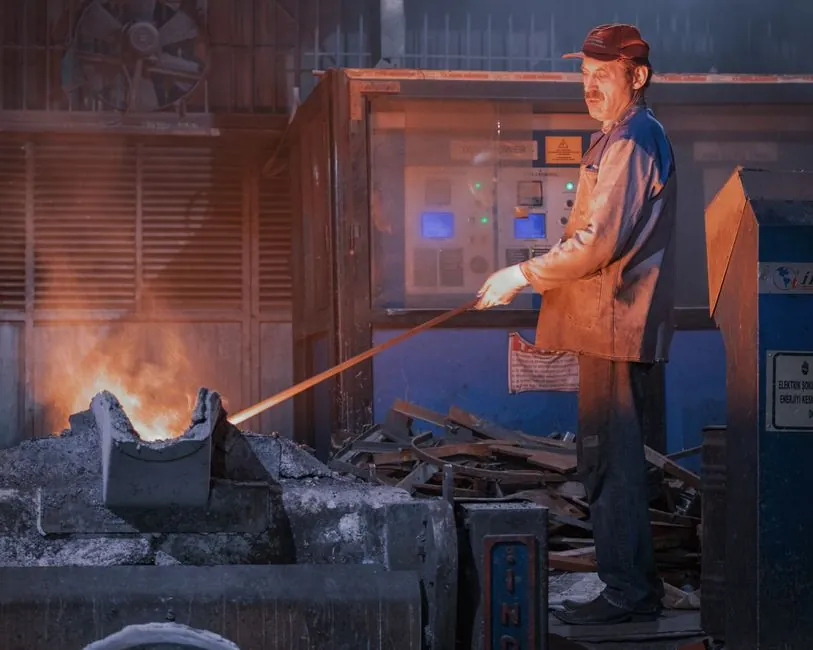
Drum ladles and bucket ladles are the two refractory-lined steel shells that handle the bulk of molten iron movement in iron foundries and integrated steelworks, and the choice between them is driven by tonnage, cycle count, and heat-loss tolerance rather than by the metal chemistry [S1][S2].
Working capacity for a casting ladle spans roughly 20 kg for a handshank vessel up to about 300 tonnes (295 long tons; 331 short tons) for steelmill ladles moved by crane or transfer car, with the drum-and-bucket distinction appearing across that entire range [S1].
Shell Geometry: Why a Drum Is a Drum, and a Bucket Is a Bucket
A drum ladle is a vertical cylinder with a flat or dished bottom and a small eccentric pour spout, so the metal surface stays inside the shell diameter during transport and is only revealed at the spout on tilt [S1].
A bucket ladle is shaped as a tapered vertical cone (or "bull ladle") that narrows toward the bottom, with the lip itself acting as the pour point when the vessel is rotated by its gearbox [S1].
Iron foundries almost always use lip-pouring (bucket-style) ladles, while bottom-pouring is reserved for very large castings such as ingot moulds, because the bucket profile gives the operator a clean, controllable stream directly off the lip without a submerged nozzle [S2].
The shell in both cases is fabricated carbon or mild steel plate, fitted with a lifting bail for overhead crane or monorail service, and protected from molten iron by a refractory lining whose working life is the dominant operating-cost variable [S1][S3].
Refractory Lining and Heat Loss: Where the Bucket Wins
Bucket-type ladles fitted with insulated covers lose less heat than open drum-type ladles on every transfer of liquid iron, because the cover blocks radiant loss from the metal bath and the bucket cone reflects heat back into the melt [S2].
Each transfer of liquid iron from one ladle to another carries an unavoidable temperature penalty, so reducing the number of intermediate transfers is the most effective way to keep metal above the pouring temperature specified for the casting [S2].
Iron-foundry ladle linings are normally expected to last a full shift, during which the ladle may be used between 50 and 100 times, and the lining material is therefore applied carefully over ganister (crushed silica rock), naturally bonded sand, or firebrick, or a combination of these materials [S2].
Pre-cast firebrick linings have largely been replaced by refractory concretes in many countries, which gives foundries a wider range of castable formulations to match melt temperature, slag chemistry, and cycle count [S1].
Capacity, Handling, and Cycle Fit

Handshank ladles are sized for what one worker can safely carry and are fitted with a long handle to keep the heat of the metal away from the operator, while larger vessels are geared crane ladles whose capacity is set by the ladle function rather than by physical size [S1].
Geared ladles are normally fitted with a 1:4 gear ratio, which allows 90 degrees of rotation in about two handwheel turns, with self-locking gearing that prevents the vessel from rolling back when the operator releases the wheel, an important safety point when the ladle is suspended over a mould line [S4].
For very large volumes of molten metal the ladle can run on wheels, on a purpose-built ladle transfer car, or be slung from an overhead crane and tilted using a second overhead lifting device, so the drum configuration tends to dominate once capacity pushes past the single-crane handling envelope [S1].
Foundry ladles are normally rated by working capacity, not by physical size, which is why a 5-tonne bucket ladle and a 50-tonne drum ladle can share a melt shop floor even though their shells look very different [S1][S3].
Pouring Configuration and Metal Cleanliness
Hand-tilt transfer and pouring ladles are commonly offered in lip-pour, bottom-pour, and teapot-spout configurations, and the choice governs how slag is separated from the metal stream as the ladle is emptied [S4].
Lip-pour bucket ladles, the iron-foundry default, pour clean metal first off the lip and retain slag inside the cone until the end of the pour, which suits most iron casting work where oxide control matters more than absolute throughput [S2][S4].
Treatment ladles are a separate class of vessel used to convert cast iron to ductile iron by addition of magnesium or other elements inside the ladle, and they are normally designed as covered tundish-style vessels, even though a standard open bull ladle can be used for the same duty in some shops [S1][S3].
Consistent head pressure and flow rate from a properly geared bucket ladle are credited with cleaner metal pours and easier slag management, both of which feed directly into casting yield and reoxidation-related defects [S4].
Decision Matrix: Drum vs Bucket for Molten Iron
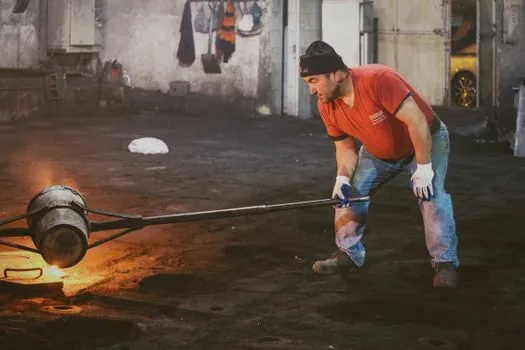
Match by tonnage and number of intermediate transfers: bucket ladles are the default under about 20 to 30 tonnes per heat with frequent transfers, drum ladles take over for very large single heats and long, infrequent transfers where a flat bath and small spout give better thermal mass [S1][S2].
Match by heat loss tolerance: insulated covered bucket ladles retain more heat per transfer than open drum ladles, so shops pouring iron within a narrow superheat window should bias toward covered bucket designs even at the cost of a smaller working capacity [S2].
Match by pouring method: choose a lip-pour bucket for general iron foundry work, a bottom-pour drum or bucket for very large castings such as ingot moulds, and a teapot-spout bucket where slag carry-over into the mould is the controlling defect [S2][S4].
Match by lining strategy: pick a refractory-concrete lined bucket for 50 to 100 pours per lining cycle in a single shift, and pick a pre-cast firebrick or ganister drum where campaign life matters more than cycle count [S1][S2].
Who Each Ladle Type Is, and Is Not, For
Bucket ladles fit iron foundries pouring multiple moulds per heat where short transfer distances and clean lip-pour stream control dominate, but they are the wrong choice for steel-mill tonnage above the single-crane lift envelope [S1][S2][S3].
Drum ladles suit steel mills and very large iron transfer operations running one or two heats per hour with a single large mould or a holding furnace, but they lose more heat per transfer and expose more bath surface to oxidation if run uncovered [S1][S2].
Hand-tilt geared ladles are not a substitute for either type when the heat weight exceeds what the operator can safely control at the handwheel, and drum ladles are not the right tool when a shop needs to change pouring style between lip-pour, bottom-pour, and teapot-spout within the same shift [S1][S4].
Operating Constraints and Common Failure Modes
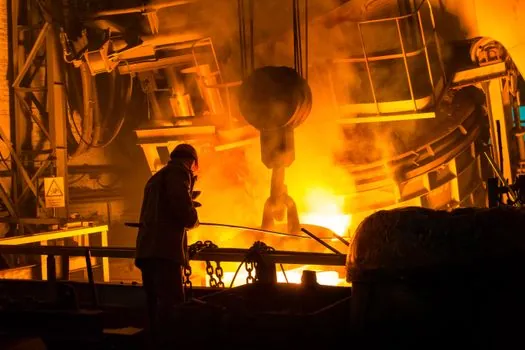
The dominant failure mode on either design is refractory wear at the slag line and at the pour lip or spout, which sets the 50 to 100 pours-per-lining ceiling that iron-foundry practice budgets against [S2].
A secondary failure mode is shell distortion from cyclic thermal loading, which is why drum ladles in steel-mill service are usually built with heavier plate and reinforcing rings, and why cast iron is rarely used as the shell material even though it has good compressive strength at temperature [S1][S3].
Open-top drum and bucket ladles both lose superheat by radiation and oxidation, so shops that must hold metal for more than a few minutes between furnace and mould should specify an insulated cover or move the metal through a bucket elevator-style transfer chain of preheated ladles to keep the total heat budget inside specification [S2].
Refractory lining practice, rather than shell choice, is usually the controlling variable in campaign cost, and foundries running a single shift on a 50 to 100-pour lining cycle should plan refractory work, spare ladle bottoms, and preheating into the daily maintenance schedule rather than treat them as unscheduled events [S2][S4].
For shops currently re-evaluating refractory thickness on cylindrical steel ladles, the working calc in Cylindrical Steel Ladle Refractory Lining Thickness: Specs and 2026 Practice lines up directly with the 50 to 100-pour lining life target cited above, and is the next node worth reading alongside this comparison.
Trackable signals over the next planning cycle: any move by an iron foundry from open drum to covered bucket to cut per-transfer temperature loss, and any move by a steel mill from firebrick to refractory-concrete linings to extend campaign life beyond the 50 to 100-pour shift envelope [S1][S2].