17-4 PH (UNS S17400, ASTM A564 Type 630) is the same alloy in both tempers, separated only by aging temperature: 900°F (482°C) for ~1 h on H900 versus 1,150°F (621°C) for ~4 h on H1150, both after a 1,900°F (1,038°C) solution treat [S5].
That single ~250°F shift in the aging furnace moves yield strength by roughly 400 MPa, hardness by ~11 HRC, and Charpy impact energy by more than 3x, which is why the choice between H900 and H1150 belongs in the drawing notes, not at the heat-treat shop [S5].
Mechanical Properties, Side by Side
H900 sits at the top of the 17-4 PH strength curve: ~1,365 MPa ultimate tensile, ~1,262 MPa yield, ~44 HRC, with elongation around 15% and reduction of area near 52% [S5]. H1150 trades most of that strength for toughness: ~993 MPa UTS, ~869 MPa yield, ~33 HRC, ~20% elongation and ~60% reduction of area [S5]. MakeItFrom's tabulated data confirms the same direction, listing H900 at 1,390 MPa UTS / 1,250 MPa yield / HRC 42, and H1150 at 990 MPa / 780 MPa / HRC 30, with elastic modulus identical at 190 GPa and density at 7.8 g/cm³ [S3].
From H900 to H1150 the yield strength drops from 1250 MPa to 780 MPa, and the Brinell hardness moves from 440 down to 320 [S3].
Toughness, Impact and SCC Resistance
Toughness moves opposite to strength as aging temperature climbs. Typical room-temperature Charpy V-notch impact energy is ~21 J for H900, ~38 J for H1025, and ~75 J for H1150, meaning H1150 carries more than three times the impact energy of H900 at the cost of peak hardness [S5].
Stress corrosion cracking sensitivity is the other half of that trade. H900 is "sensitive to SCC" per Rolled Alloys' data sheet, while higher-temperature tempers (H1025, H1150) are the standard mitigation when the part sees a corrosive aqueous or sour environment [S7]. For sour-service components, NACE MR0175 environments (commonly called "NACE" in the materials spec) typically call for H1150 or H1150D specifically because the over-aged microstructure and reverted austenite resist cracking.
Fatigue strength also diverges: MakeItFrom reports ~670 MPa for H900 versus ~470 MPa for H1150, a counter-intuitive result that reflects H1150's lower UTS rather than an intrinsic fatigue penalty at a given stress ratio [S3].
Machinability and Shop-Floor Reality
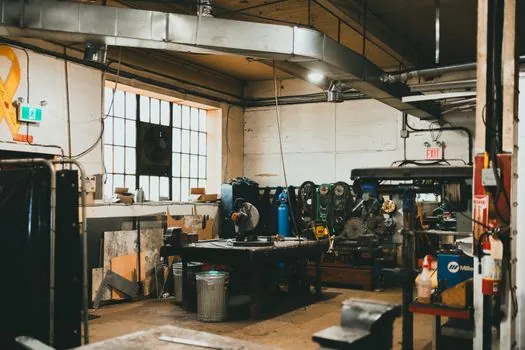
Machinists consistently report that H1150 "cuts much easier than annealed (solution treated)" and is the only one of the three commonly sold in the aged condition off the shelf; H900 is almost never sold pre-aged because it sits near 44 HRC and quickly eats tooling [S1]. The general rule from the heat-treat industry: machine from Condition A (solution annealed, ~HRC 30–35, "gummy" and ductile) to near-net shape, then age to H900 in the final step, and avoid trying to machine finished H900 unless the cut is light and the machine is rigid [S1][S6].
Rough machinability ratings follow the same direction: 17-4 PH in Condition A machines roughly like 304 stainless, and machinability improves as aging temperature rises toward H1150 [S2]. The mill specifications controlling these bars and forgings are ASTM A564 (bars/shapes), ASTM A693 (strip), ASTM A705 (forgings) and AMS 5643 for aerospace stock, with H900, H1025, H1075 and H1150 all called out as standard conditions [S2].
Selection Matrix: When to Use Which
Use H900 when the part is a high-load shaft, pin, fastener, actuator body, structural connector or any geometry where maximum strength and minimum cross-section are the drivers, and where the service environment is non-corrosive or only mildly so [S5]. A typical H900 design point is 190–200 ksi (1,310–1,380 MPa) UTS and 170–185 ksi (1,172–1,276 MPa) yield, with HRC in the low to mid-40s [S4].
Use H1150 when the part sees impact loads, cyclic thermal stress, sour H₂S, marine chloride exposure, or when weld repair / post-weld stress relief is in the process plan, because the over-aged temper restores ductility and SCC resistance [S5][S7]. H1025 sits in the middle (yield ~1,117 MPa, ~38 HRC) and is often the default for valve trim, pump shafts and aerospace fittings that need a balanced package [S5].
For plant instrumentation hardware that ties into pressure transmitter manifolds, flow meter bodies and industrial valve internals, H1150 is the conservative default because any distortion or SCC in a wetted component can bias a measurement loop or leak across a seat. A comparison-style read on condition monitoring strategies for these assets is covered in the vibration condition monitoring reference, where shaft material temper affects vibration signatures at the bearing housing.
Common Spec Errors and How to Avoid Them

Three mistakes recur on prints. First, calling out "17-4 PH" without a temper: the mill ships Condition A, and the buyer ends up doing an unplanned aging step, or worse, the part goes into service annealed. Second, specifying H900 for a part that will later be welded, because H900's hardened martensite cracks in the HAZ and the typical fix is to re-solution, weld, then age to H1150 [S7]. Third, mixing H900 and H1150 fasteners in the same bolted joint, which produces uneven preload and fatigue initiation at the joint, a defect mode covered in the 2oo3 voting vs single-sensor trip decision matrix discussion by analogy (assumed-uniform components that are not actually identical).
Mill lead times for H900, H1025 and H1150 are essentially identical, because the heat-treat furnace is the bottleneck, not the chemistry, so there is no cost-saving reason to leave the temper off the print [S2]. Verifying the actual mill cert against ASTM A564 Type 630 and the named condition, then checking hardness on a sample coupon, is the cheapest insurance against a Condition-A-vs-H900 mix-up at receiving.
For shop-floor decision-making on cutting parameters, a related spec-driven pick on alloy selection for stainless and tool-steel work, including machinability trade-offs, is laid out in the AE44 vs AS41 magnesium die-casting comparison and the A413 vs A380 aluminum die-casting outdoor housing corrosion guides, which use the same property-versus-process logic to pick one alloy over another.