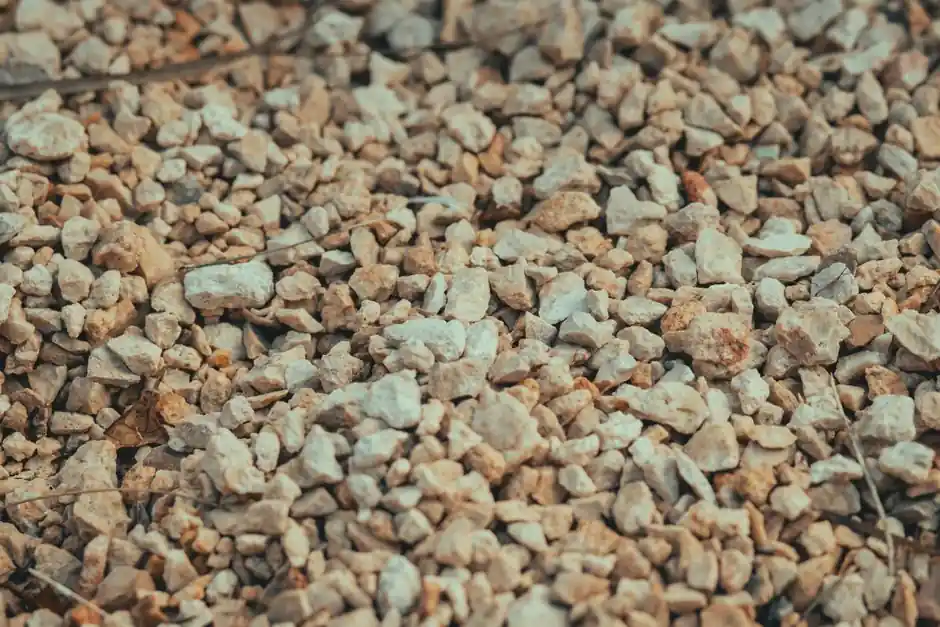
Tabular alumina, white fused alumina (WFA), and brown fused alumina (BFA) are the three workhorse high-alumina aggregates for refractories and abrasives, and they are NOT interchangeable above 1600 °C or in any application where creep, thermal cycling, or chemical purity sets the design limit [S1][S4].
Alumina content alone tells almost nothing: WFA runs 99.0–99.6% Al₂O₃, tabular 99.2–99.8%, BFA only 94–97%, and the gap in impurities (Fe, Si, Ti, C) drives the difference in hot strength, corrosion resistance, and friability [S2][S5][S7]. The decision is not purity for purity's sake; it is which microstructure survives the dominant failure mode in the lining.
How Each Aggregate Is Made, and Why That Sets the Property Ceiling
Tabular alumina is a sintered, not fused, product: calcined alumina is held at 1700–1850 °C, below the melting point, until large, well-developed corundum crystals (50–500 µm) grow into tablet-like hexagonal platelets visible under SEM; the sintered grain reaches near-theoretical density at 3.55–3.58 g/cm³ with no residual glass phase [S4]. Because the route is sintering rather than fusion, electricity use drops to roughly one-seventh to one-tenth of the fused-corundum route, and the process emits combustion CO₂ rather than arc-furnace off-gas and slag [S3].
WFA is produced by electrofusing calcined alumina in an electric arc furnace above 2050 °C, drawing 2,300–3,300 kWh per tonne, then controlled cooling of the ingot; the resulting grain carries a residual glassy phase at grain boundaries, true density 3.94–3.97 g/cm³, and a blocky, angular morphology with sharp cutting edges [S2][S3][S4]. BFA follows the same arc-furnace route but feeds bauxite plus iron filings plus anthracite, so the chemistry drifts to 94–97% Al₂O₃ with measurable Fe, Si, and Ti, and the crystalline structure is coarser and less uniform than WFA [S5][S7].
Property Comparison on the Numbers That Drive Lining Life
Side by side, the three grades diverge most on porosity, thermal shock, and creep above 1600 °C, not on alumina assay [S4]. Tabular grains carry 2–5% controlled open porosity and a population of closed spherical pores under ~10 µm in diameter that blunt crack tips, so thermal shock and spalling resistance run materially higher than either fused grade at comparable size [S3][S4][S6]. WFA grain sits at 0–1% open porosity and bulk density 1.75–1.95 g/cm³, while tabular bulk density runs 1.90–2.00 g/cm³, and BFA bulk density is higher still because of impurity inclusions [S4][S6].
WFA's CTE is roughly 8.0 × 10⁻⁶/°C over 25–1000 °C, tabular slightly lower at 7.5–8.0 × 10⁻⁶/°C, but the more important figure for cyclic service is glassy-phase content: WFA retains residual vitreous phase that begins to soften near 1500 °C, tabular has none, and BFA sits between the two with more grain-boundary impurity than WFA [S4]. On creep in compression, Schafföner et al. measured lower total compression and creep rate for WFA than for tabular under identical pressing conditions, while tabular delivered higher cold crushing strength and higher Young's modulus before and after thermal shock [S1]. The two results are consistent, not contradictory: WFA wins on hot load-bearing under steady temperature, tabular wins on mechanical strength and resistance to thermal-cycle damage.
Decision Matrix: Match Aggregate to Dominant Failure Mode
Engineers should size the aggregate to the failure mode that actually kills the lining, not to the highest published alumina number. The matrix below lines the three grades against four design criteria drawn from the research: max service temperature, thermal cycling, abrasion/erosion, and unit cost [S1][S3][S4][S5].
Max service temperature: tabular 1800–1850+ °C, WFA 1750–1800 °C, BFA below ~1750 °C in reducing atmospheres and lower where Fe contamination is unacceptable [S4][S5]. Thermal cycling: tabular high (closed pores, glass-free grain boundaries), WFA moderate (residual glass softens above 1500 °C, friability accelerates under cycling), BFA moderate-to-low (impurity-rich grain boundaries) [S3][S4]. Abrasion/erosion at high temperature: WFA high (sharp angular grains, Mohs 9, hot hardness), tabular moderate (large blocky crystals), BFA high in cold abrasive service but lower at very high temperature [S2][S4][S5]. Unit cost on a per-tonne basis: BFA lowest (cheap bauxite feed), WFA mid, tabular commands a 20–40% premium over standard WFA, with the spread driven by grade, particle size distribution, and order volume [S4][S5].
Use-case rule of thumb: pick tabular for steel ladles, tundish covers, glass tank regenerators, and petrochemical linings where thermal cycling, spalling, or creep above 1600 °C sets the life limit; pick WFA for high-wear zones with steady high temperature and for bonded abrasives where sharp angular grains and chemical purity drive cutting performance; pick BFA for general-purpose grinding, sandblasting, and refractory applications where cost dominates and the operating envelope stays below the limits where Fe and Si impurities shorten life [S2][S3][S4][S5][S8].
Standards, Sourcing, and Verification Before You Order
None of the three aggregates is governed by a single harmonised product standard the way structural steel is, so verification falls back on mill test data plus recognised refractory test methods for the finished lining. The relevant published checks are chemical assay (XRF for Al₂O₃, Fe₂O₃, SiO₂, TiO₂, Na₂O, CaO), true and bulk density by pycnometry and ASTM-style envelope methods, apparent porosity on the finished grain, and a refractoriness-under-load or creep-in-compression test on the pressed body [S1][S3][S4]. On tabular alumina in particular, producers should explicitly state that the grain is sintered rather than fused, because the two routes are routinely confused in commodity catalogues [S3][S4].
On factory acceptance, the practical rule is to require a per-lot mill sheet that lists Al₂O₃, Fe₂O₃, SiO₂, TiO₂, and Na₂O, the bulk and true density, and the dominant crystal size range, then spot-check 1 in 10 lots against a refractory test panel pressed at the same particle size distribution the lining will use [S1]. The Schafföner factorial study showed that a modified Andreasen particle size distribution with blocky coarse grains lowered apparent porosity and raised apparent density for both tabular and WFA, and reduced creep-in-compression for both, so the grading curve the producer ships on should be checked, not just the chemistry [S1].
Limits, Failure Modes, and Common Mis-Specifications
Specifying WFA where the lining sees frequent thermal cycles is the single most expensive mistake in this product family: the residual glassy phase softens above 1500 °C, and once the glass flows, the angular WFA grains rearrange and the lining creeps, even though the room-temperature strength looked fine on the data sheet [S1][S4]. The opposite mistake, specifying tabular in a high-velocity particle-erosion zone, leaves money on the table because tabular's large blocky crystals wear more slowly under pure abrasion than the sharper, more friable WFA grains, but they also cost more per tonne and do not always outperform WFA on a wear-rate basis under steady temperature [S3][S4].
BFA mis-specification is the most common: it is fine for cold abrasive blasting and for low-temperature general-purpose refractories, but its 94–97% Al₂O₃ ceiling and the Fe, Si, and Ti impurities mean it is not a drop-in for WFA in chemically aggressive or reducing atmospheres, and it should not be used above its effective service ceiling in critical linings [S5][S7]. Across all three grades, the most reliable failure signal in service is progressive loss of Young's modulus after thermal cycling, which the Schafföner study tracked as a leading indicator of remaining lining life on both tabular and WFA [S1].
Two more trackable signals for the next buying cycle: published tabular-alumina bulk density and porosity windows have stayed stable across the 2017 and 2024–2025 data sets, so any producer quoting numbers outside the 1.90–2.00 g/cm³ bulk / 2–5% open-porosity band warrants a re-check, and the 20–40% tabular-over-WFA price premium has held across the 2024 and 2025 sourcing reports, which is the cleanest signal that the sintering-versus-fusion cost gap is structural rather than cyclical [S3][S4][S5]. For related abrasion-rate decisions at lower service temperatures, the fettling-wheel speed window in 80 m/s vs 50 m/s fettling wheels applies the same BFA/WFA trade-off to a different equipment class.
Component reference pages worth checking: alumina ceramic, pressure transmitter, and flow meter.