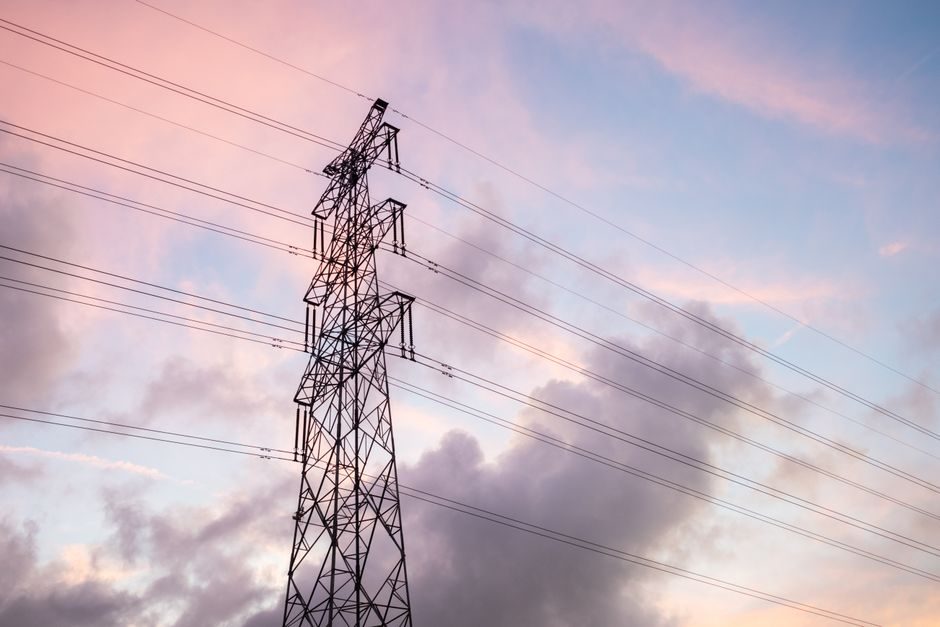
An active harmonic filter (AHF) in 2026 is a parallel-connected, IGBT-inverter-based compensator that injects a counter-harmonic current to cancel load-generated distortion, marketed alongside SVG and PCS units in a single power-quality stack by Chinese OEM CoEpower [S1].
Harmonic analysis software such as ETAP's Harmonic Filters & Sizing module treats filter selection as a sizing problem driven by the load's harmonic spectrum, the source impedance (Isc/IL ratio), and the desired post-mitigation THDu at the common coupling point [S2]. The taxonomy below is built around that sizing discipline, not around brand names.
Passive vs Active vs Hybrid: Decision Map by Load Character
A passive LC-tuned filter bank is the lowest-cost option for a known, stable harmonic spectrum — typically 5th, 7th, and 11th order — and is sized in kvar by the reactive compensation it must also deliver; it fails when the spectrum drifts because the trap detunes. An active harmonic filter uses an IGBT voltage-source inverter to synthesize the inverse harmonic current, so it tracks load changes in real time and is the right call for VFD-rich, LED-driver, or EV-charger buses where the spectrum is wide and shifting [S1][S2].
A hybrid configuration places a smaller passive bank on the dominant 5th/7th order and stacks an AHF to clean the residual 2nd through 50th order content, cutting inverter kVA rating by 30–50% on heavy six-pulse rectifier duty. The comparison that drives a buy decision typically runs across four axes: THDi reduction, response time, footprint per 100 A, and whether the unit also performs dynamic VAR / voltage-sag support. On the last axis, the same CoEpower product line bundles AHF, SVG, and Dynamic Voltage Restorer (DVR) functions that share an IGBT platform [S1], which matters when a single MCC room must handle harmonics, PF, and voltage dips together.
Who the Passive Filter Is For — and Who Should Skip It
Passive tuned filters fit legacy plants with a small, well-known harmonic source list — six-pulse DC drives, large UPS rectifiers, arc furnaces on dedicated feeders — where the Isc/IL ratio at the PCC stays above roughly 20 and the utility imposes a hard individual harmonic limit (e.g., 3% on the 5th) rather than a fleet THDi cap.
Buyers in data-center white-space should not pick the mainstream passive option even though it is cheapest per kvar; the harmonic profile of modern IT loads (12-pulse plus active PFC front ends plus SMPS harmonics from 3rd through 25th) drifts hour by hour, and a tuned trap can amplify a 5th-order voltage notching into a 7th parallel resonance with the upstream transformer. The same logic pushes EV fast-charging hubs and battery-cell production lines — both of which stack high-frequency PWM rectifiers — toward active units sized at roughly 30–60 A per 100 kW of charging load. For deeper context on the reactive-power side of the same decision, see the reactive compensation vs harmonic filter decision map.
Spec Numbers That Drive the AHF Shortlist
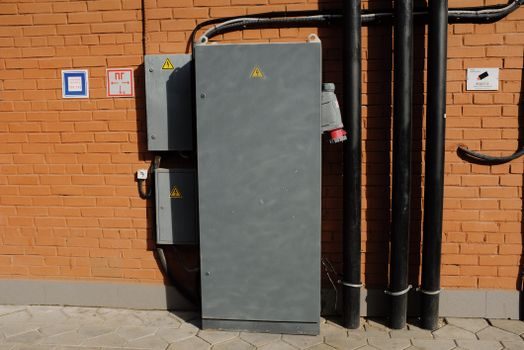
The first citable number is compensation current rating: LV rack-mount AHFs are commonly offered from 30 A up to 300 A per module, paralleled in master-slave for bus totals above 300 A, with cabinet-rated units reaching 600 A at 400–690 V. The second is harmonic order coverage — 2nd through 50th is now table stakes for new units, with selectable per-order compensation so the 3rd (neutral) and 11th/13th (asymmetric six-pulse) can be prioritised on the same bus [S1].
The third is response time: full-step compensation in under 5 ms (one fundamental cycle at 50 Hz, or about 16.7 ms to 95% of the target envelope) is the figure that separates an AHF from a slower SVG-tuned-for-VAR. The fourth is the CT placement rule — load-side CTs are mandatory for closed-loop harmonic cancellation, while grid-side CTs alone deliver only grid-current shaping with lower accuracy. ETAP's sizing workflow codifies this by computing required Isc, IL, and per-order Ih before the filter kVA is selected, so the spec sheet, not the brochure, sets the rating [S2]. Related engineering on the broader power-quality stack, including reactive power compensation shortlist logic, treats these four numbers as non-negotiable inputs. A working background reference for the filter element itself is the harmonic filter encyclopedia entry, and the filter element page covers the LCL/C components inside the inverter leg.
Voltage Class, Cooling, and Cabinet Footprint
LV AHFs ship in 400 V, 480 V, 600 V, and 690 V variants; MV AHFs sit in the 6 kV / 10 kV / 35 kV range with a step-down transformer or direct medium-voltage IGBT stack, and the cooling method — forced-air (most common below 300 A), liquid-cooled (300 A and above, or harsh/dusty sites), or a hybrid — drives both IP rating (IP31 indoor vs IP54 for plant-floor) and the derating curve above 40 °C. Paralleling up to 8 modules on a single DC bus is now standard, which lets a buyer start at 100 A and grow in 30 A or 50 A steps without re-engineering the switchboard. [S3]
The foot-print math that the spec sheet hides: a 100 A LV AHF typically occupies a 600 mm-wide cabinet roughly 2.0 m tall, while a 300 A liquid-cooled unit sits in a 800 mm cabinet of similar height. Plan 200–300 mm rear clearance for either forced-air or liquid hose routing. For indoor MV installations, the upstream step-down transformer adds another 1.5–2.0 m of lineup length per unit, so the room sizing must be locked before the PO, not after.
Communication, Integration, and What to Verify on Site
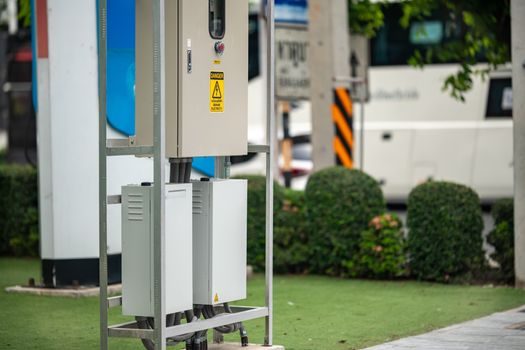
Modern AHFs expose Modbus TCP / RTU as a baseline, with PROFIBUS, PROFINET, and Ethernet/IP on the upper-tier units, plus a dry-contact trip and a 4–20 mA analogue feedback of the % compensation for SCADA roll-up. The integration step that trips up first-time buyers is the CT polarity and the open-protocol assumption: an AHF that hands back only Modbus registers cannot be polled by a Siemens S7 without a gateway, and CT cabling on the load side must be twisted shielded pair, not the leftover Cat5 from the IT room. [S3]
On the acceptance test, IEEE 519-2014 compliance at the PCC is the verifiable target, with the more common European projects pointing to EN 50160 voltage limits and the IEC 61000-2-2 / IEC 61000-2-4 compatibility levels for LV systems; the filter vendor's warranty typically keys off a measured THDi at the PCC of 5% or 8% under stated load.
Failure Modes and Limits Buyers Often Miss
Three limits surface in the field more often than the brochure admits. First, AHFs do not fix neutral overloading on single-phase non-linear loads unless the unit is a 3-phase + neutral (4-wire) variant sized to the zero-sequence 3rd harmonic; a 3-wire AHF on a 4-wire distribution will leave the neutral hot. Second, the IGBT inverter generates its own high-frequency noise on the DC bus, so the filter must ship with a tuned LCL output stage and EMC line filter to meet IEC 61000-6-4 industrial emission limits, or the cure is worse than the disease. [S1]
Third, ambient temperature derating starts at 40 °C on most air-cooled units and hits roughly 70% nameplate at 50 °C; specifying an air-cooled unit for an unventilated MCC room above 40 °C is a common root cause of nuisance trips. The wider buying context, including how filter selection sits next to broader plant power-quality planning, is covered in the reactive compensation vs harmonic filter decision map. Buyers who need the mechanical-side sister component should cross-reference the harmonic reducer encyclopedia entry when sizing torque-side mitigations on the same drive train.
Trackable Signals to Watch Through Q4 2026

Two signals are worth tracking over the next two quarters: vendor FAT report templates that explicitly cite IEEE 519-2014 versus EN 50160 dual-compliance on a single test sheet, and the rollout of AHF modules with integrated DC-link energy storage that double as DVRs for voltage-sag ride-through [S1]. Either of these will shift the shortlist on a 2027 retrofit.
One more procurement-level signal: pricing on 100 A / 400 V LV modules from Chinese OEMs held flat across 2025 and into the first half of 2026, while MV-class units (6 kV / 10 kV) tightened on lead time because transformer slots filled faster than IGBT deliveries. Confirm both price and lead time in writing before locking the BOM, and re-tender the MV portion if delivery slips past 20 weeks.