
Harmonic and RV reducers both serve precision robotics, but harmonic units emphasize compactness and low backlash, while RV units deliver higher torque, torsional rigidity, shock resistance, and service life [S1][S2].
For a robot platform, the choice is usually joint-specific rather than platform-wide: harmonic drives fit lightweight, space-constrained axes, whereas RV reducers fit heavy-load axes requiring greater rigidity and durability [S2].
How the two reducer architectures differ
A harmonic reducer, also called a strain-wave gearbox, uses a wave generator, flexible spline, and rigid gear wheel. The flexible wheel undergoes controlled elastic deformation, allowing a high reduction ratio in one compact stage [S4]. Its practical strengths are ultra-low backlash, high positioning accuracy, low transmission inertia, low weight, and smooth, repeatable motion [S2][S4].
An RV reducer, or RV cycloidal reducer, combines a cycloidal reduction mechanism with a planetary stage. It is engineered for high torque, heavy loads, shock resistance, torsional stiffness, and continuous industrial operation [S2]. The additional planetary and cycloidal structure makes RV units heavier and larger than harmonic units [S2].
The terminology matters when comparing catalogs. RV reducers are cycloidal drives, whereas ordinary cycloidal reducers are not automatically equivalent to RV reducers. For related topology, see RV reducer and harmonic reducer.
Selection criteria: torque, stiffness, mass, and duty
Torque capacity is the first dividing line. Harmonic units are classified as medium-to-high torque, while RV units are rated very high torque; rigidity is high for harmonic and extremely high for RV. Harmonic units are lighter and more compact, whereas RV units are heavier and larger [S2].
The comparison should be based on four procurement variables rather than reduction ratio alone:
Torque: RV for the base and shoulder axes of heavy arms, especially where shock loading and continuous operation dominate. Harmonic for wrists, forearms, and smaller axes where payload is lower.
Stiffness: RV where positioning error under load affects the process, such as heavy palletizing, welding, CNC automation, and construction handling [S2].
Mass and envelope: harmonic where link weight, actuator diameter, and hollow-shaft routing constrain the mechanical design [S1][S4].
Cost: harmonic is moderate to high, while RV is higher [S2]. The selected reducer must also satisfy rated output torque, peak load, allowable backlash, rated life, motor-side inertia, and the joint's duty cycle.
Criterion-by-criterion reducer comparison

Both technologies offer excellent positioning accuracy, but they optimize different constraints [S2]. Harmonic offers ultra-low backlash and a single-stage high-ratio package, while RV offers very low backlash, very high torque capacity, and extremely high rigidity [S2][S4].
Harmonic wins on unit mass, packaging size, transmission inertia, and acquisition cost. RV wins on shock resistance, heavy-load capacity, torsional rigidity, and rated service life [S2][S8]. Harmonic is therefore preferable for collaborative robots, humanoid limbs and hands, medical robots, semiconductor equipment, optical inspection, and precision assembly, where compact motion control dominates [S2].
RV is preferable for welding robots, palletizers, heavy robotic arms, CNC automation, machine tools, construction robots, and heavy industrial automation [S2]. Harmonic should not be selected merely because it can deliver a high ratio; repeated shock, sustained high torque, and high torsional error can disqualify it. RV should not be selected merely because it has greater capacity; its mass and cost may exceed the joint budget.
Application architecture: one robot rarely uses one type
A six-axis articulated robot typically uses four RV reducers and two harmonic reducers. A SCARA robot typically uses four harmonic reducers, while a Cartesian robot typically uses three RV reducers and one harmonic reducer. A DELTA robot with its motor mounted on a fixed base typically uses one harmonic reducer [S4].
This architecture follows the load path. Large articulated axes require the torque capacity and rigidity of an RV unit, while smaller wrist or distal axes benefit from harmonic packaging [S4]. In humanoids, one published configuration estimate uses 20–30 precision reducers, including 14–16 harmonic units and 6–8 RV units [S7]. That allocation is an engineering estimate, not a universal bill of materials.
The architecture-specific cycloidal reducer option can support heavy industrial axes, but the design package must demonstrate the required torque, rigidity, backlash, and life. A reducer class alone does not qualify a specific model for a robot joint.
Market context without confusing forecasts with specifications

The global industrial robot reducer market was valued at USD 5.92045 billion in 2025 and is projected to reach USD 10.24087 billion by 2033, growing at a CAGR of 7.09% from 2026 to 2033. The same estimate assigns harmonic reducers 39.7% of global revenue and China 24.8% of the market [S3] (2025-08).
Separately, the RV speed reducer market is projected to grow from USD 2.37 billion in 2026 to USD 4.05 billion by 2034, a 6.9% CAGR [S6]. These are commercial forecasts, not operating limits. They should not be used to infer model life, rated torque, backlash, or supplier capacity without supporting datasheets.
Market growth does not remove the engineering trade-off. Harmonic has the larger cited revenue share at 39.7% [S3], while RV retains a distinct position in high-torque robot axes because of its rigidity, fatigue strength, and shock tolerance [S1][S8]. For robotic applications, sizing must be based on the joint load map rather than market share.
Failure modes, limits, and qualification checks
Harmonic drives can suffer fatigue damage in the flexible spline under repeated elastic deformation, while torsional compliance and shock loading can degrade positioning performance. RV drives introduce greater mass and complexity, including a planetary stage and cycloidal mechanism, so their performance depends on rigid, correctly aligned assembly [S1][S2].
For harmonic units, verify rated torque, peak torque, rated output speed, backlash or lost motion, torsional stiffness, allowable radial and axial loads, rated life, motor inertia, lubrication requirements, and temperature limits. For RV units, verify rated and peak output torque, allowable moment loads, torsional rigidity, backlash, rated life, and installation alignment. The research establishes the qualitative advantages of each architecture, but final numeric limits must come from the selected manufacturer datasheet [S1][S2].
Precision-reducer manufacturing is sensitive to material, equipment, and process control, which creates a high entry barrier [S4]. A second source is not interchangeable without requalification. Validate lost motion, vibration, torsional deflection, temperature rise, and endurance under the actual joint profile, including emergency stops and collision loads.
Robotic safety compliance must be assessed separately from reducer selection. ISO 10218-1:2011 and ISO/TS 15066:2016 address industrial robot safety requirements and collaborative-operation provisions, but neither can substitute for joint-level load testing or a manufacturer datasheet.
Engineering recommendation and sourcing record
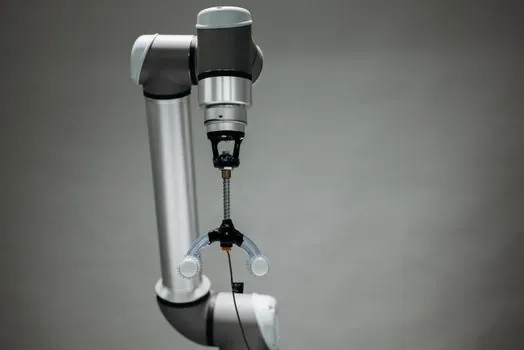
Choose harmonic when the joint envelope, link mass, low inertia, ultra-low backlash, and single-stage reduction ratio dominate. Choose RV when rated and peak torque, shock tolerance, torsional rigidity, and heavy-duty life dominate. For a mixed architecture, use RV at the high-load proximal axes and harmonic at the smaller distal axes, a pattern reflected in the typical four-RV and two-harmonic arrangement for a six-axis articulated robot [S4].
Before issuing a purchase specification, record the joint's continuous and peak torque, output speed, inertia ratio, permissible lost motion, torsional error, radial and axial loads, duty cycle, ambient temperature, target service life, mounting orientation, and maintenance method. Request the model-specific rating, tolerance definition, operating-temperature range, lubrication specification, and endurance test basis from the manufacturer.
The next engineering node is a joint-by-joint load map followed by candidate reducer datasheets and prototype validation. Track any change in rated torque, allowable moment load, or backlash as a design-review item rather than treating a category-level market forecast as an equipment qualification.