
A 2-wire fixed gas detector draws its operating current from the same pair of conductors that carry the 4-20 mA process signal back to the controller, while a 3-wire or 4-wire (line-powered) detector receives power from a separate conductor pair and uses the loop purely for signal transmission [S1][S3].
Sensor technology dictates which topology is even available: low-power electrochemical cells operate from a 2-wire loop fed by a 24 VDC supply, whereas catalytic bead (pellistor) and non-dispersive infrared (NDIR) sensors need the higher current budget that only 3-wire or 4-wire wiring can deliver [S5].
Why the 2-Wire Topology Exists, and Where It Stops Working
A loop-powered 2-wire transmitter modulates its own loop current between 4 mA and 20 mA in proportion to the electrochemical sensor's measuring range, with currents below 1.2 mA reserved for fault indication and the band between 1.2 mA and 4 mA used for warnings and maintenance signals, consistent with NAMUR NE43 [S5]. The same two conductors carry both the DC energy (typically 24 VDC at the supply) and the analog signal, so no separate power run is needed in the field, which is why most DCS analog input cards are already wired to expect a 2-wire loop-powered transmitter [S6].
The trade-off is the strict power ceiling: the detector head must operate from whatever voltage remains after the loop's burden resistor and cable drop, which restricts compatible sensors to low-current electrochemical types; catalytic bead and infrared sensors are explicitly out of reach on 2-wire because their heated elements draw more current than the 4-20 mA budget can spare [S5]. For toxic-gas monitoring (H2S, CO, Cl2, NH3) on existing 4-20 mA infrastructure, this constraint is usually acceptable, and the wiring savings are real: a 2-wire detector typically reduces cable count, conduit fill, and labor relative to running a separate power pair [S5][S7].
3-Wire and 4-Wire: When You Must Run Separate Power
A line-powered detector is, electrically, a different animal: the loop's two wires (or one wire plus a shared common in a 3-wire device) carry only the 4-20 mA signal, while a dedicated pair from a 24 VDC, 24 VAC, 120 VAC, or 240 VAC supply feeds the sensor and transmitter electronics [S1]. In an isolated 4-wire device the signal return is intentionally floated from the power-supply common, so no galvanic path exists between the power source and the current loop, which simplifies noise and ground-loop mitigation in larger plants [S1]. A 3-wire device shares the power-supply common with the signal return, which saves one conductor but loses that isolation [S1].
3-wire and 4-wire devices also enable features the 2-wire budget cannot support: heated optical benches in NDIR heads for combustible-gas detection, higher-power catalytic bead elements for LEL measurement, on-board relays, audible-visual alarm drivers, and backlit displays [S1][S2]. The practical ceiling is the additional cable run and the larger power supply you must size in the marshalling cabinet, which is why the topology is most often specified for combustible-gas detectors, multi-sensor combo heads, and any detector that must drive a local alarm without a separate loop-powered sounder. For a deeper look at how detector count and spacing shape the cabinet-side wiring, the Fixed Gas Detector Coverage Radius: Sensor Spacing Rules per Location reference lays out the per-location spacing logic that drives the conductor count in the first place.
Selection Criteria: 2-Wire vs 3-Wire vs 4-Wire Side by Side
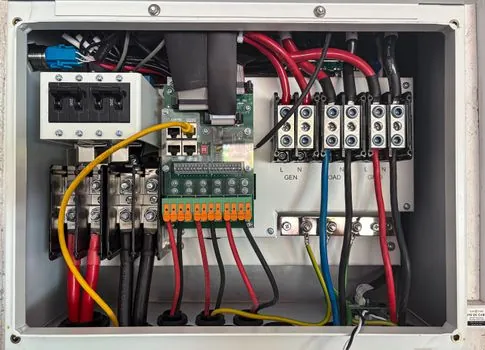
Specifying a fixed gas detector is rarely a free choice; the controller, the sensor, and the cable plant have to agree. The four criteria below cover roughly 90% of the decisions an instrumentation engineer actually faces on a new build or retrofit: [S5]
1. Sensor technology compatibility. Electrochemical toxic-gas sensors work on 2-wire, 3-wire, and 4-wire. Catalytic bead (LEL) and NDIR (LEL/CO2) sensors require 3-wire or 4-wire because their optical or heated elements exceed the 2-wire power budget [S5].
2. Wiring cost and infrastructure. 2-wire needs one twisted pair from the controller, no local power, and is the lowest-cost option for large detector populations on existing DCS analog inputs [S1][S5][S6]. 4-wire needs two isolated pairs (power + signal); 3-wire saves one conductor but shares power common with the signal return [S1].
3. Diagnostic signal behavior. A 2-wire detector using NAMUR NE43 reports faults below 1.2 mA and maintenance/warning in the 1.2-4 mA band, which lets the controller distinguish a true fault from a clean zero reading without extra wiring [S5]. 3-wire and 4-wire devices can carry the same NE43 current signature, but the fault tolerance is usually wider because the head is not power-starved.
4. Local output capability. 2-wire heads generally cannot drive local relays, audible-visual alarms, or backlit displays from the loop budget; if the safety philosophy requires a local alarm at the sensor, plan on a 3-wire or 4-wire detector, or add a separate loop-powered sounder [S1][S2]. A useful baseline reference for the current-loop side of this design is the fixed gas detector encyclopedia entry, which catalogs the head types, sensor families, and the typical 4-20 mA signal chain they share.
Application Matching: Which Topology Fits Which Job
For a greenfield toxic-gas (H2S, CO, Cl2) installation on a refinery or a wastewater treatment plant, the default is a 2-wire loop-powered detector: one twisted pair per point, a 24 VDC supply in the DCS or safety PLC marshalling cabinet, and a NE43-compliant 4-20 mA input card. The gas type, the controller card, and the existing cable tray are already aligned with that topology, and the savings in cable, conduit, and labor are largest precisely where detector count is highest [S1][S5][S6].
For LEL combustible-gas detection, the choice is forced: catalytic bead and NDIR sensors need 3-wire or 4-wire, period [S5]. In a well head, tank farm, or compressor shelter where combustible-gas risk drives the safety case, a 4-wire isolated head is often preferred because the floating signal return cuts ground-loop noise on long cable runs and gives a cleaner 4-20 mA reading at the controller [S1].
For retrofits of older 2-wire systems where the original supplier has discontinued the product line, a like-for-like 2-wire replacement on the existing cabling is the cheapest path, and several major manufacturers continue to ship 2-wire toxic-gas heads (Polytron 5100 EC, Polytron 3000 EC, Polytron 7000 EC) specifically to serve this installed base [S5]. If the new requirement adds a local alarm or a relay output that the old 2-wire head could not support, the realistic options are to either pull a third conductor (3-wire) or to run a fresh power pair and treat the job as a 4-wire install, with the conductor cost amortized against the avoided cabinet rebuild [S1][S5]. For more on how the control-side I/O modules and relay modules split the safety function, the Control Module vs Relay Module: Functional Boundaries, Selection Criteria, and Wiring piece walks through that decision.
Common Pitfalls When Specifying the Loop
The most common field error is under-sizing the loop's voltage budget. A 2-wire head must operate from the supply voltage minus the drop across the controller's sense resistor, the cable resistance, and any safety barrier; if the head needs, for example, 12 V at the terminals and the cable run is long, a 24 VDC supply with a 250 ohm input can leave negative headroom. The fix is either a higher supply voltage, a lower loop resistance, or a move to 3-wire/4-wire where the signal pair and the power pair are sized independently [S1][S3][S7].
The second pitfall is mixing topologies on the same controller card. DCS analog input cards are typically designed for a single wiring convention; connecting a 4-wire head to a card configured for 2-wire (or vice versa) produces either a saturated 20 mA reading or a persistent under-range fault. Confirm the card's wiring diagram and the head's wiring diagram before energizing, and remember that the NE43 fault band (current below 1.2 mA) is the only universally safe way to tell a healthy zero from a wiring fault on a 2-wire loop [S5][S6].
A third pitfall is assuming HART or any other digital protocol runs on the same pair as power in a 3-wire or 4-wire system without checking the manufacturer's rating; HART is an FSK signal superimposed on the 4-20 mA analog loop and behaves predictably on a 2-wire loop-powered head, but on a 3-wire or 4-wire head the HART modem's grounding, isolation, and shield termination all follow the head's own wiring guide, not the 2-wire default [S3]. On the cabinet side, the loop power distributor reference covers how multiple 2-wire loops are isolated and fused in the marshalling panel without crosstalk, which matters more on dense detector populations than on a single-point install.
Standards, Sourcing, and What to Verify Before Purchase
There is no single international standard that mandates 2-wire vs 4-wire for a fixed gas detector; the choice is driven by sensor physics, by the controller card's expected input type, and by hazardous-area protection concept. For explosive atmospheres, the detector's certification mark (ATEX, IECEx, or the relevant national scheme) governs how the wiring enters the enclosure, and the loop-power versus line-power distinction interacts with intrinsic-safety (Ex i) and flameproof (Ex d) protection in different ways; an installer must match the head's certification to the wiring method and to the safety barrier or cable gland specification [S1][S5].
For sourcing, the practical 2026 reality is that several legacy 2-wire toxic-gas product lines have been discontinued, and the supply chain has consolidated around a smaller number of 2-wire, 3-wire, and 4-wire families from a handful of major manufacturers, with new 2-wire devices such as the Dräger Polytron 5100 EC, Polytron 3000 EC, and Polytron 7000 EC explicitly positioned for replacement and brownfield expansion [S5]. Before specifying, confirm: (a) the exact sensor technology and the wire count it requires, (b) the controller card's wiring convention, (c) the NE43 compliance of the 4-20 mA output, and (d) the hazardous-area certificate that matches both the detector and the wiring method [S1][S5][S6]. A side-by-side look at the bench-test tooling that drives these loops is in the loop calibrator reference; for verifying an already-installed loop without breaking the current path, the loop tester entry covers the field procedure and the expected mA readings at zero, span, and NE43 fault levels.
Closing signal: two watch items for the next six to twelve months. First, monitor whether more manufacturers expand their 2-wire electrochemical portfolios, since the recent discontinuation of older 2-wire lines has left a gap that current 2-wire offerings are explicitly targeting [S5]. Second, watch the hazardous-area certification landscape for any updates to the 2-wire intrinsic-safety installation rules, since any tightening of the energy budget on Ex i loops would push more designs toward 3-wire or 4-wire combustible-gas detectors even where the 2-wire option is technically still feasible.