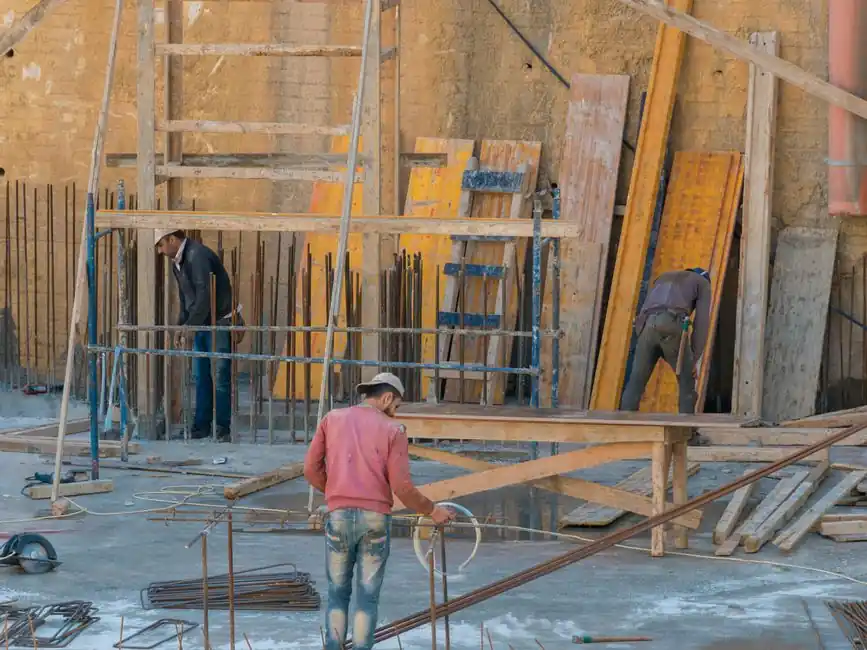
HDPE, ABS, and fiberglass hard hats differ most in cost, impact behavior, heat tolerance, electrical suitability, and service life: typical shell prices span $21–$135 for HDPE, $80–$130 for ABS or PC/ABS, and $157–$177 for fiberglass [S1].
The shell material is only one part of the specification. ANSI/ISEA Z89.1 evaluates the complete helmet, including its shell, suspension, vents, and accessories, so select the required Type and Class before choosing a material [S1][S4].
Material selection by work environment
HDPE is an economical option for general construction and utilities, with typical shell weights of 12–14 oz [S5]. ABS is suited to Type II helmets and applications requiring greater impact toughness, while fiberglass is relevant to radiant-heat environments [S1][S3][S7].
Do not select on impact strength alone. The completed helmet must carry the required ANSI/ISEA Z89.1 mark, and material alone does not establish its suitability. A fiberglass helmet is not automatically a high-heat or electrical helmet, and a vented shell can change the electrical classification [S4].
HDPE for general-duty and bulk purchasing
HDPE provides the lowest acquisition cost and broad configuration availability. The reviewed MSA V-Gard Type I cap weighs 0.66 lb, and a Bullard Type II example weighs 18.9 oz; typical prices range from $21 to $135 [S1]. Its non-conductive construction supports Class E or Class G helmets when the finished model is approved for that class [S5].
Heat and ultraviolet exposure are the main constraints. One technical guide advises storing HDPE below about 120°F and replacing the shell within about 5 years [S3]. HDPE ages in ultraviolet, and one technical guide advises storing it below about 120°F and replacing the shell within about 5 years [S3][S5].
HDPE is vulnerable to heat and ultraviolet exposure and is not the preferred material for foundries [S3][S5]. Solvents and petroleum products can also weaken the polymer, so chemical-compatibility review remains necessary for utility, plant, and industrial work [S5].
ABS for impact toughness and Type II helmets
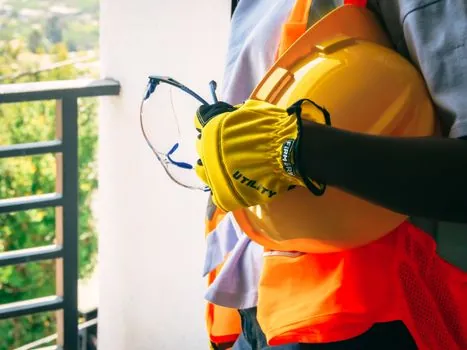
ABS provides greater impact resistance than HDPE [S7]. It is commonly used for climbing-style Type II helmets with foam liners and can also appear in cap-style helmets [S2][S3]. Reviewed ABS or PC/ABS Type II helmets with foam liners weigh 495–567 g, or about 1.09–1.25 lb, and typically cost $80–$130 [S1].
ABS provides better impact resistance than HDPE but at a higher cost, and its smooth surface also supports branding applications [S7]. It should not be treated as automatically heat-proof, electrically superior, or longer-lived than HDPE. The exact Type, Class, venting, suspension, optional tests, and operating limits must come from the helmet’s certification and user instructions [S4].
ABS can be blended with polycarbonate. Polycarbonate shells are stiffer and more heat-tolerant than HDPE, with MSA publishing a 275°F radiant-heat figure for its polycarbonate TopGard; that value is a manufacturer test figure, not an ANSI radiant-heat rating [S3]. For a Type II helmet, compare the complete assembly because liner density and suspension design materially affect the 495–567 g examples [S1].
Fiberglass for radiant heat and industrial exposure
Fiberglass uses glass-fiber reinforcement in a thermoset resin and is normally heavier and more expensive than injection-molded plastic. A reviewed MSA Skullgard Type I example weighs about 0.9 lb and costs $157–$177, while the material is selected where resistance to radiant heat, chemicals, and sparks matters [S1][S3].
The reviewed phenolic Skullgard carries Type I Class G markings and MSA publishes a 350°F radiant-heat figure. That number describes the tested manufacturer product, not a blanket rating for every fiberglass helmet, and ANSI/ISEA Z89.1 does not itself rate shells for radiant heat or flame [S3].
A manufacturer publishes a 350°F radiant-heat figure for its phenolic MSA Skullgard [S3]. For molten metal, hot maintenance, furnace, or foundry work, request the exact model datasheet, test scope, replacement instructions, and evidence for the full shell and suspension assembly rather than relying on the words “fiberglass” or “FRP” [S4].
Type, electrical class, and weight
Material does not determine the Type or Class by itself. Type I covers impact to the top of the head, while Type II adds front, back, and side protection.
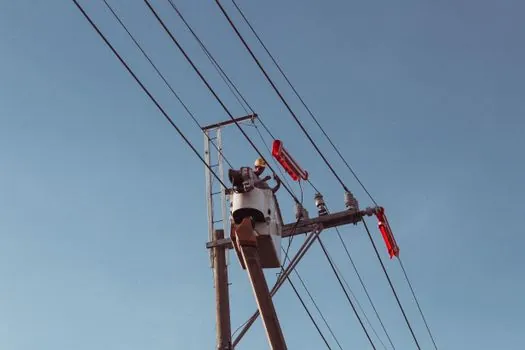
HDPE, ABS, and fiberglass can each appear in Type I or Type II helmets and in Class E, G, or C configurations, but only the label on the finished, tested helmet settles the classification [S1][S3]. For electrical work, select a properly marked, usually non-vented model in the required electrical Class and verify the complete configuration; material is secondary to the approval evidence [S4].
Weight comparisons must use complete helmets with the same Type, brim, liner, and suspension. The reviewed set includes a 0.66 lb HDPE Type I cap, 495–567 g ABS Type II helmets, and a 0.9 lb fiberglass Type I helmet, so the apparent material difference is partly configuration [S1]. More details on these distinctions appear in the electrical and mechanical hard hat guide.
Cost, service life, and failure risks
HDPE normally delivers the lowest purchase cost, ABS adds toughness and Type II design flexibility, and fiberglass adds heat capability at a higher price. Representative price bands are $21–$135 for HDPE, $80–$130 for ABS or PC/ABS, and $157–$177 for fiberglass [S1]. These are typical US prices from manufacturers and major retailers, not fixed quotations, and total cost should include replacement intervals, accessories, and inventory complexity [S1].
Failure modes differ by material. HDPE risks UV embrittlement, heat softening, and chemical weakening; ABS can lose suitability if heat limits or optional tests are ignored; fiberglass can delaminate or lose resin properties if exposed beyond its documented limits or damaged by impact [S2][S3][S5]. For all three, the suspension, shell condition, date marking, storage history, and model-specific instructions can limit service even when the shell material appears intact.
Do not treat a flex test as a substitute for certification or inspection. A degraded HDPE shell may feel stiff, crack at the flex point, or leave a chalky residue, but field observation cannot recreate ANSI/ISEA Z89.1 impact, penetration, electrical, and conditioning tests [S5]. Replacement decisions should also account for the shell, suspension, and date rules for hard hats.
Specification checklist for buyers
Specify in this order: impact Type, electrical Class, required temperature exposure, optional tests, complete weight, shell and suspension construction, accessories, service-life instructions, and unit cost. For general construction, compare documented HDPE and ABS models; for electrical installation, prioritize the required electrical Class and non-vented construction; for radiant heat, use only a model with documented temperature evidence [S4].
For inventory programs, keep separate model numbers rather than treating one shell material as a universal SKU. Request marking photographs, the applicable declaration or certificate, user instructions, exact model datasheet, compatible accessory list, and a production-representative sample [S4]. Distributor programs should also document destination-standard requirements and replacement intervals because destination-specific variants may not share identical approvals [S4].
The defensible selection is simple: HDPE for low-cost general exposure, ABS for impact-tough Type II applications, and fiberglass for documented high-heat work. The next procurement action is to place the exact candidate model, label, suspension, vents, and accessories into the site hazard assessment before approving it.