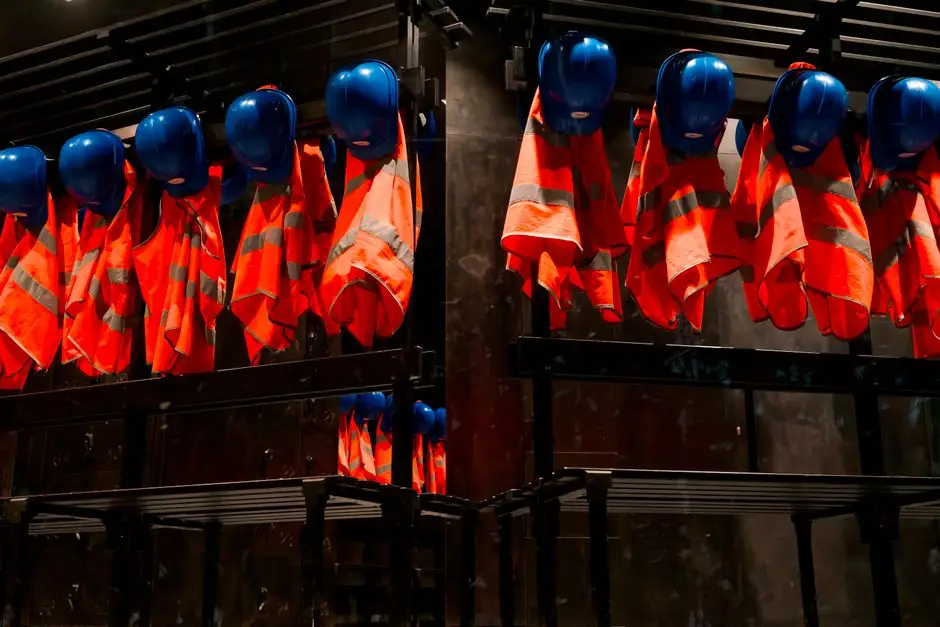
A Type I MSA V-Gard HDPE hard hat weighs 0.66 lb, or 10.6 oz, while the Klein 60513 carbon-fiber Type I model weighs 17.6 oz [S2].
The 7.0 oz spread shows why complete hard hats of the same type should be compared, because model and configuration differences can confound shell-material comparisons.
HDPE vs carbon fiber: the actual weight range
HDPE is the lower-mass option for many general-purpose configurations. Typical HDPE shell weights are around 12–14 oz, and the listed MSA V-Gard Type I cap achieves 0.66 lb, or 10.6 oz [S1][S2]. Published comparisons also place the average standard HDPE hard hat at roughly 13 oz, although one broad material list gives an approximately 18 oz figure for HDPE [S3][S6]. These differences show why procurement should use a specific model weight rather than a material average.
Carbon-fiber hard hats generally weigh around 17 oz, and the Klein 60513 full-brim Type I example is listed at 17.6 oz, or 1.10 lb [S2][S3]. The 17.6 oz model is 7.0 oz heavier than the 10.6 oz V-Gard example, but those helmets differ in brim and configuration as well as shell material [S2]. Against a 13 oz ABS benchmark, carbon fiber adds about 4 oz; against a 14 oz HDPE benchmark, it adds about 3 oz [S3].
The correct comparison is unit for unit. Confirm Type I versus Type II, cap versus full brim, shell-only versus assembled weight, and whether the liner and suspension are included. Because different helmet configurations can affect weight, complete hard hats of the same type should be compared rather than relying on shell material alone.
Why carbon fiber is not automatically lighter
Carbon fiber is often selected for stiffness, dent resistance, and shell geometry rather than guaranteed minimum mass. The material is woven carbon fiber set in resin and cured into a shell; the finished assembly includes the suspension and any accessory system [S2]. Published examples list 17–19 oz for resin hard hats and approximately 17 oz for carbon fiber hard hats [S3].
A 350°F figure sometimes used to characterize carbon-fiber thermal resistance does not establish that the complete hat is lighter than HDPE. Material behavior and assembled weight are separate specifications [S3]. If comfort over a long shift is the controlling requirement, request the listed weight of the exact finished configuration and fit it to the wearer rather than assuming a carbon label delivers a lighter helmet [S1].
Electrical class changes the selection
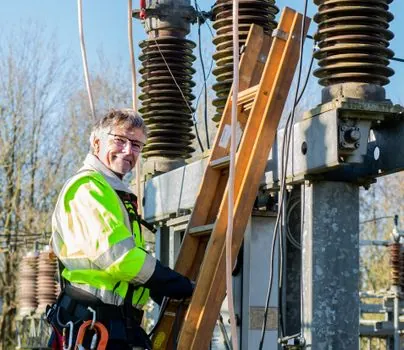
Shell material can determine available electrical protection even when the impact rating is identical. The cited carbon-fiber examples are Class C, while non-vented HDPE models are available with Class E, 20,000 V, and Class G, 2,200 V ratings [S1][S2].
Type and class control the tests, not the shell material by itself. Every hard hat cited in the comparison was tested to ANSI/ISEA Z89.1 as a finished product, and Type I covers impacts to the top of the head while Type II adds front, back, and side impact protection [S2]. OSHA 29 CFR 1926.100 requires head protection that reduces electrical shock where exposed electrical hazards are present, so a carbon-fiber hat should not be selected merely because its shell material is described as strong or lightweight [S2].
For a broader review of Type and Class requirements, see Electrical vs Mechanical Hard Hats: Type and Class Guide.
Cost, heat resistance, and service life tradeoffs
HDPE is the economical general-purpose choice, while carbon fiber carries a substantially higher purchase premium. The comparison lists HDPE prices from $21 to $135, carbon-fiber composite at $175 to $195, and Kevy carbon-fiber products at $249 to $329; model, type, and configuration account for much of the spread [S2].
HDPE begins to soften around 248°F, and the material guide advises against use where sustained radiant heat exceeds 150°F, including foundries, smelting, and welding-splash zones [S1]. It also identifies UV degradation, with replacement every 2–3 years under heavy sun exposure, and notes that manufacturers commonly recommend replacing HDPE shells after 5 years from manufacture regardless of condition [S1].
Carbon fiber does not solve every environmental limitation. Fiberglass, not carbon fiber, is the material identified for roughly 350–400°F sustained service in foundries, steel mills, glass manufacturing, petrochemical plants, and electrical utilities [S1]. Carbon-fiber hard hats generally weigh around 17 ounces, compared with about 13 ounces for an ABS plastic hard hat, but they are substantially more expensive than HDPE hard hats.
Selection criteria and recommended uses

Choose HDPE when the requirement is minimum acquisition cost, a mass around 12–14 oz in a typical shell, general construction exposure, and no sustained radiant heat above 150°F. Use a vented or non-vented configuration according to the hazard assessment, and select Class E or Class G only when the helmet label carries the required rating [S1].
Choose carbon fiber when a specific finished model offers a lower weight than the HDPE alternative or provides a preferred stiffness, durability, Type I geometry, or venting arrangement, and when Class C electrical protection is acceptable. Do not use the generic 17 oz carbon-fiber figure as a purchase guarantee because the cited range includes 17–19 oz resin models and configuration-dependent options [S2][S3].
Do not choose either material without checking the helmet label, manufacturer instructions, ANSI/ISEA Z89.1 type and class, production date, suspension condition, and site hazards [S2][S5]. For broader material selection beyond this weight comparison, HDPE vs ABS vs Fiberglass Hard Hats: Material Selection covers the practical tradeoffs among the major shell families.
Record the mass of the exact approved model, including brim, liner, and suspension, in the PPE specification. Recheck it against replacement models before purchase because a material swap can change both weight and electrical class without changing the ANSI/ISEA Z89.1 test framework [S2].