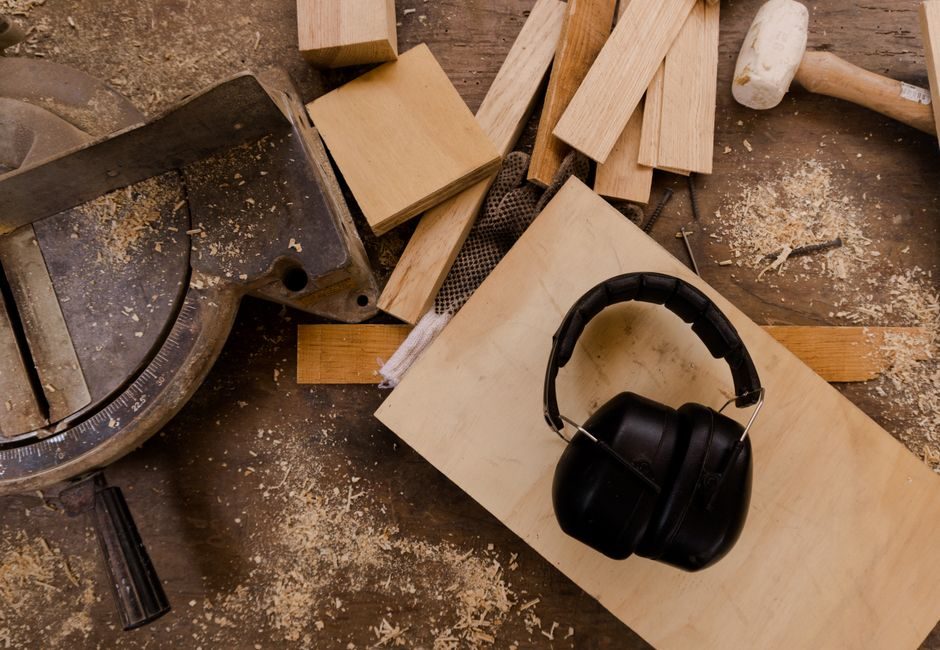
A hearing protector is specified by its Noise Reduction Rating (NRR) in decibels, the single number that tells an EHS engineer whether a cup, plug or band can pull a worker out of OSHA's 85 dBA / 8-hr action zone or the EU's 80/85 dBA lower/upper exposure action values.
Passive muffs span roughly 24 dB NRR for thin radio-equipped models up to 37 dB NRR for high-attenuation over-ear units like the Browning HDR [S1][S3]. Foam disposable plugs and banded earplugs fill the 27–33 dB NRR band; electronic and dual-protection systems go higher and add features such as AM/FM, ambient microphones, or Bluetooth [S1][S2].
What "NRR" Actually Means on a Datasheet
NRR is a laboratory-measured attenuation figure derived under ANSI S3.19-1974 (or the newer S3.19-2024 / EN 352 parts) using octave-band methods on trained subjects, not real workers moving around a plant [S5]. NRR is reported as a single dB value and sits between roughly 24 dB for slim electronic muffs like the 3M WorkTunes and 37 dB for high-attenuation passive muffs such as the Browning HDR [S1][S3].
For Australia and New Zealand, AS/NZS 1269.3:2005 (now superseded) defined the hearing protector program methodology for selecting, fitting, training and re-evaluating protectors in occupational settings; current programs reference AS/NZS 1269 in conjunction with the model Work Health and Safety regulations [S5]. The standard's framework still drives the SLC80 (Sound Level Conversion) rating used on Australian-packaged muffs and plugs, which is the local analogue of NRR.
Spec teams should treat NRR/SLC80 as a ceiling, not the field number. OSHA's NRR derating methodology subtracts 7 dB from the lab figure, then multiplies by 50% for unprotected/uncontrolled environments; EU field guidance under EN 458 / EN 352 also halves the lab attenuation to estimate protected exposure. A "30 dB NRR" muff typically delivers roughly 11–15 dB of real-world attenuation on a moving worker — so a 100 dBA noise floor drops to 85–89 dBA at the ear, not 70 dBA.
The Main Protector Types Compared
Four format families cover ~95% of industrial spec sheets, each with a distinct attenuation, comfort and electronics profile: [S1]
1. Disposable foam earplugs (NRR ~32–33 dB, SLC80 23–27 dB class 5): cheapest at US$0.02–0.10 per pair in bulk, single-use, vulnerable to contamination, ideal for visitors and high-turnover crews. China-origin supply on Made-in-China lists medical-grade PU foam plugs at US$2.99–5.00 per hundred pieces with 200-piece MOQs from Guangdong factories [S6].
2. Reusable banded earplugs and pod plugs (NRR ~25–27 dB): quick to don/doff for intermittent noise, replaceable tips, popular on automotive assembly lines and in food processing where hygiene dominates.
3. Passive over-ear muffs (NRR ~24–37 dB): no electronics, widest headband fit range, hot in summer, no batteries. The Browning HDR sits at the top of the range at 37 dB NRR with soft-foam ear cups [S3].
4. Electronic/active muffs and in-ear monitors (NRR ~24–30 dB; lower attenuation, much higher situational awareness): integrated AM/FM, Bluetooth, level-dependent ambient microphones, two-way radio pass-through. 3M WorkTunes AM/FM is a 24 dB NRR radio muff with integrated microphone and high-fidelity speakers [S1]. App-driven solutions like HearSafe layer training and fit-tracking onto the hardware side [S2].
For very high noise (≥100 dBA) or impulse sources (riveting, drop-forge, shooting ranges), dual protection — plug + muff worn together — is the standard approach and adds roughly 3–5 dB to single-protector attenuation; this is also called "double protection" in EU/UK guidance.
Selection Criteria: Matching Protector to the Noise Hazard
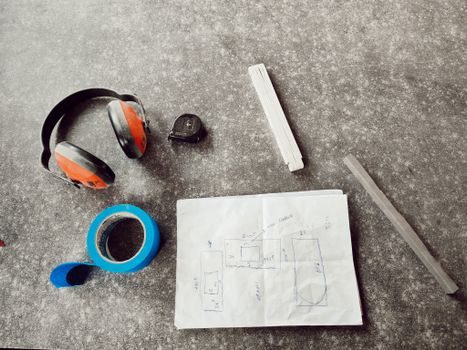
Pick the protector after you have measured the noise, not before. The decision tree is straightforward once three numbers are known: A-weighted equivalent level (Leq/LAeq), peak C-weighted level (LCpeak), and the octave-band spectrum. From these the required protected exposure is calculated: target ≤80 dBA at the ear under EU rules (Directive 2003/10/EC), or ≤85 dBA TWA under OSHA 29 CFR 1910.95. [S2]
For continuous 90–95 dBA industrial noise, a single foam plug or low-NRR banded plug (NRR 25–30 dB) is normally sufficient after the 50% derate, giving protected ear levels of 70–80 dBA. For 95–105 dBA — typical of stamping, foundry shakeout, and woodworking — over-ear muffs in the 30 dB NRR range (e.g. mid-tier passive muffs) are the common spec.
Above 105 dBA, or anywhere LCpeak exceeds 140 dB, dual protection is the rule: foam plug + over-ear muff, with the muff carrying the higher NRR (often 30+ dB) and the plug adding the residual 3–5 dB. For impact/impulse noise like drop forge or ammunition lines, look for explicit "impulse" or "high-noise impact" ratings rather than relying on the NRR alone, because NRR is an A-weighted continuous figure and under-represents peak protection.
If the job requires communication — radio, push-to-talk, hearing alarms — specify an electronic muff with level-dependent ambient microphones (often called "active listening") rather than a passive muff that simply blocks everything. Models with 3.5 mm audio input or Bluetooth streaming let crews hear machine diagnostics or take calls, but check the audio dose: speakers driven above safe SPL defeat the purpose of the protector.
Fit, Hygiene and the 50% Real-World Derate
Even a 37 dB NRR muff delivers around 15 dB of real attenuation on a poorly fitted worker; on a well-trained worker it can hit 20+ dB. AS/NZS 1269.3:2005 and its successor program rules formalised the requirement for fit-testing every user — a foam plug rolled down to its smallest diameter, held in place for 30–60 seconds while it expands, and inserted to the full depth of the ear canal [S5].
Comfort drives compliance: a worker who pulls a muff off for 10 minutes during an 8-hour shift cuts effective protection by 25%. Over-ear muffs add heat load and clamping pressure, which is why many EHS programs issue muffs in the 26–30 dB NRR range rather than pushing 37 dB NRR — the marginal attenuation is not worth the comfort penalty. For hot environments (steel mills, foundries, outdoor construction in summer), banded earplugs or thin-profile electronic muffs are the more specifiable choice.
Hygiene rules follow the use environment: foam plugs are single-use, banded pod tips are wipe-clean and replaced every 1–4 weeks, muff cushions are wiped weekly and replaced every 6–12 months or when the seal deforms. A training app such as HearSafe supports fit-check and usage logging to document the program side of compliance [S2].
Compliance, Certification and Intrinsic Safety

Four regulatory frameworks dominate global hearing-protector spec work, and the right standard must be on the data sheet: [S3]
• US (OSHA 29 CFR 1910.95 / MSHA): NRR required on the packaging, derating required for field exposure estimate; 85 dBA TWA action level, 90 dBA PEL with HPDs.
• EU (Directive 2003/10/EC, transposed in each member state): 80 dBA lower / 85 dBA upper exposure action values; protectors meeting EN 352-1 (muffs), EN 352-2 (plugs), EN 352-3 (helmet-mounted) carry the CE mark.
• UK (Control of Noise at Work Regulations 2005): aligned with EU values, retained post-Brexit.
• Australia / New Zealand (AS/NZS 1269 series, model WHS Regulations): SLC80 labelling, Class 1–5 system; AS/NZS 1269.3 historically covered the program elements [S5].
For oil & gas, mining, chemical and grain-handling sites, intrinsic safety (IS) certifications are equally important: IECEx/ATEX Zone 0/1/2 for European/IEC markets, UL Class I/II Div 1/2 for North America, plus MSHA approval for underground US coal. A standard Bluetooth muff without an IS rating cannot be brought into a classified area even if the attenuation spec is right.
Cost Bands and Sourcing Reality
Disposable foam plugs on Made-in-China list at US$2.99–5.00 per 100 pieces, MOQ 200 pieces, from Guangdong factories with 15+ years of export history [S6]. That puts landed cost for a 1,000-person plant running one pair per shift at well under US$0.10/employee/day.
Mid-tier passive muffs (NRR 26–30 dB) retail in the US$18–45 range per unit; high-attenuation models like the Browning HDR appear around US$39 on the secondary eBay market, with retail channels typically US$45–60 [S3].
Electronic / communication muffs are the cost outlier: AM/FM units (e.g. 3M WorkTunes) sit at US$55–90, Bluetooth and level-dependent models climb into the US$120–250 band, and IS-rated electronic muffs (Sensear, 3M Peltor LiteCom, Howard Leight Sync) can reach US$300–500 per unit [S1]. For programs outfitting 500+ workers, that is the difference between a US$15k and a US$250k annual spend.
For context on the equipment-cost side of a 2026 PPE program, see this protective clothing spec-cut guide, and for the linear-bearing and motion-component side of an industrial maintenance build, the linear bearing price & cost guide is a useful parallel reference.
Limitations and Failure Modes
No single protector covers every scenario, and the common failure modes are predictable: [S4]
• NRR mismatch: specing a 24 dB NRR muff into a 100 dBA line gives 74 dBA at the ear — under OSHA's 90 dBA PEL but above the EU 80 dBA action value, so the EU site is still non-compliant [S1].
• Derate ignored: a 33 dB NRR foam plug is treated as "33 dB of protection" by untrained supervisors, when the field figure is closer to 13 dB. Training plus fit-testing is the only fix.
• Wrong environment: passive muffs in 50 °C outdoor work cause heat-stress complaints; over-ear muffs interfere with hard-hat slots unless they are the helmet-mounted EN 352-3 type.
• Electronics in hazardous areas: Bluetooth-only muffs without IS rating cannot be used in Zone 1 / Class I Div 1 areas, even though the radio looks like a productivity win.
• Acoustic trauma from "safe-sounding" audio: electronic muffs with built-in speakers can drive 85+ dB directly into the ear canal, negating the protection. Limit input gain and specify a max SPL rating.
A practical rule of thumb from a senior EHS standpoint: spend 70% of the program budget on training and fit-testing, and 30% on hardware. The hardware spec is the easy half — the human half is what determines whether the hearing protector actually protects.
For component-level specifications, see linear guide, and crossed roller guide.
