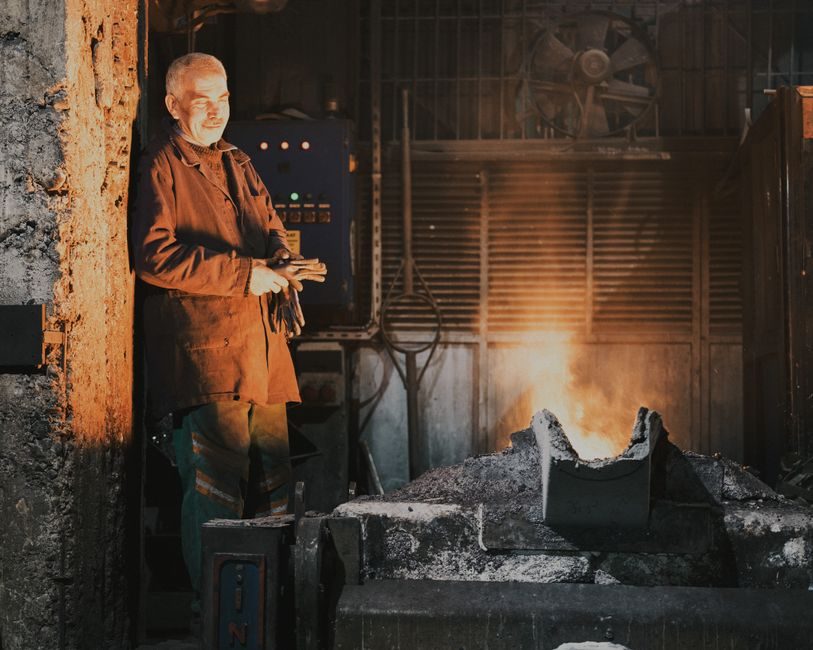
A 2026 spec-led buyer for a heat treatment furnace starts with three numbers — max temperature (°C), chamber or work-zone volume (L), and atmosphere (air / controlled gas / vacuum) — because those three parameters fix the equipment class, the refractory and the price band in the same step [S1][S6].
Across the surveyed OEM listings, the cheapest new build (gas-fired, LPG or electric resistance, vertical, ISO-class shop furnace) lands near US$1,200–3,000 per set on Chinese B2B marketplaces, while process-grade vacuum or controlled-atmosphere units from Western OEMs sit between US$14,386 and US$50,000 per set, and full RTO-integrated production lines run US$50,000–US$800,000 per system [S6][S9][S10]. Capacity tiers are equally stratified: laboratory GLO-series units from Carbolite Gero cover 10 L, 40 L, 75 L, 120 L and 260 L chambers at 600 °C, 900 °C or 1,100 °C maximum temperature [S1].
Five furnace families and where each one fits
Forced-air industrial ovens from Weldotherm are mobile, self-contained units rated for arctic-to-tropical field deployment, which makes them the default for on-site stress-relieving and PWHT of welded fabrications where moving the workpiece to a fixed shop furnace is impractical [S2].
Production heat treatment furnaces from ADVANCE RIKO are designed around the workpiece geometry and the metallurgical objective, with high-speed preheating of aluminium extrusion dies, continuous in-line treatments of strip and rod, and clean-heating modes for parts that cannot tolerate oxide scale [S7].
Vacuum furnaces are specified when decarburisation, bright-surface finish, or tight carbon-potential control matters more than throughput; Yokogawa’s SMARTDAC+ GX is documented in a Yokogawa application note as a matched program controller for vacuum heat treatment, with HOLD / ADVANCE / WAIT program-step functions and simultaneous PV + time event display [S3].
Specialty variants such as low-vacuum atmosphere furnaces for cemented carbide and ceramic heat treatment are listed in the US$1,200–3,000 / set price band on Made-in-China.com, fueled by electric resistance, and used in industrial, school, hospital and lab environments [S6].
Heat resistant furnace fixtures — trays, radiant tubes, recuperators, sink rolls, skid riders, galvanizing-line sleeves and bushes — are sourced as a separate workstream from dedicated foundries using nickel plates, chromium irons and high-silicon cast iron anodes, with typical heat-resistant castings comparable in quality to AFE Cronite but with shorter delivery [S8].
Spec sheet: the seven numbers that decide the model
Max temperature, atmosphere control, chamber volume, heating medium (electric / gas / LPG), footprint width, certification (ISO 9001:2015, ATEX, CE as applicable) and data-acquisition interface are the seven hard gates; a request that omits any one of them usually returns three to four wrong quotes and one expensive one [S1][S6][S10].
For GLO-series lab units the published maximum-temperature options are 600 °C, 900 °C and 1,100 °C (1,112 °F, 1,652 °F, 2,012 °F) and the chamber-volume options are 10 L, 40 L, 75 L, 120 L and 260 L (2.64 gal, 10.57 gal, 19.81 gal, 31.7 gal, 68.68 gal), with external widths spanning 850 mm to 2,400 mm — meaning a buyer can right-size the bench footprint against the largest single workpiece and avoid paying for the 260 L chamber when a 75 L unit covers 90% of the workload [S1].
Heat treatment accessories — die-casting tool inserts, HRC48-52 S136 inner rods, top-wear covers — are priced as low as US$1.00–2.00 per piece from China-based manufacturers at 1-piece MOQ, but these are consumables, not capital equipment, and should be budgeted on a per-cycle basis [S4].
Atmosphere and vacuum: which process needs which
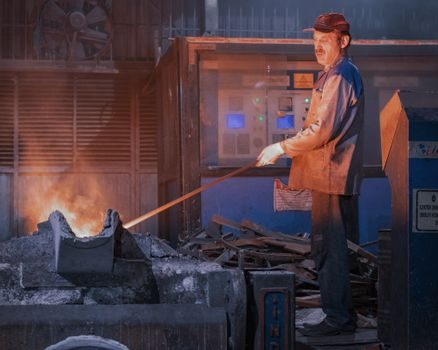
Air-atmosphere batch furnaces handle general annealing, stress-relieving and tempering of carbon and low-alloy steels; controlled-atmosphere (N₂, Ar, endothermic gas) units are required for bright hardening, carburising and nitrocarburising where surface chemistry has to be held within a tight carbon-potential window; vacuum furnaces are specified for tool steels, aerospace alloys and cemented carbides where decarburisation and scale cannot be tolerated [S1][S3][S6].
Carbolite Gero’s GLO documentation lists vacuum and controlled-atmosphere operation as a primary characteristic alongside annealing, with gas-fired heat source and 1,100 °C ceiling — a configuration that addresses bright-hardening of tool-steel dies and aerospace fasteners in a single chamber [S1].
Low-vacuum atmosphere furnaces for cemented carbide and ceramic heat treatment are explicitly called out in 2026 supplier listings as a distinct family from high-vacuum metallurgical units, and the fuel is electric resistance rather than gas, which simplifies site permitting and removes flue-gas handling [S6].
Who should (and shouldn’t) buy what in 2026
Job shops and field-erection contractors doing on-site PWHT or stress-relieving of large vessels should default to mobile industrial ovens with self-contained power and atmosphere, because the labour cost of rigging a 30-tonne workpiece into a fixed shop furnace dwarfs the equipment premium [S2].
Aluminium extrusion houses and continuous in-line processors benefit from ADVANCE RIKO-style high-speed preheating and clean-heating systems engineered around the workpiece geometry, because the throughput gain from optimised ramp rates pays back the engineering premium in months, not years [S7].
Tool-room and R&D labs needing bright-hardening, brazing or sintering of small parts below 260 L should compare GLO-class chamber volumes against their largest single load and pick the smallest unit that still clears the workpiece plus fixture — oversizing by one tier doubles refractory mass and idle power draw [S1].
Buyers who only need a simple tempering or annealing box for low-alloy hardware should NOT spend on vacuum or controlled-atmosphere; a US$1,200–3,000 vertical gas or electric batch unit from a Chinese ISO 9001:2015 manufacturer is fit-for-purpose and ships faster [S6].
Programming, data acquisition and process control

Program control of a vacuum heat treatment furnace is a documented Yokogawa use case for the SMARTDAC+ GX paperless recorder, which displays planned program patterns alongside actual measured values, supports HOLD, ADVANCE and WAIT step functions, and shows time and PV events simultaneously for after-the-fact trace review [S3].
Buyers specifying a new furnace in 2026 should treat recorder, controller and program-pattern editor as a single line item rather than three; mismatched recorders on a multi-zone furnace are the single most common cause of audit findings under IATF 16949 and AS9100 [S3].
Fixtures, trays and consumables: the hidden 15–25%
Heat treatment furnace trays, radiant tubes, recuperators, sink rolls, skid riders, galvanizing-line bushes and sleeves are typically cast from nickel-plate, chromium-iron or high-silicon cast iron, and procurement is usually run as a separate workstream from the furnace itself; budget 15–25% of furnace capex for fixtures in the first year, then re-budget on a 2–3 year replacement cycle [S8].
Heat treatment accessories at US$1.00–2.00 per piece (HRC48-52 S136 inner rods, die-casting tool inserts) belong to the same consumable ledger, not the capex ledger, and should be ordered on monthly Kanban rather than annual PO [S4].
Price-band comparison: four common procurement scenarios
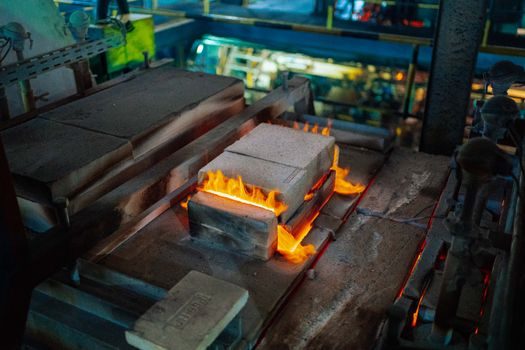
Scenario A — lab bright-hardening / annealing: GLO-series gas / vacuum unit, 10–75 L chamber, 1,100 °C ceiling — Western OEM list typically US$20,000–60,000 depending on chamber size and atmosphere options [S1].
Scenario B — small-shop tempering / quenching: Chinese-market vertical gas or electric batch furnace, ISO 9001:2015 — US$1,200–3,000 / set at 1-set MOQ [S6].
Scenario C — process-grade vacuum heat treatment system: US$14,386–50,000 per set at 1-set MOQ, including controller and recorder [S9][S10].
Sourcing and standards checklist for 2026
Verify ISO 9001:2015 certification for any production-line furnace supplier, confirm chamber-volume and max-temperature data on the OEM datasheet (not the reseller page), and pin atmosphere class (air / controlled / vacuum) and refractory material grade in the PO technical schedule [S1][S6][S10].
For tool-steel, aerospace and medical work, specify vacuum integrity in mbar·L/s leak rate, request a witnessed factory-acceptance test with a thermocouple survey, and require a SMARTDAC+ GX-class recorder with HOLD / ADVANCE / WAIT functions and simultaneous PV + time event logging [S3].
For field PWHT work, verify the mobile oven’s ambient rating (arctic-to-tropical) and self-contained power source against the project’s site conditions before signing the PO; Weldotherm’s documentation explicitly calls out operation in the coldest regions and in tropical heat, which is the kind of claim to test, not assume [S2].
For cast fixtures and consumables, audit the foundry’s raw-material chain (nickel plate, chromium iron, high-silicon cast iron) and benchmark against AFE Cronite as a quality reference rather than buying on price-per-kilo alone [S8].
Track these two signals over the next quarter: (1) Chinese B2B furnace listing price drift on the US$1,200–3,000 set band as a proxy for shop-furnace demand, and (2) Western OEM controlled-atmosphere option-pricing on the GLO family for signs of mid-2026 escalation [S1][S6]. Buyers comparing furnace capex to abrasives or cutting-torch spend will see the same spec-first rule show up across the shop — see the Oxy-Fuel Cutting Torch Price & Cost Guide 2026 for the parallel logic on torch and gas selection.
For component-level specifications, see heat detector, and linear guide.